

Take That, Congress
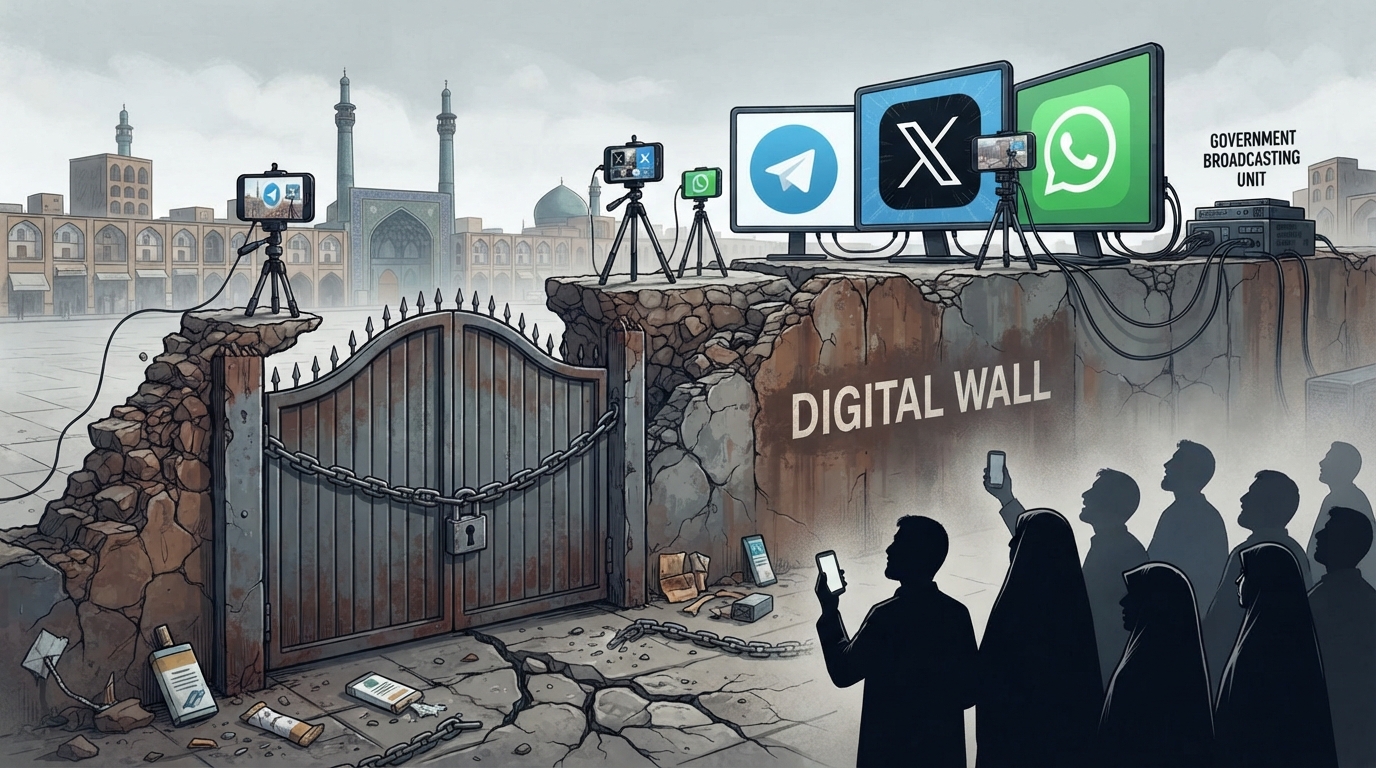
Official Tehran has made an unexpected but long-overdue move. After years of strict restrictions, the Iranian government has officially lifted the formal ban on the use of foreign messengers (Telegram, X, WhatsApp) for government agencies.
This was announced by the official spokesperson for the Iranian Cabinet, Fatemeh Mohajerani. According to her, this decision was prompted by the need to wage "information warfare" more effectively.
At the same time, this step has quite understandable and long-overdue reasons, as Tehran's digital security paradigm requires changes:
The doctrine of offensive media warfare.
Previously, Iran sought to protect its domestic information space through complete isolation and the creation of national equivalents, such as Bale and Soroush. Now, the course has turned 180 degrees. The authorities have admitted: it is impossible to promote one's agenda and counter fake news while remaining within a closed digital loop. To win the media confrontation, Tehran officially has to enter the opponent's "battlefield" — global social networks.
Where is the line of state secrecy?
In her speech, Mohajerani clearly emphasized: the legalization applies only to public broadcasting. Internal document flow and official correspondence of officials remain strictly prohibited due to the risks of cyberattacks. The main task for local IT specialists is now of a technical nature: how to strictly separate the personal work tools of civil servants from the management of official agency channels in order to prevent critical leaks.
The end of the "digital paradox."
The Iranian government's decree has effectively legalized the status quo that had persisted for years. The accounts of the Iranian Ministry of Foreign Affairs, the Presidential Administration, and even Supreme Leader Ali Khamenei were actively maintained on Telegram and X, bypassing formal bans. Now, this has become a legal tool. However, for ordinary citizens, the strict filtering of Western platforms remains in place for now, creating a curious legal conflict.
Conclusion:
Iran recognizes that global communication platforms have become a crucial geopolitical tool. Instead of trying to build a solid digital wall, the state seeks to learn how to use its opponents' weapons in its own interests.
But the main question still remains open:
Iranian agencies will publish important state news on Telegram or X, but an ordinary Iranian will still have to use a VPN to read them. Is a symmetrical easing of internet filtering also planned for the population?