

Surveillance and 'constant paranoia': Western diplomats tell BBC of life in war-time Moscow
Officials compare working in Russia since its full-scale invasion of Ukraine to the Cold War era.
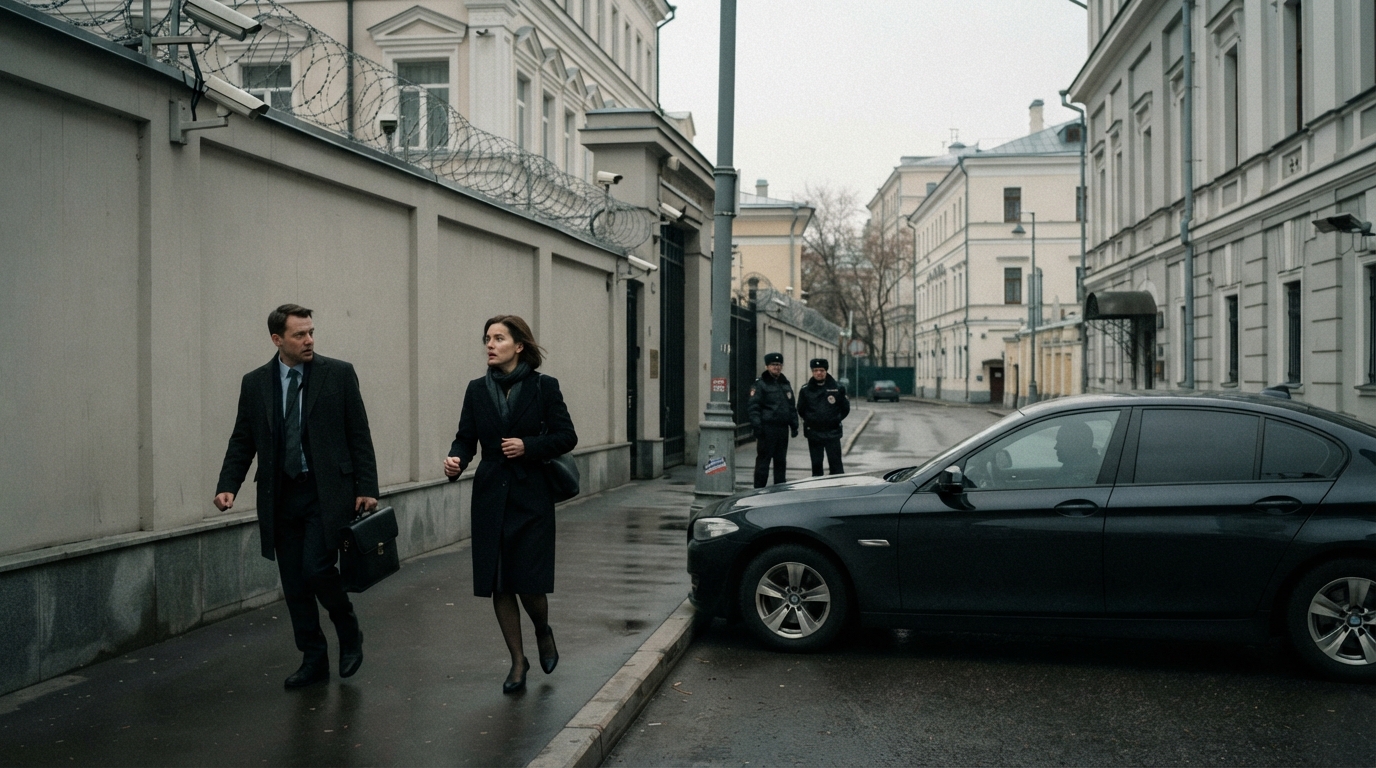
Surveillance and 'constant paranoia': Western diplomats tell BBC of life in war-time Moscow
Former US and French ambassadors Lynne Tracy and Pierre Lévy were among those who spoke to the BBC about their time in Moscow.
"Being the ambassador to Russia was probably the hardest assignment of my career," Lynne Tracy, who served as the US representative in Moscow from 2023 to 2025, tells the BBC.
US, UK and European diplomats once had a vital role in Russia, easing tensions even during the darkest periods of the Cold War.
But now, labeled "unfriendly" by President Vladimir Putin's government, Western ambassadors are kept under constant watch, isolated and increasingly cut off from the country they were sent to understand, as the war in Ukraine moves through its fifth year.
The BBC spoke with five diplomats who have served in Russia since the start of its full-scale invasion.
They liken the current level of pressure to the Cold War years, when Western embassies were kept under surveillance through physical monitoring, listening devices concealed in gifts, and "spy dust" - a nearly invisible chemical used to track officials.
Hundreds of Russian diplomats were expelled from countries in Europe and the US after the war began in 2022. Moscow answered in kind, declaring hundreds of Western diplomats persona non grata and leaving many embassies understaffed.
Tracy's 30-year career took her to places including Pakistan, where she survived an armed attack in 2008. Yet she says that even with constant physical danger, her posting in Peshawar was, in some ways, easier than Russia.
"There, I still felt that there were things within my control. What made Moscow more difficult were the high levels of uncertainty."
She says the relentless pressure from Russian counterintelligence was the main source of that uncertainty.
Russian diplomats in the West also complain about unfair treatment. But the diplomats who spoke to the BBC say Moscow's intelligence services operate on a far larger scale and with more aggressive tactics.
"Expect listening devices, expect cameras in every single room of your house," one former European diplomat says he was warned before going to Moscow.
Another former ambassador says they were forced to fire two Russian employees after Moscow's domestic security service, the FSB, tried to recruit them and demanded that they report everything happening at the diplomatic mission.
The two told the embassy instead, which then let them go - "otherwise, they could have faced some sort of criminal prosecution".
At the same time, Russians who would normally build ties with diplomatic staff - including people in academia and culture - are also being pressured into avoiding contact with Western officials.
One former ambassador says his visitors were once "tailed" by FSB agents all the way to the embassy doors.
Just this June, guests invited to the British ambassador's residence in Moscow for the King's birthday celebrations said they were harassed by pro-Kremlin activists and state-media journalists, and then questioned by police.
One of the guests says he has since turned down several invitations to events at Western embassies because of fear.
Not everyone can withstand the strain.
One former ambassador says "constant paranoia" has pushed several officials to resign. Even after leaving Russia himself, he says he was still looking over his shoulder for months.
In the immediate aftermath of the invasion, there were debates across Europe about whether to recall ambassadors or stop working in Russia entirely, says former French ambassador Pierre Lévy.
He remembers calling Paris right away to say that withdrawing their envoys would be a mistake, believing that the worse relations became, the more necessary they would be.
The invasion rapidly changed their work, says another former European ambassador; the cooperation needed for normal efforts on bilateral relations, trade and joint projects was now impossible.
And for those who remained in Russia, the war brought a long list of new priorities beyond helping their own citizens and companies.
First, countries seen as unfriendly by Moscow still wanted at least one channel of communication with Russian officials in order to get an accurate sense of what was happening inside the country.
But they also had to protect their staff and keep their embassies operating.
After Russia banned the hiring of foreign nationals in 2021, the US embassy's facilities team was left badly understaffed. Even a small plumbing problem such as a leaking pipe could become a major issue, taking up diplomatic staff time.
One diplomat recalls discussing the staffing shortage with a Russian official, who told him not to get too upset. "He said, 'at least you still have the chef'."
Financial sanctions imposed by Western governments in support of Ukraine created different everyday problems. After Russian banks were cut off from the Swift payment network, and Mastercard and Visa suspended operations in Russia, many embassies struggled to cover basic expenses.
A former ambassador recalls simply running out of cash and being unable to pay staff - until another diplomat, who was selling his car after being expelled, brought the rubles to the embassy in a suitcase.
"It's completely insane," the diplomat laughs. "But you had to look at it with a sense of humour."
Russian officials make little effort to hide their view of Western diplomats. They have openly accused those from "unfriendly countries" of "espionage".
Moscow has been especially critical of those who take an interest in signs of dissent against the Kremlin and, according to Russian journalist Alexei Venediktov, has effectively barred most Russian officials from speaking to Western embassies.
Venediktov says this has only made relations with the West worse, recalling how he told Russian officials: "You are being misunderstood precisely because of your own actions - because ambassadors cannot do their jobs."
Today, Moscow has little or no contact with many Western governments, says one former European ambassador. "There are no calls, no meetings at ministerial level."
But they say this has made diplomats even more important, leaving them responsible for conveying their governments' positions to Moscow.
"Generals prove what they can do during a war. The same is true for diplomats. When things get really difficult, every single thing you do actually matters."
Lynne Tracy left Moscow in 2025 believing she had achieved her main goal: the US Embassy had held firm.
But she is also proud of the work she and her team did to preserve ties between Americans and ordinary Russians.
"Because at some point, government-to-government relations will have a chance to improve - and those ties between people will be there to help speed the improvement."