

Supreme Court temporarily unfreezes Trump ballroom construction
The temporary order will allow the $400m (£297m) to continue while the high court mulls a final decision on the case.
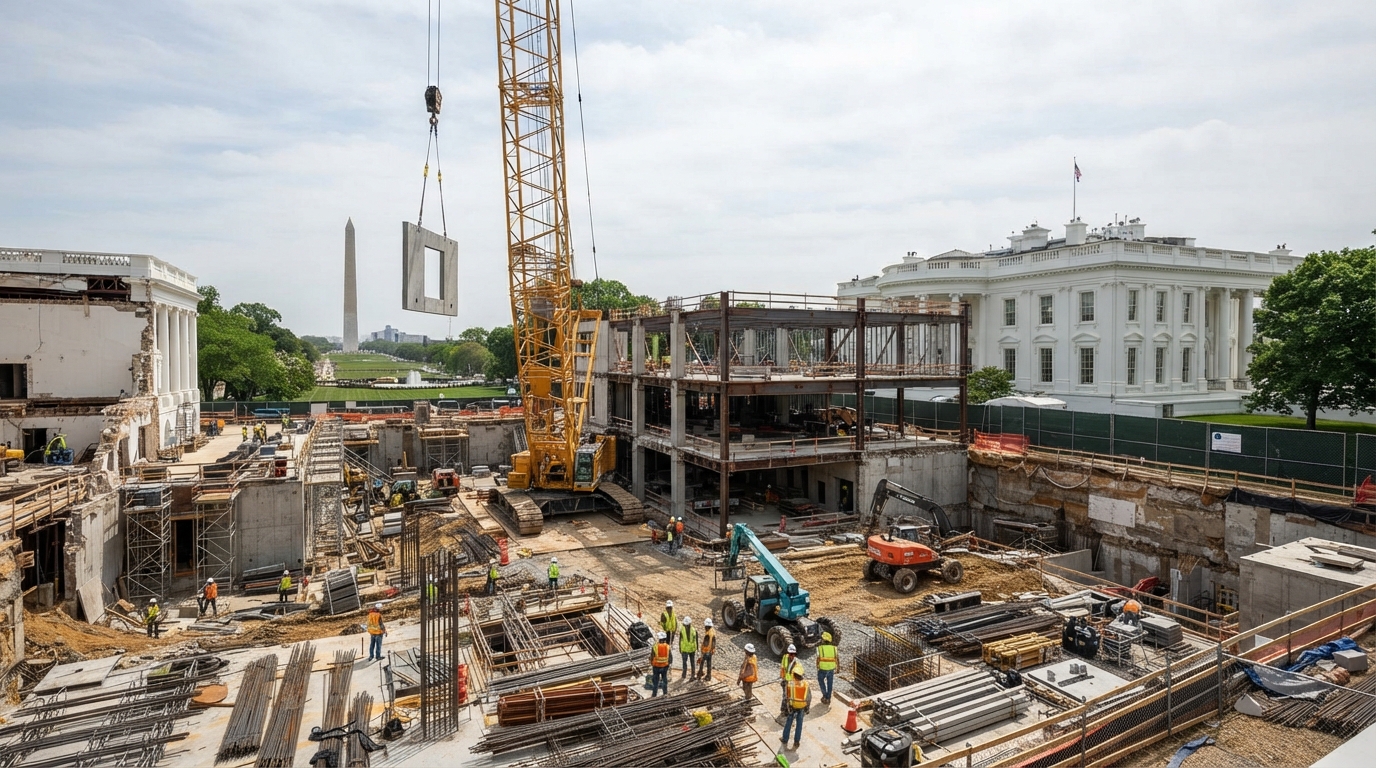
The US Supreme Court has temporarily given the green light for construction to proceed on the White House ballroom.
Chief Justice John Roberts issued a stay on Friday, allowing President Donald Trump's $400 million (£297 million) project to continue while the high court considers a case seeking to permanently halt it. The stay will remain in effect until the court takes further action.
The case was brought by a preservation group arguing that the project would become irreversible if not stopped immediately. It reached the Supreme Court after a federal appeals court had ordered a halt to the work earlier this month. The appeals court had ruled that Trump, as a "temporary tenant" of the White House, could not make such alterations without congressional approval and gave the administration two weeks to appeal.
The National Trust for Historic Preservation, the group leading the lawsuit against the ballroom, contends that it is causing irreversible damage to a historic building. "We are aware of the administrative stay," the group informed the BBC on Friday. "To be clear, this is not a final decision on the merits of the government's stay application, and we await further action."
This decision marks a victory for Trump, though potentially a temporary one. He has consistently argued for the need for a larger events space at the White House, and more recently, asserted its importance for national security. Had the Supreme Court not issued the stay or ruled against the Trump administration, construction would have been legally obligated to stop on Friday.
The president has stated that the new ballroom is necessary to "accommodate people for grand parties, State Visits" and is "vital for National Security." Government lawyers have supported this, arguing that the additional security complex and features within the ballroom project are essential to protect the White House from drones, ballistic missiles, biohazards, and other threats, thereby safeguarding the president, his family, and staff.
In an emergency filing to the high court before the stay, US Solicitor General D John Sauer emphasized that construction on the ballroom needed to continue for safety reasons.
Initially announced in July 2025 as a 650-person ballroom that would integrate with the existing building, revised plans later expanded its capacity to 900, then approximately 1,000, involving the demolition of the entire East Wing structure. The ballroom building would include a large above-ground entertaining space and a subterranean security complex. Trump reiterated the necessity of the space following an assassination attempt at the White House Correspondents' Association dinner in April.
However, the Trust, which filed its lawsuit in December, argues there is no basis to "disturb" the White House and that a ballroom does not constitute a national security emergency. They contend that federal review panels should have the opportunity to evaluate the plans before further work proceeds. The US Congress was not consulted before bulldozers began work on the building.
The ballroom project, along with a helipad being constructed on the South Lawn, is part of the president's broader initiative to reshape Washington's cityscape. This effort also includes the renovation of the Lincoln Memorial Reflecting Pool and a planned "Arc de Trump," intended to be larger than the Arc de Triomphe in Paris. In each instance, the administration has faced accusations of bypassing legally mandated review and public-comment processes—charges that Trump vehemently denies.