

Supreme Court revives controversial US data system for citizenship checks
The system uses citizenship information and other sensitive data to filter alleged non-citizen voting.
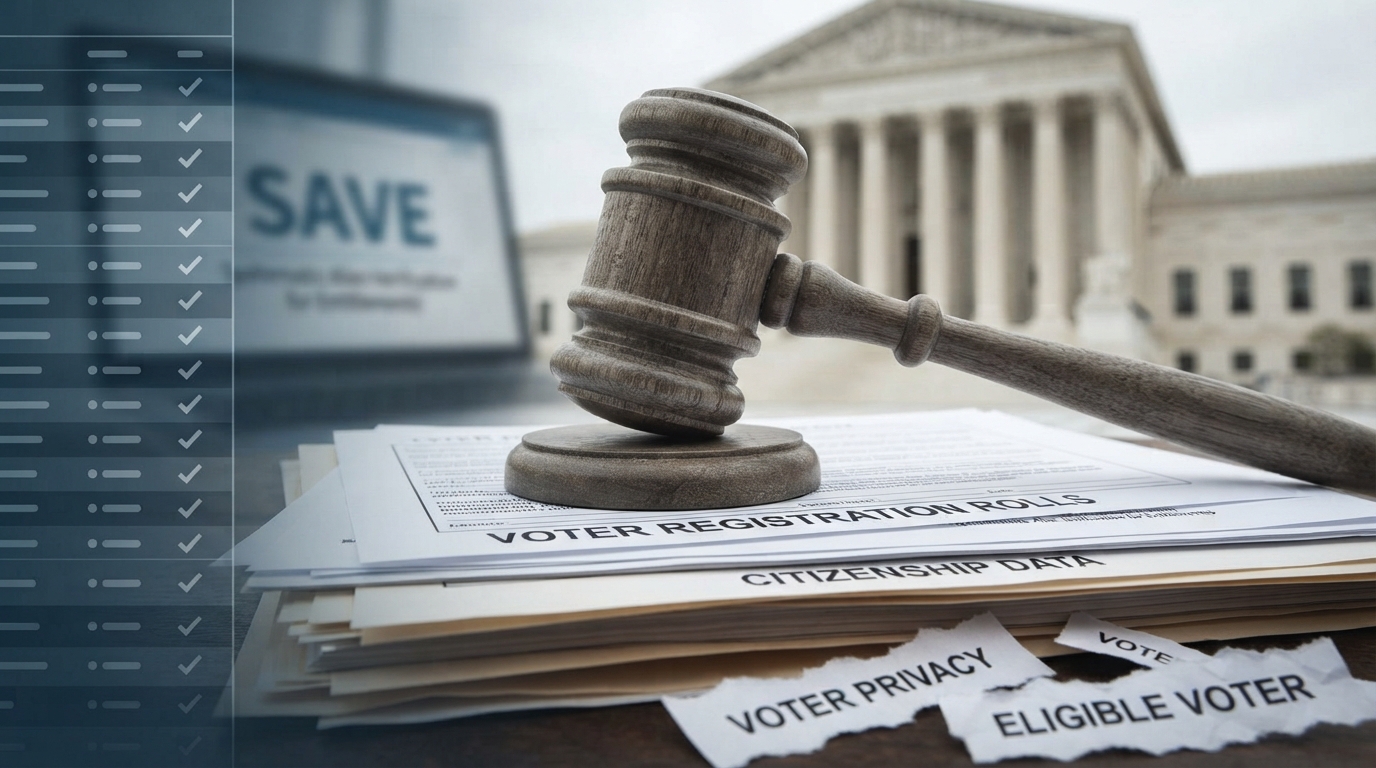
Supreme Court restores controversial US data system for citizenship checks
The US Supreme Court has removed limits on the Trump administration’s use of a disputed federal voter database that relies on citizenship information and other sensitive data to screen for alleged non-citizen voting.
Opponents say the decision could result in eligible voters being taken off the electoral rolls.
The ruling is a win for the Trump administration as it pushes to crack down on claims of non-citizen voting.
The court’s three liberal justices dissented, while the other six conservative justices backed the decision. In June, a federal judge found the system unlawful and said it violated Americans’ privacy rights.
The Department of Homeland Security programme, called Systematic Alien Verification for Entitlements, or SAVE, lets officials check whether voters on the rolls are eligible.
The database was originally created in 1986 to help officials confirm the citizenship or immigration status of people applying for public benefits. But last year, the Trump administration broadened its search functions by permitting bulk searches with social security numbers.
In June, however, US District Judge Sparkle L Soonnan - a Biden-appointee - ruled that the updated system showed the federal government "knowingly trampled on the privacy rights" of US citizens "in a manner that threatens the sacred right to vote."
A federal appeals court let that ruling remain in place, before the Supreme Court overturned it on Friday.