

Sun-tanned cauliflowers and knobbly spuds - the heatwave veg that's good to eat
British shoppers should expect to see more wonky vegetables due to repeated heatwaves.
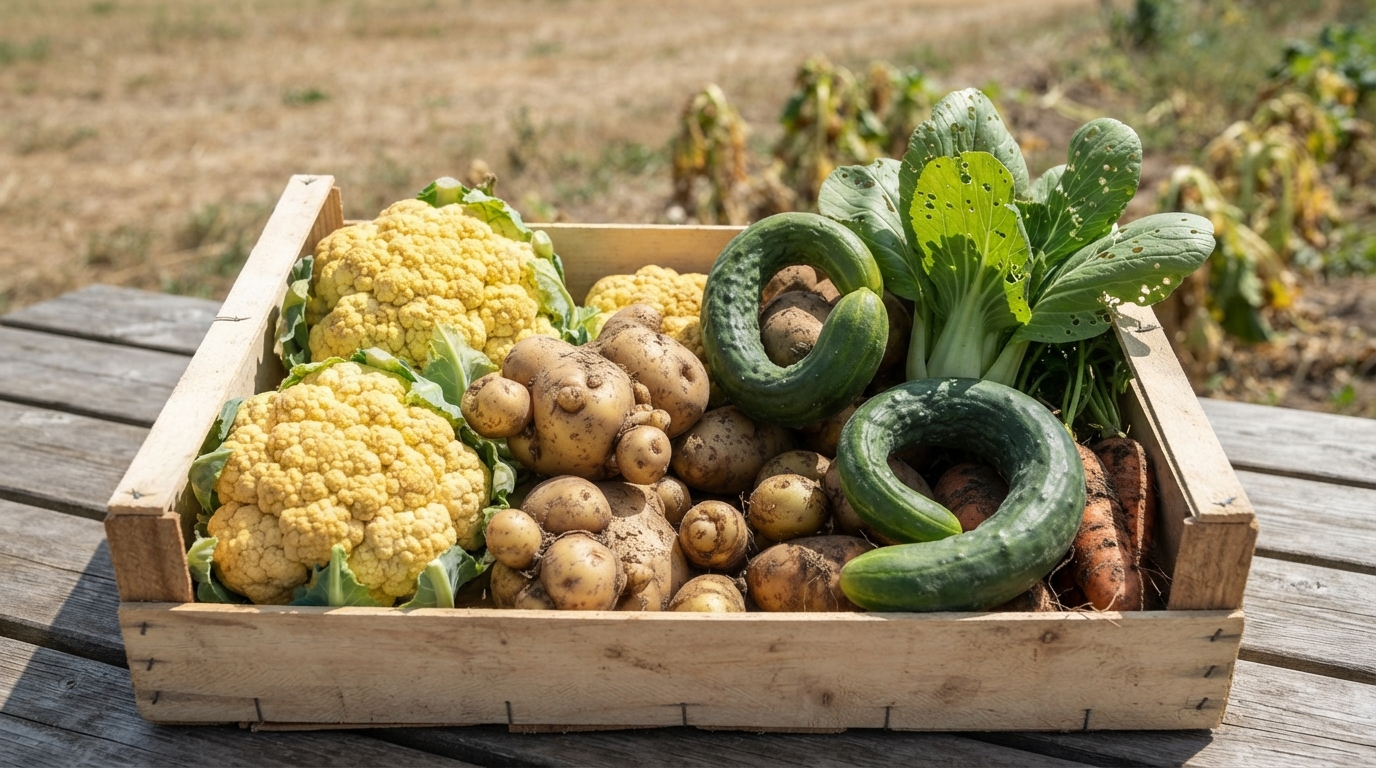
**Sun-Kissed Cauliflowers and Bumpy Potatoes: The Edible Heatwave Harvest**
Would you consider purchasing a cauliflower with a sun-tanned appearance or a cucumber that has curled in on itself?
Farmers across the United Kingdom are contending with one of the most arid and sweltering growing seasons in decades. Consecutive heatwaves, following an unseasonably warm spring, have led to projections of the most meager harvest since record-keeping began. The intense heat is not only impacting the volume of produce cultivated but also its aesthetic.
Typically, retailers reject fruits and vegetables that do not adhere to stringent standards regarding size, shape, and color. However, with supply chains under strain, many are now anticipated to relax these regulations to avert empty shelves. This implies that consumers may soon encounter smaller, more irregularly shaped, or unusually colored vegetables in stores. Both sellers and growers affirm that this produce remains perfectly suitable for consumption.
This year's extreme heat is causing cauliflower heads to turn yellow instead of their usual white. Cauliflower is particularly susceptible to hot weather due to its high water requirements. Its heads are usually shielded from sunlight by their leaves, but this year, increased light exposure is causing them to yellow.
Emilie Vanpoperingh, co-founder of Oddbox, a subscription service that distributes surplus produce rejected by supermarkets, stated that this is "purely a cosmetic defect" and the taste of the plants is unaffected. She reported that Oddbox acquired 6,000 cauliflower heads last week that were deemed too dark for supermarket sale.
Growers are reporting depleted water reserves, according to Vanpoperingh, which will result in slower growth for brassicas like cauliflower and broccoli, leading to reduced supplies. This scarcity means retailers may soon begin stocking "sun-tanned" cauliflower because "their biggest nightmare is empty shelves," she explained. "They want to make sure that they've got availability of produce all the time."
Extreme heat is also causing cucumbers to curl back on themselves. Growers are observing misshapen cucumbers, with some bending into spirals. This phenomenon occurs because the plants are cultivated in greenhouses that overheat in high outdoor temperatures, causing the plants to experience stress, Vanpoperingh noted. "Even if they get the irrigation then it's just extreme heat, which means the plant is not able to grow anymore."
Pests that thrive in hot conditions are creating holes in the leaves of John Harper's pak choi. John Harper, a farmer in Worcestershire who supplies pak choi to Sainsbury's, Aldi, and Co-op, has discarded more produce than usual this year due to tiny holes made by pests. Flea beetles flourish in hot, dry environments, and farmers are now restricted in their use of pesticides, making net covers Harper's sole defense. Supermarkets' strict cosmetic rules mean "one tiny little hole can render the plant useless," he said, though some have temporarily eased these rules. "We've been working with them through this hot period and in general they sort of get it," he added. Harper confirmed that the vast majority of affected pak choi is still edible, even if "it seems to be quite tasty" for the beetles as well.
Hot weather can cause potatoes to develop into several distinct sections. Lucy Munns, a potato farmer in Cambridgeshire, stated that the hot weather will hinder the root vegetable's growth, resulting in oddly shaped tubers that supermarkets and chip shops, her usual clients, would typically reject. When the weather cools after a hot spell, instead of the main potato tuber growing, "it tends to grow a little knobble on the end." "Trying to find people that will accept potatoes like that is very difficult. So that ultimately means a lot of wastage for us," Munns added. "It's criminal, to be honest, to be chucking that much food away." These "knobbly and misshapen potatoes" are, however, perfectly fine to eat, she assured. "The only difficulty is peeling them, but just cut the knobbly bit off and peel it separately."
Many supermarkets have introduced their own 'imperfect veg' lines in recent years. Supermarkets including Sainsbury's, Tesco, Morrisons, and Waitrose already feature dedicated lines for wonky vegetables. Calum Kelly, Waitrose's produce technical manager, stated that in challenging weather conditions, "we relax size and shape guidelines for key veg to avoid waste and provide more income to our growers and farmers." "Baking potatoes might be a little smaller than usual this harvest if the drought continues. All these veg still taste great, but like many of us in a heatwave, they might just look a little less than perfect."
However, not every shortfall can be addressed in this manner. Andrew Opie, the director of food and sustainability at the British Retail Consortium, noted that supermarkets are also importing more food from abroad as UK supplies dwindle. "Retailers face the dilemma of supporting British farmers, but also making sure that we, as customers, have what we expect to buy when we go in the shop," he said. "It's going to be a challenging period right through into the autumn. We're hearing potentially it could affect things like cherries as well."
Supermarkets are being compelled to import more produce from abroad due to the heat. British summers are becoming hotter and drier as the climate changes, and heatwaves like the current one are becoming more frequent. This suggests that a season like this one may become less of an anomaly and more of a preview of what British farming will regularly face. Many farmers will either have to accept increased waste, invest in improved irrigation and water storage systems, or find ways to sell more imperfect produce to consumers.
Munns, the potato farmer, encouraged more people to consider buying imperfect vegetables if they encounter them in supermarket aisles this year. People should "be a bit less picky" about fresh produce, she advised. "We've been too spoilt in the UK … In other less fortunate countries we wouldn't have a choice."
**Related Stories:**
* Winemakers prosper but veg farms wilt in the drought
* Could heatwaves make your food shop more expensive?
* From Stonehenge to the Serpentine - satellite images show impact of hot, dry summer