

Students imagine artificial intelligence as a "thinking" machine
Students view artificial intelligence primarily as a technological tool created to complete tasks quickly and efficiently. At the same time, however, they also attribute human characteristics to it, such as thinking, creativity, and being "smart." A study conducted by psychologists at Tyumen State University showed that such contradictions exist in young people's perceptions of artificial intelligence.
Students imagine artificial intelligence as a "thinking" machine
The study involved 556 students. To study their views on artificial intelligence, scientists used the free association method. Participants were asked to name the first words and images that came to mind when artificial intelligence was mentioned.
The responses were then analyzed to determine which concepts were repeated most frequently and their place in terms of importance. This method made it possible to highlight the concepts that held the strongest place in the students' perception.
According to the results, the concepts most associated with artificial intelligence were intelligence, technology, help, speed, and the future. Students mainly perceived it as a technical system that eases human workload and serves to perform tasks efficiently.
At the same time, the participants also emphasized that artificial intelligence is artificially created and lacks human qualities. According to their view, artificial intelligence is not a "living mind," but rather a tool serving specific purposes.
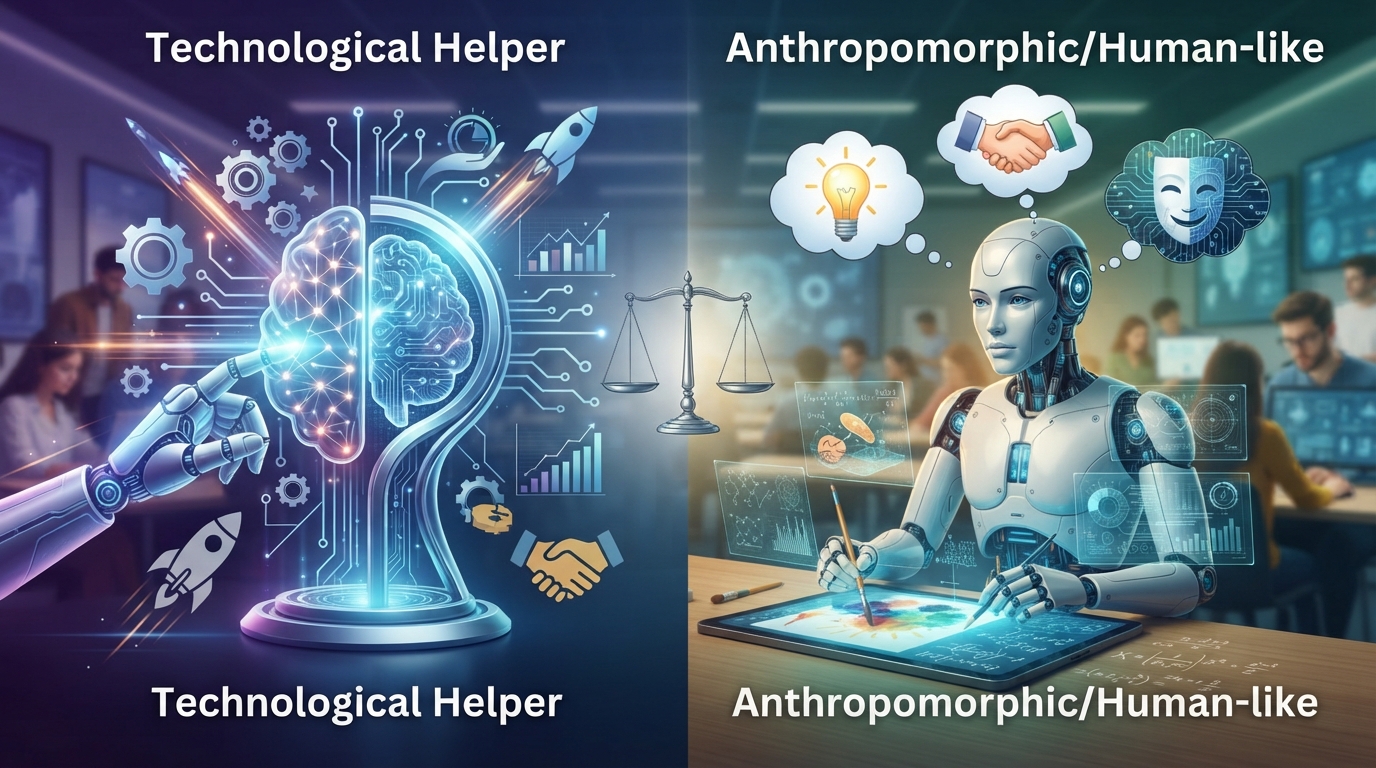
However, researchers found that two different approaches coexist side by side in the students' perceptions. On the one hand, artificial intelligence is seen as a technological assistant capable of significantly increasing productivity—a powerful work mechanism. In this approach, its practical utility and the degree to which it efficiently performs tasks come to the fore.
On the other hand, students tend to attribute human qualities to artificial intelligence. For example, they described it as a system that can think, create, and be "smart" or, conversely, "foolish." In psychology, this phenomenon is called anthropomorphism, which is attributing human traits to non-human entities.
Despite the generally positive attitude toward artificial intelligence, there are also concerns among students. While they recognize the future possibilities of the technology, questions regarding its reliability and safety remain open.
"Although the students' overall attitude is positive, they also have serious concerns. Despite recognizing the future potential of artificial intelligence, many express doubt about its reliability and safety," said Inna Vasilyeva, a professor at the School of Education at Tyumen State University.
She emphasized that these issues require special attention.