

Sri Lankan court to deliver verdict on deadly Easter bombings
Co-ordinated suicide attacks killed 270 people across several churches and hotels in Colombo in 2019.
Sri Lankan court to hand down ruling in deadly Easter bombings case
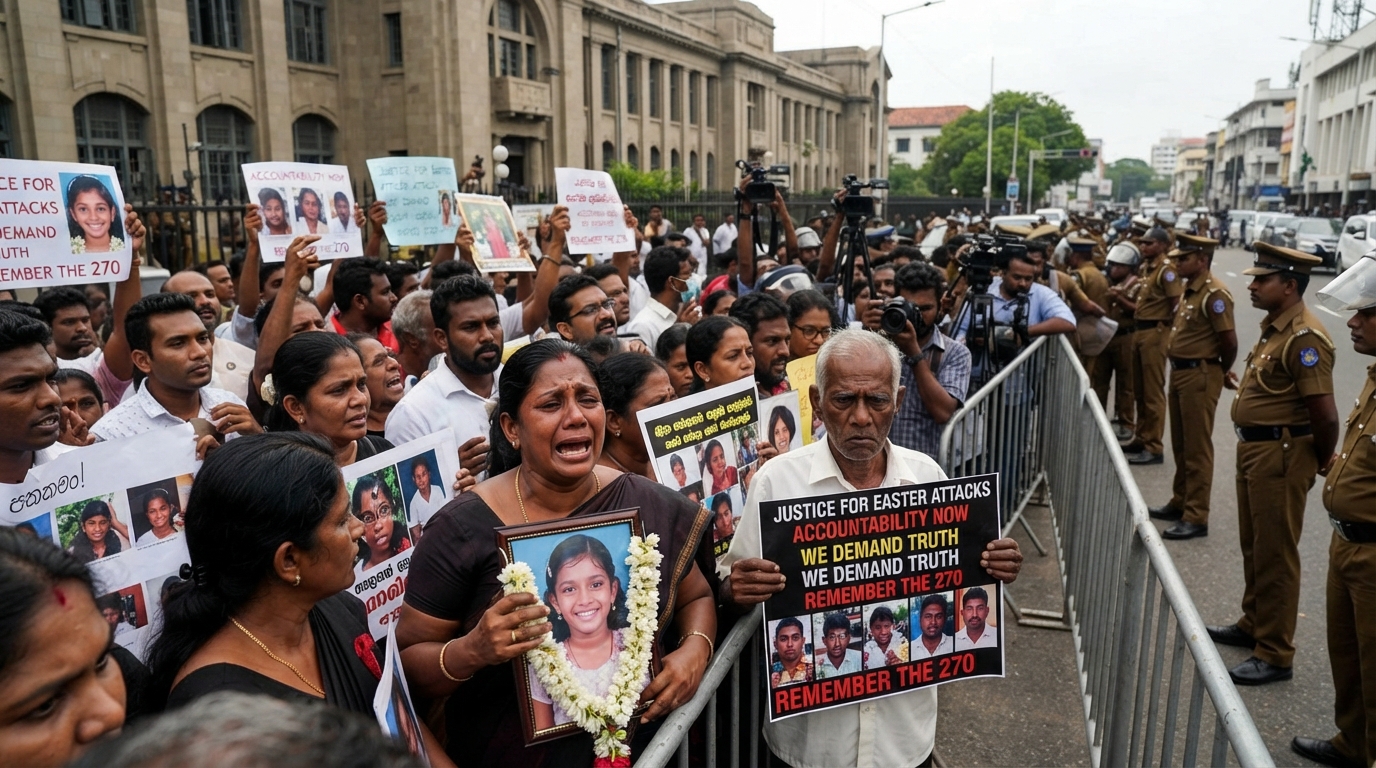
For years, the victims’ families have staged regular protests calling for accountability after the attacks.
A Sri Lankan court is due to issue its verdict on Naufer Moulavi, who is accused of masterminding the Easter bombings that killed 270 people and injured more than 500 in 2019.
Twenty-three other people will also learn their fate over their roles in planning and carrying out the coordinated suicide attacks.
The strikes on multiple sites, including several churches holding Easter mass and three luxury hotels, were the deadliest Sri Lanka had experienced since the civil war ended in 2009.
The associates and relatives of nine suicide bombers are among those facing more than 23,000 charges, including murder, conspiracy to commit terrorism and possession of firearms.
Prosecutors identified Moulavi as the chief organiser of the attacks and presented what they said was a voluntary confession to the court, in which he admitted his involvement.
The court accepted the confession. But Moulavi later told the three-judge panel hearing the case that he had not been shown what he was signing and denied the accusations against him.
More than 2,300 people testified for the prosecution.
There were also 2,076 items of evidence, including explosives, swords and firearms.
After the attacks, Sri Lankan authorities cited a "major intelligence lapse". Parliament heard that a warning from India about the attacks was not properly passed on to the authorities.
In 2023, the Supreme Court ordered former president Maithripala Sirisena to pay millions in compensation to the victims of the bombings after ruling that he was responsible for national security failures that led to the attacks.
Last month, two former senior officials were sentenced to death for criminal negligence that led to the bombings. In Sri Lanka, death sentences are usually reduced to life imprisonment because of a decades-old moratorium on executions.
For years, Sri Lankans have held regular demonstrations demanding justice for the victims of the Easter attacks.
Tuesday’s verdict comes while a separate investigation into former intelligence chief Suresh Sallay is under way. Sallay is accused of orchestrating the bombings with Islamist extremists.
The claims mirror those made in a 2023 documentary by British broadcaster Channel 4, which included whistleblower testimony alleging the attacks were allowed to happen to boost the popularity of the Rajapaksa family, which long dominated Sri Lankan politics.
Sallay, who was arrested in February, denies the allegations. Former president Gotabaya Rajapaksa, who was elected months after the 2019 attacks on a campaign against Islamist extremism, has also denied the allegations.
Rajapaksa, who has been barred from leaving the country, has asked the court to stop any possible arrest in connection with the ongoing investigations.