

South American piranhas have appeared in a Malaysian river
In the Klau River in Malaysia's Pahang state, a second piranha has been caught within the last 30 days. Experts say the fish may belong to the red-bellied piranha species. This fish, native to South America, is considered an invasive species for Malaysia and could pose a threat to the local ecosystem.
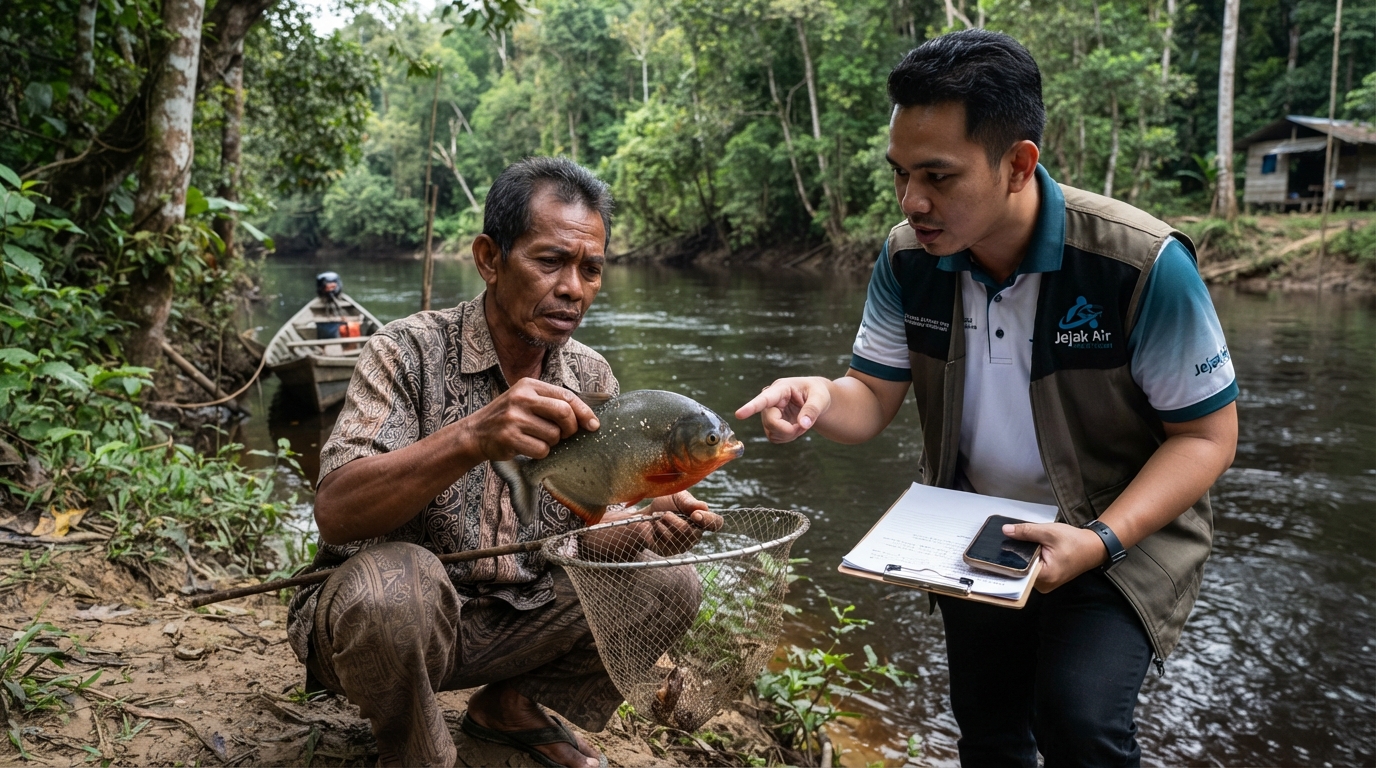
South American piranhas have appeared in a Malaysian river
Another piranha has been caught in the Klau River in the Raub district of Malaysia's Pahang state. This was reported by the environmental organization Jejak Air Tawar.
According to preliminary assessments, the caught fish may belong to the species of the common or red-bellied piranha — Pygocentrus nattereri. The natural habitat of this species is South American rivers. In Malaysian water bodies, piranhas are not a native species and are classified as an invasive organism.
The first piranha was caught in fishermen's nets near the Klau Dam on August 26. Approximately one month later, a second similar fish was caught from the river in the same area.
The Department of Fisheries Malaysia stated that there is currently no information about a stable population of red-bellied piranhas in the country's water bodies. Therefore, the capture of two fish does not confirm that they have multiplied in the river. However, the detection of two specimens within a short period of time has raised serious concerns among experts.
**The first fish could not be studied**
The first fish caught in August was studied only through photographs. Based on external characteristics, experts classified it under the genus Pygocentrus, but it was noted that the exact species of the fish could not be reliably determined solely based on a photograph.
The person who caught the fish said that it had died and was subsequently thrown away. For this reason, experts did not have the opportunity to directly examine the first specimen, record its measurements, or conduct genetic analysis.
In the second case, representatives of Jejak Air Tawar contacted the fisherman and obtained several photos and videos from him. After reviewing the materials, experts came to the preliminary conclusion that the second fish belongs to the same species as the previous one.
**Someone may have released the piranhas into the water**
Ecologists suspect that someone released the piranhas into the water body either intentionally or through negligence. However, whether they were released directly into the river or initially dumped into the Klau reservoir remains unknown.
It is also unclear how many piranhas were released into the water body. Representatives of the Jejak Air Tawar organization noted that such fish are often released in groups rather than individually. Therefore, the possibility of other piranhas being in the river is not ruled out.