

Smartphones have become noticeably more expensive worldwide — study
**Smartphones have become noticeably more expensive worldwide — study**
Average retail prices for smartphones on the global market have increased by approximately 15% since the beginning of 2026. More than 40% of models have become more expensive, and new devices cost on average a quarter more than their counterparts from last year.
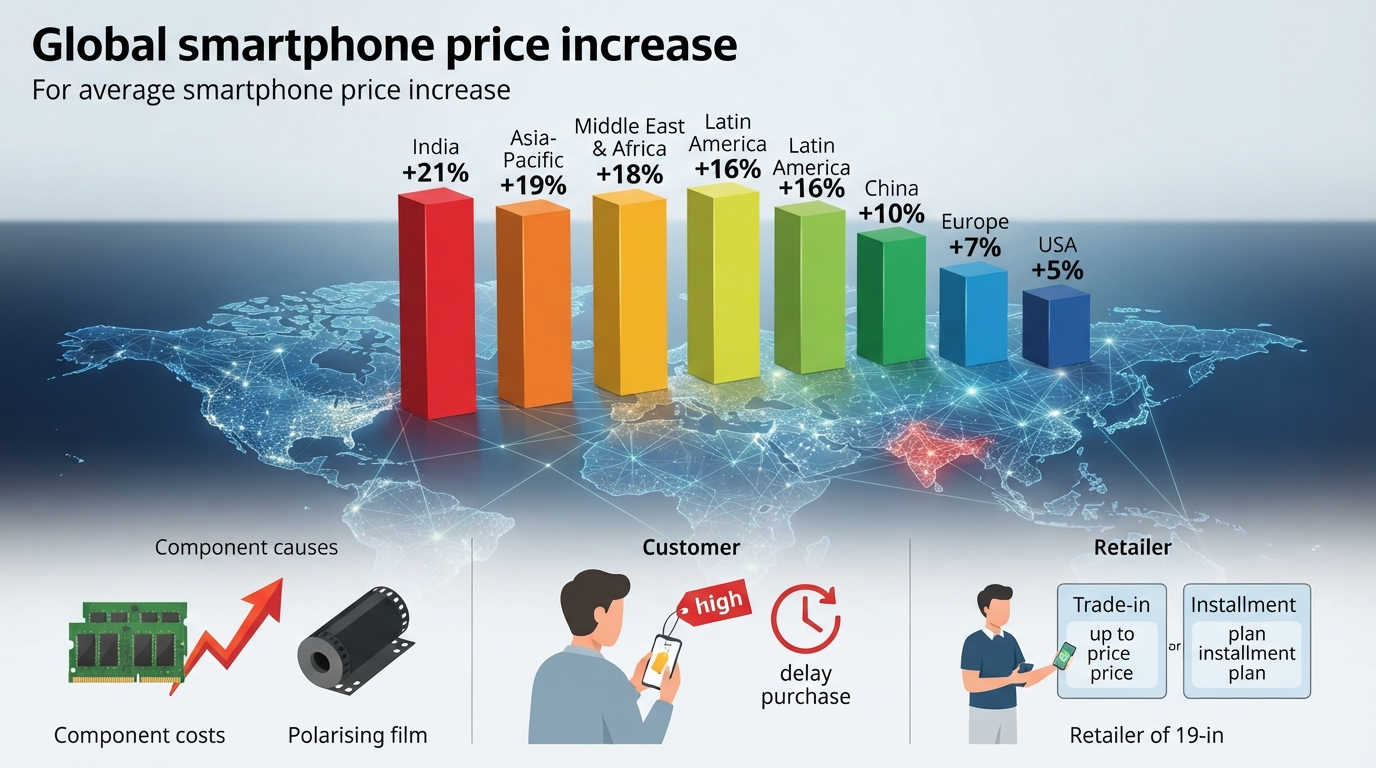
According to a study by Counterpoint, the most noticeable price increases occurred in markets where buyers are particularly sensitive to the cost of devices. In India, smartphones became more expensive by an average of 21%, in the Asia-Pacific region — by 19%, in the Middle East and Africa — by 18%, and in Latin America — by 16%.
In markets with a high share of premium devices, the growth was more moderate: in China, prices increased by 10%, in Europe — by 7%, and in the US — by 5%. In these regions, the bulk of the price increase fell on new models, while the prices of already available devices changed less.
One of the key reasons for the rising cost of smartphones was the increase in the price of memory and other components. Manufacturers are trying to hold prices down by changing device specifications — in particular, by reducing the amount of built-in memory, cutting the number of cameras, and, in certain segments, releasing more models with 4G support again.
Against the backdrop of rising prices, buyers are delaying smartphone upgrades, choosing versions with less memory, and turning to the used device market more often. Operators and retailers are partially offsetting the price increases through installment plans, trade-in programs, and other offers.
According to Counterpoint Research, new smartphones will continue to become more expensive in the coming quarters. The memory shortage and high component prices are expected to continue to put pressure on manufacturers and their margins.
, that Chinese manufacturers of polarizing films, who control more than 70% of the global market, may raise prices by 10% due to rising raw material costs and logistical expenses. The shortage of these components is expected to persist until at least 2027.