

Short stories: The street, the bride and groom caught in the rain
The wedding took place in the groom's courtyard, under the open sky. The weather was clear, but with a somewhat melancholy breeze uncharacteristic of summer
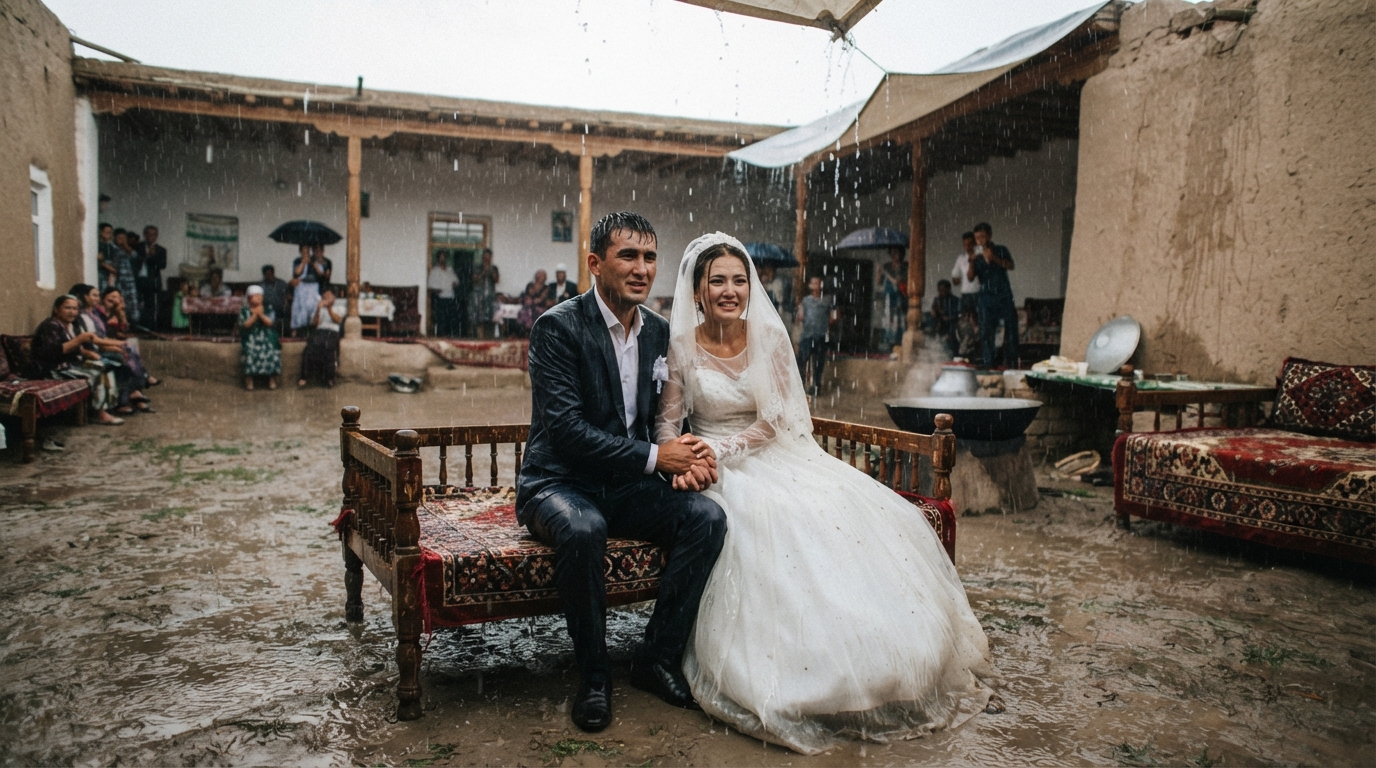
Short stories: The street, the newlyweds in the rain
They waited for each other for a very long time. Without knowing or recognizing each other, they waited for the moments of happiness to arrive. On both sides, wedding preparations began several times, but the night of union still remained out of reach. Just as the sparks of hope began to fade, the two young people met at a bus stop. A brief acquaintance turned into a firm commitment.
The wedding took place in the groom's courtyard, under the open sky. The weather was clear, but a cool breeze, unusual for summer, was blowing, as if playing with the bride's dress.
Suddenly, the sky thundered, and lightning illuminated the wedding venue blindingly. The rain began to pour in torrents. Everyone rushed to the veranda.
The newlyweds remained in their places; they sat quietly, as if fearing that if they stood up and fled to the veranda, the birds of happiness would fly away, or someone else would occupy the throne of union. Their clothes became soaking wet, and the rain chilled them to the bone. They did not even notice it. The hardships of the long wait were washed away. Their commitment, born at the bus stop, was tested that very day. The rain was forced to retreat. The sun shone brightly in the sky once again.
It seems that growing old begins with remembering childhood memories...
In our village, which has a thousand-year history, circumcision weddings would take place during the cold winter days; a bullock would be slaughtered, pilaf would be brewed in large cauldrons, and a table would be laid out for the community. In the summer, collective voluntary labor (hashar) would reach its peak, and we, the children, along with the adults, would participate in this ceremony.
If parents wanted to build a house for their married son, they would invite relatives, friends, and close ones to the hashar; joining the master builders, they would raise the walls of a two- or three-room house and cover its roof within one or two days. The women's hashar consisted of sending food to the builders; for those with many acquaintances and relatives, the hashar would turn into a lavish feast, and the workers would look at each other meaningfully and say, "Oh-oh, this turned out to be a feast rather than a labor."
Once, my father and I went to a hashar at our relative's house in a neighboring village. The builders were driving pegs into the four corners of the house to be built and starting their work. My father estimated some things to himself, then, with his thick eyebrows slightly furrowed, called our relative over and said, "My nephew, the outer wall of the house has extended into the street, it needs to be moved half a fathom inside." Neither the nephew nor the builders liked this advice. The laying of stones under the wall began anyway.
We returned home without waiting for lunch. I could feel that my father was upset, but I did not know the reason. My father was just saying to himself: "Eh, nephew, nephew, you must not have heard the saying: 'Take the land of a cemetery if you must, take the land of a mosque if you must, but do not touch the right of the street.' Lord, forgive us."
The house was finished before autumn. But... in the spring, a heavy mudflow came and washed away its outer wall.
As the bus jolted while traveling on a bumpy road, two standing people bumped into each other quite hard. The bundle in one person's hand scattered on the floor, and the other's glasses flew off. Both were masters of sour, sarcastic words, and they "treated" each other thoroughly, then moved on to rudeness. The younger one made a great threat. The older one said: "If you are so tough, come on, get off the bus, show your strength."
Before reaching the destination, the bus jolted once or twice more. The crowd thinned out. In the end, it turned out that both fighters were coming to the same household to see their friend who had returned safe and sound from a long journey...