

Senate approves expansion of Central Bank's autonomy
Senators of Uzbekistan have approved a law expanding the independence of the Central Bank. Some of its regulatory acts will be registered under a simplified procedure within 10 working days, and the mandatory coordination of draft projects with the Chamber of Commerce and Industry and the Business Ombudsman will be canceled.
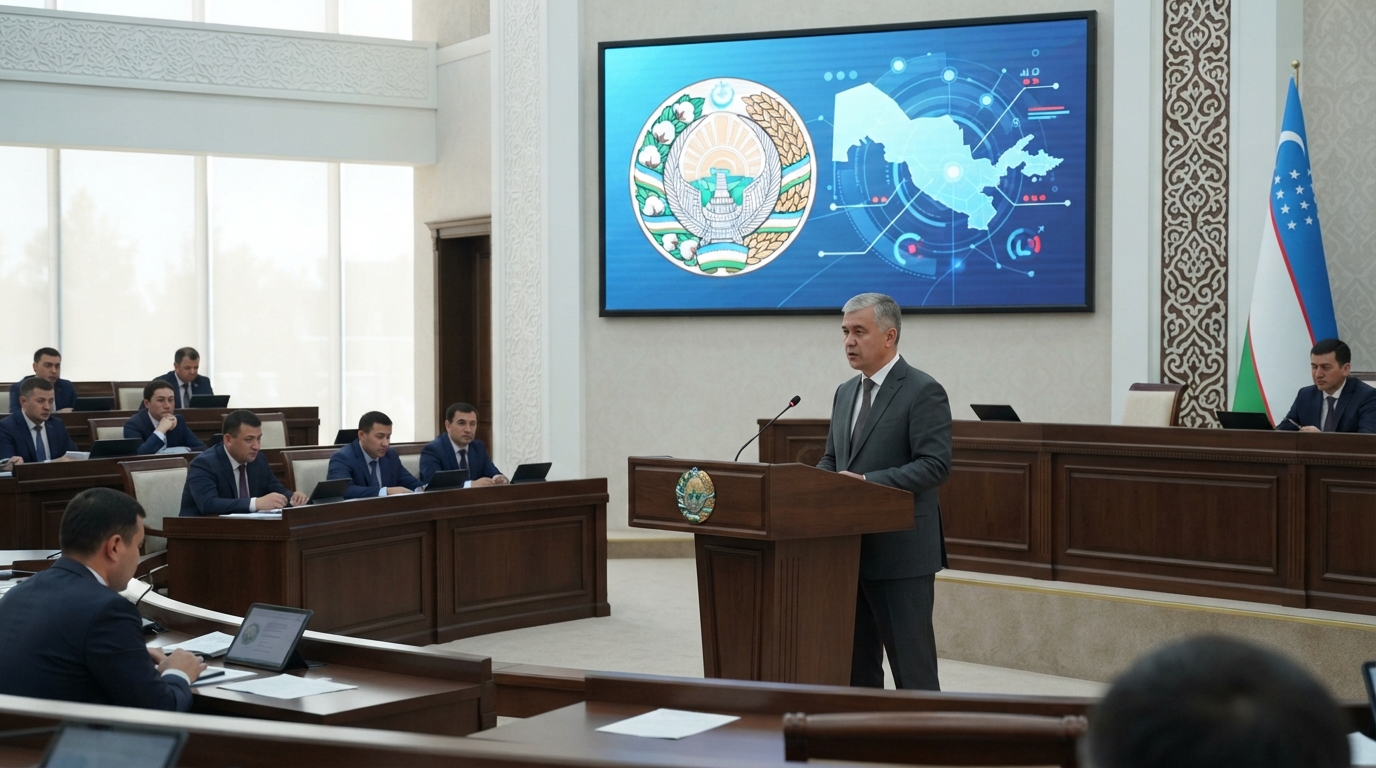
Senate Approves Expansion of Central Bank's Independence
At its meeting on October 2, the Senate of the Oliy Majlis of Uzbekistan supported a law that expands the independence of the Central Bank in adopting regulatory acts and clarifies the procedure for auditing the regulator's activities.
The report on the document was presented by Erkin Gadoev, Chairman of the Senate Committee on Budget and Economic Reforms. He noted that the amendments were prepared to ensure more effective implementation of monetary policy, banking supervision, and regulation of payment systems, as well as for prompt response to emergencies in the financial market.
Changes are being made to the laws "On the Central Bank", "On Guarantees of Freedom of Entrepreneurial Activity", "On the Chamber of Commerce and Industry", and "On Regulatory Acts".
The law "On the Central Bank" establishes that the regulator makes decisions within its powers independently of other state authorities and administration and is accountable to the Senate.
In this regard, the procedure for auditing the Central Bank itself, its regional main departments, and subordinate organizations is also being clarified. Such audits will be conducted based on a Senate decision or in cases directly provided for by legislation.
At the same time, the procedure for state registration of the Central Bank's regulatory acts with the Ministry of Justice is changing. During registration, their compliance only with the Constitution and laws of Uzbekistan will be verified.
For certain regulatory acts, simplified registration is introduced — within 10 working days, subject to a positive opinion from the Central Bank's legal service.
In particular, this concerns documents establishing prudential standards for credit organizations, requirements for corporate governance and internal audit of banks, risk management of banks and banking groups, as well as those regulating the debt burden of the population.
The simplified procedure will also apply to documents in the field of monetary policy, prevention of systemic financial crises and mitigation of their consequences, as well as regulation of payments and payment systems.
The law also abolishes the mandatory coordination of draft regulatory acts of the Central Bank with the Chamber of Commerce and Industry.
During the discussion in the Senate, the abandonment of mandatory coordination of such drafts with the Business Ombudsman was also mentioned.
One of the senators asked the Central Bank representative whether this would weaken the protection of entrepreneurs' interests.
Sanjar Nosirov.
Deputy Chairman of the Central Bank Sanjar Nosirov stated that banks and financial organizations are themselves business entities, but at the same time play a special role in redistributing financial resources between the state, the population, and business, so their regulation requires a special approach.
"The abolition of this coordination will not lead to interference in entrepreneurial activity and will not have a negative impact on the protection of entrepreneurs' interests," he said.
According to Nosirov, the Central Bank's independence in making such decisions is already provided for by legislation, and the new norms are intended to further consolidate this principle and eliminate legal uncertainty.
The law also provides for an exception for part of the Central Bank's regulatory acts from the general rule of a three-month delay.
Currently, legislative acts that complicate the conduct of business, introduce new obligations for entrepreneurs, or new liability measures must enter into force no earlier than three months after official publication.
For regulatory acts of the Central Bank that will undergo state registration under the simplified procedure, this requirement will not apply.
Thus, individual decisions of the regulator in the field of banking supervision, financial stability, the debt burden of the population, and payment systems can be introduced without the mandatory three-month delay.
The law was prepared taking into account the recommendations of the International Monetary Fund and the World Bank, received following the Financial Sector Assessment Program (FSAP, "Gazeta" wrote about this in detail).
Answering a senator's question about the significance of these recommendations, Sanjar Nosirov reported that the assessment was conducted in late 2024 – 2025 and became the first such comprehensive assessment in the history of Uzbekistan.
According to him, international organizations analyzed the effectiveness of the reforms being implemented and their compliance with international norms and recommendations. Based on the results, Uzbekistan received a corresponding report and recommendations.
Nosirov also linked the implementation of these recommendations to the investment attractiveness of the banking sector. He emphasized that foreign investors, when assessing the market, pay attention to the FSAP results and the compliance of the financial system with international standards.
"For such investors operating at the international level, the results of the FSAP assessment and how well our system complies with international norms are very important."
According to the Deputy Chairman of the Central Bank, regulating audits of the Central Bank's activities and simplifying the procedure for adopting its regulatory acts directly stem from the FSAP recommendations and should increase the effectiveness of banking supervision.