

Scientists have refuted the notion that "All roads lead to Rome"
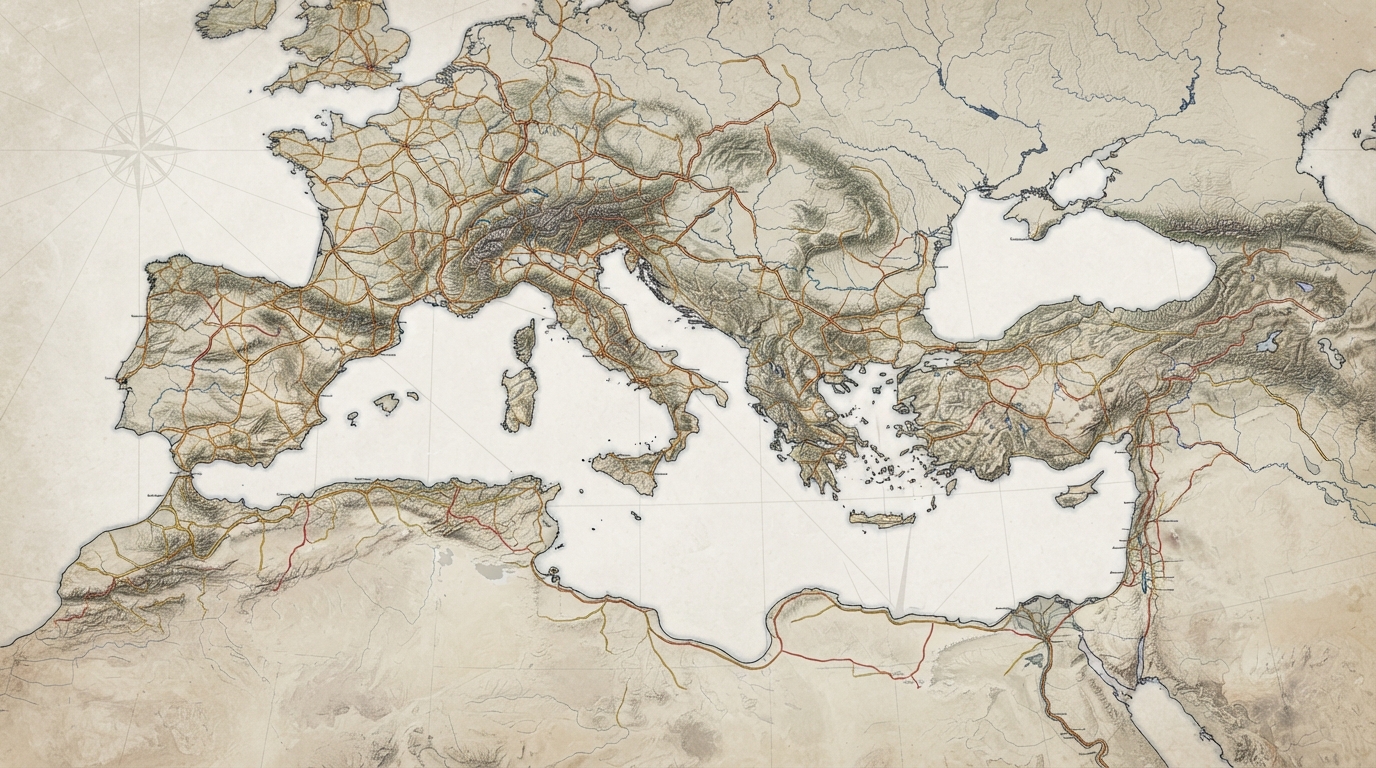
Scientists analyzed nearly 300,000 kilometers of ancient roads within the territory of the Roman Empire, casting doubt on a number of popular beliefs about them. According to the study, Roman roads were not always straight, and the city of Rome was not considered the center of the entire empire's land transport network.
Scientists have refuted the notion that "All roads lead to Rome"
The total length of the digitized land roads amounted to nearly 300,000 kilometers. The new model allowed scientists to analyze on a large scale how the road network of the Roman Empire was actually formed.
The results of the study were published in the scientific journal Nature Communications.
**Roman roads were not always straight**
The study showed that the widespread perception that Roman engineers strived to build roads as straight as possible does not entirely correspond to reality either.
According to the scientists' conclusion, ancient Roman engineers did not attempt to build roads in a straight line under all circumstances. On the contrary, they adapted the route to the local terrain.
Where a straight route could be used, the Romans chose such roads. However, when viewed on the scale of the entire empire, ancient Roman roads were much more winding compared to modern major highways.
The location of mountains, valleys, rivers, and settlements had a major influence on where the roads passed.
Roman engineers used methods such as building terraces, cutting through rock to open paths, and constructing retaining walls and bridges to pass through difficult terrains.
The researchers found that in many cases, engineers chose a shorter but winding route instead of a straighter but longer road.
This situation is particularly evident in Southern Europe and around the Mediterranean. Because the terrain in these regions was more complex, there was less opportunity to build roads in a straight line.
**Not all roads actually led to Rome**
The study also provided a different perspective on the historical notion behind the famous phrase "All roads lead to Rome."