

Scientists have found that chess is good for mental health
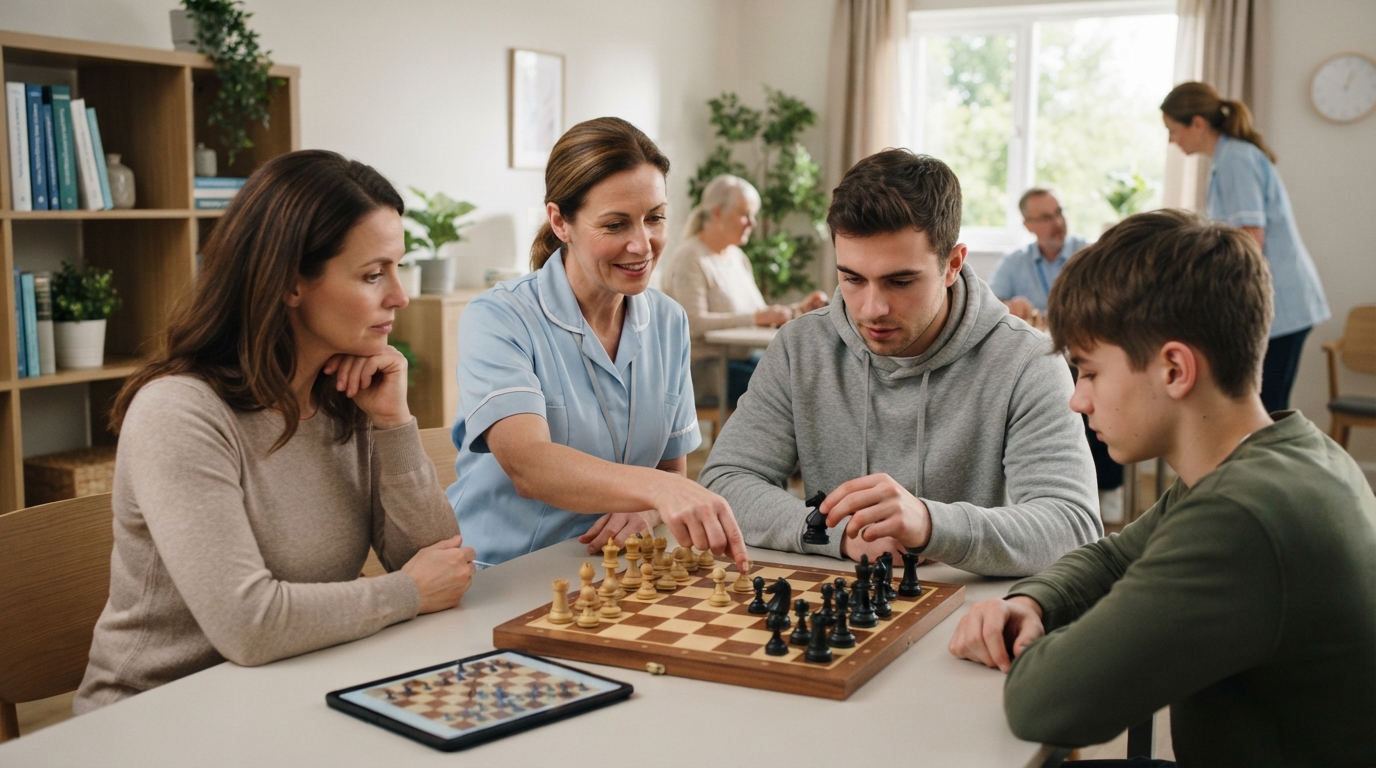
Scientists have discovered the positive effects of chess on mental health.
Researchers from the German Central Institute for Mental Health have found that solving chess problems can improve brain function and significantly improve the quality of life of patients with mental illnesses. Patients do not need to know the rules of chess to use this method.
**Restores attention in alcohol rehabilitation**
The first study, published in the journal Neuropsychological Rehabilitation, involved patients undergoing alcohol rehabilitation. In addition to standard treatment in the hospital, they regularly practiced chess positions under the supervision of specialists. As a result, the group that performed additional exercises recorded significantly higher indicators of attention stability than patients undergoing a standard treatment course. Participants also noted an improvement in quality of life, and group exercises encouraged communication between patients.
**Stabilizes the memory and mental state of adolescents**
The second experiment, published in the journal "Clinical Child Psychology and Psychiatry", involved adolescents aged 13 to 17 years old who were being treated in a psychiatric hospital. After a six-week course of chess training, the adolescents' working memory improved significantly compared to other patients. Their psychological state stabilized and their personal assessment of the quality of life increased.
**What is the essence of the new method?**
The main essence of this treatment method is not to play chess against an opponent. It tasks patients with remembering the location of pieces on the chessboard and restoring them in the same position. Such exercises develop cognitive skills of the brain, such as attention stability, working memory, planning and problem solving. Since these functions are most affected during mental illness, the new approach is expected to be in great demand in psychiatric practice.
**A tool for traditional medicine**
The authors of the study say that chess exercises cannot replace traditional treatment methods prescribed by doctors, but rather serve as an additional tool that complements them. The fact that the method was equally effective in two completely different groups of patients - adults with alcohol dependence and adolescents in a psychiatric ward - indicates its usefulness. Scientists believe that larger and more extensive trials are necessary for the method to be widely used in clinical practice in the future.