

Scammers demand ransoms from Instagram users over fake copyright claims
Users say they are losing money or risk having their accounts suspended because Meta struggles to identify scammers.
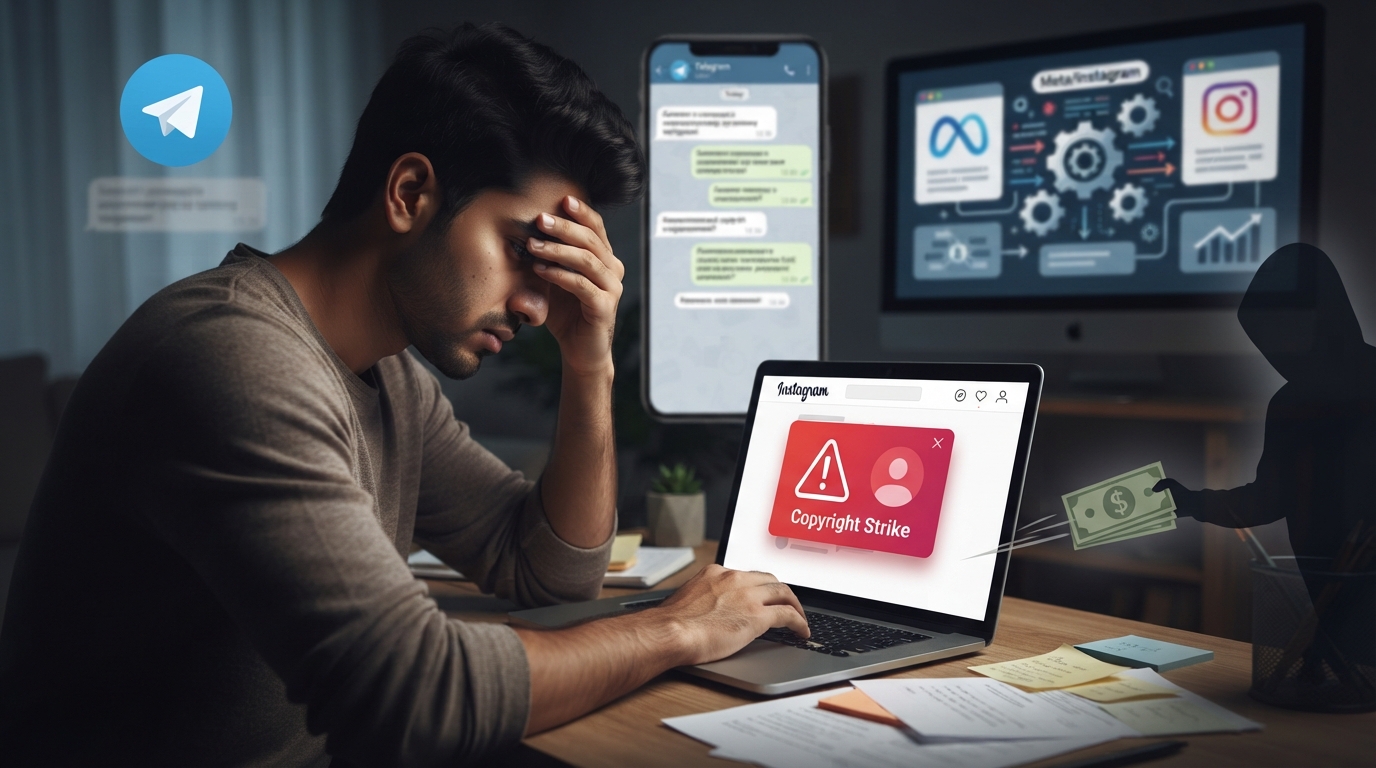
Scammers are demanding ransoms from Instagram users by making fake copyright claims
Instagram creators say they have lost thousands of pounds after their accounts were suspended or removed because of bogus copyright complaints.
Extortionists have submitted false claims to the Meta-owned social media platform, then demanded ransoms to retract them, knowing that repeated complaints can result in account bans.
One Instagram user, who has 1.5 million followers, told the BBC he paid a scammer $50 (£37) to recover his account, saying Meta’s appeals process would take weeks and had previously cost him thousands in lost income.
"We understand this can be frustrating for those impacted, and our systems are designed to protect people from this happening in the first place," a Meta spokesperson said.
"Following our review, we have restored the affected content and added additional protections to safeguard accounts against further attempts of this kind."
However, content creators the BBC has spoken to say Meta is poor at spotting obviously fake cases, and say its appeals process is slow to respond unless you pay a monthly fee.
The Lost in Time History Instagram account shares historical images with its more than 1.5 million followers.
Its creator Olly, who did not give his last name, told the BBC he posts pictures that are in the public domain or ones for which he has permission from the rights holder.
Even so, he has received dozens of "obviously fake" copyright complaints so far in 2026.
Meta does not verify the authenticity of complaints when they are submitted, so if someone is targeted repeatedly, their account can be temporarily removed.
Olly says he is often hit with multiple strikes at once, all from the same email address.
He is then contacted by the person asking to move the conversation to the private messaging app Telegram.
"They'll demand a certain amount of money," he said - usually a few hundred dollars - to withdraw the claim.
The BBC has seen messages from the claimants in which they demand money or threaten more copyright strikes.
Olly eventually agreed to pay an extorter $50 in cryptocurrency to restore his account, which had been temporarily taken down by Instagram.
Law enforcement organisations advise extortion victims not to pay ransoms because it supports the criminal ecosystem.
Olly said he paid as a "last resort" because it was faster than dealing with Meta, which could take weeks.
But he was hit with more copyright strikes immediately after paying.
"That's the worst part," he said.
"Having to pay the person who's actively put you through all of that anguish only for it to happen straight away again."
Because of how many times he has been targeted by copyright claims, Olly's account was demonetised, meaning he could no longer earn money from Instagram for high-performing posts.
"There's no investigation into abuse, or system detection [from Meta] that it could be abuse," he said.
Other Instagram users have reported similar experiences.
"Meta was not helpful throughout the entire process, forcing you to pay for support to talk, even as they claim to be here for the creator," said Abin Tom Sebastian, who runs the Morbid Kuriosity account.
Meta charges a £9.99 monthly fee to be Verified on Instagram, which gives users 24/7 access to support through a live chat.
"I lost irrecoverable and crucial, brand contracts that unfortunately moved ahead with another creator, and no reassurance or support from Meta saying this will not happen again," Sebastian said.
Instagram says only copyright holders, or an authorised representative, can report copyright infringement, and it advises affected users to contact rights holders directly.
After the BBC approached Meta with examples from Olly and other account holders, Meta said it had added extra protections to their accounts, which it said would stop similar problems happening in the future.
It said it fought deceptive behaviour intended to scam or defraud people and businesses.
The BBC has spoken to three people who file copyright strikes against Instagram users even though they are not the copyright holders.
All three appear to be based in India, or in nearby countries.
They deny holding accounts to ransom - instead saying they submit legitimate claims on behalf of copyright holders.
But the BBC has seen messages from one of them asking for $900 (£668) to withdraw a strike.
They said this was payment for the service, and confirmed they kept all the money.
Two others denied making any money at all.
One said they are sent accounts to target and investigate the claim.
"If I find that they are using someone else's content, I issue copyright strikes for the benefit of everyone," they said.
The other said they are sent accounts or posts through an account holder or another representative.
Legitimate agencies do exist that are paid to file copyright strikes on behalf of clients.
But Olly - who has dealt with these before when he has accidentally posted copyrighted material - says they are usually straightforward to handle, and "you can easily tell the difference".
"They're established companies with millions of followers, so it's very different," he said.
These kinds of copyright scams are not new, with a version of the crime dating back to the early days of the internet, said Andres Guadamuz, reader in intellectual property law at the University of Sussex and an expert on digital copyright.
In the past, they were emails or letters sent to website owners claiming they owned the copyright to photos used online, and asking for money to avoid legal action.
But the recent rise in this tactic may be because AI has made it easier to do on a larger scale.
"It's a numbers game," Guadamuz told the BBC.
"Pretty much anyone can now deploy [AI] that is going to automate all of this in some way," he said.
It is also harder for platforms with billions of users to police the racket and tell genuine copyright claims from fake ones.
"The system was almost built with the assumption that the person that was making a copyright strike claim was legitimate," he said.