

Sapporo to move some beer production from Canada to US after tariffs
The Japanese brewer plans to shift non-alcoholic beer brewing to the US from Canada as tariffs bite
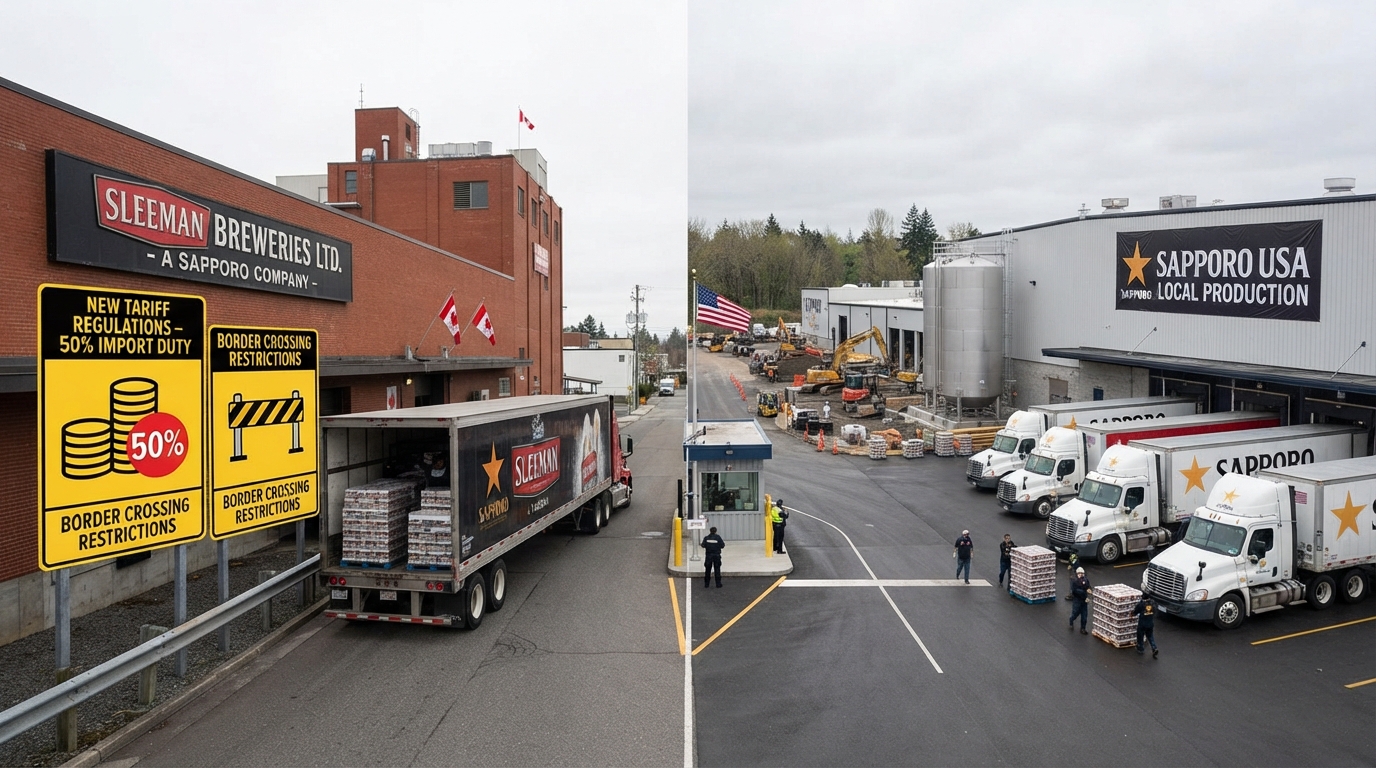
Sapporo to shift some beer production from Canada to US after tariffs
Japanese brewer Sapporo is moving some beer production from Canada to the US after new tariffs on Canadian beer came into force on Tuesday.
The change follows the introduction of a 50% tariff on beer imported from Canada. For companies that ship beer across the border, that means much higher costs.
Chief strategy officer Rieko Shofu called tariffs "something out of our control," telling Bloomberg that the beer giant would "move ahead with local production."
Sapporo did not immediately respond to the BBC's request for comment. The company plans to transfer production of its non-alcoholic beer, which is currently made in Canada for US customers, to the US by the first half of 2027.
The US is one of Sapporo's most important overseas markets, and any move south of the border will directly affect operations at its Canadian subsidiary, Sleeman Breweries.
To offset rising costs, the Japanese brewer is considering expanding production capacity on the US West Coast. Possible options include building or buying a brewery, or working with a third-party manufacturer.
Sapporo has spent years building its presence in the US and says its flagship Sapporo brand is the country's best-selling Asian beer brand.
The company is also investing heavily outside Japan, where a shrinking population has weighed on alcohol sales.
Sapporo plans to invest up to ¥400bn ($2.6bn) by 2030 as it aims to grow overseas and increase profits. About 30% of the capital is set aside for overseas markets.
The brewer is also looking beyond North America. In July, it announced a partnership with Danish brewer Carlsberg to expand in Southeast Asia.
Sapporo's decision to move production comes as companies adjust to a rising number of tariffs around the world.
In July, the US announced new tariffs on dozens of trading partners, including Canada, increasing costs for businesses that depend on cross-border supply chains.
The move shows how some companies are rethinking where they produce goods as trade barriers make it more expensive to serve customers from overseas.