

'Half my business will be gone' - Firms in Canada and US fear trade war
Business owners in both countries are navigating uncertainty and worry as the tit-for-tat import taxes ratchet up.
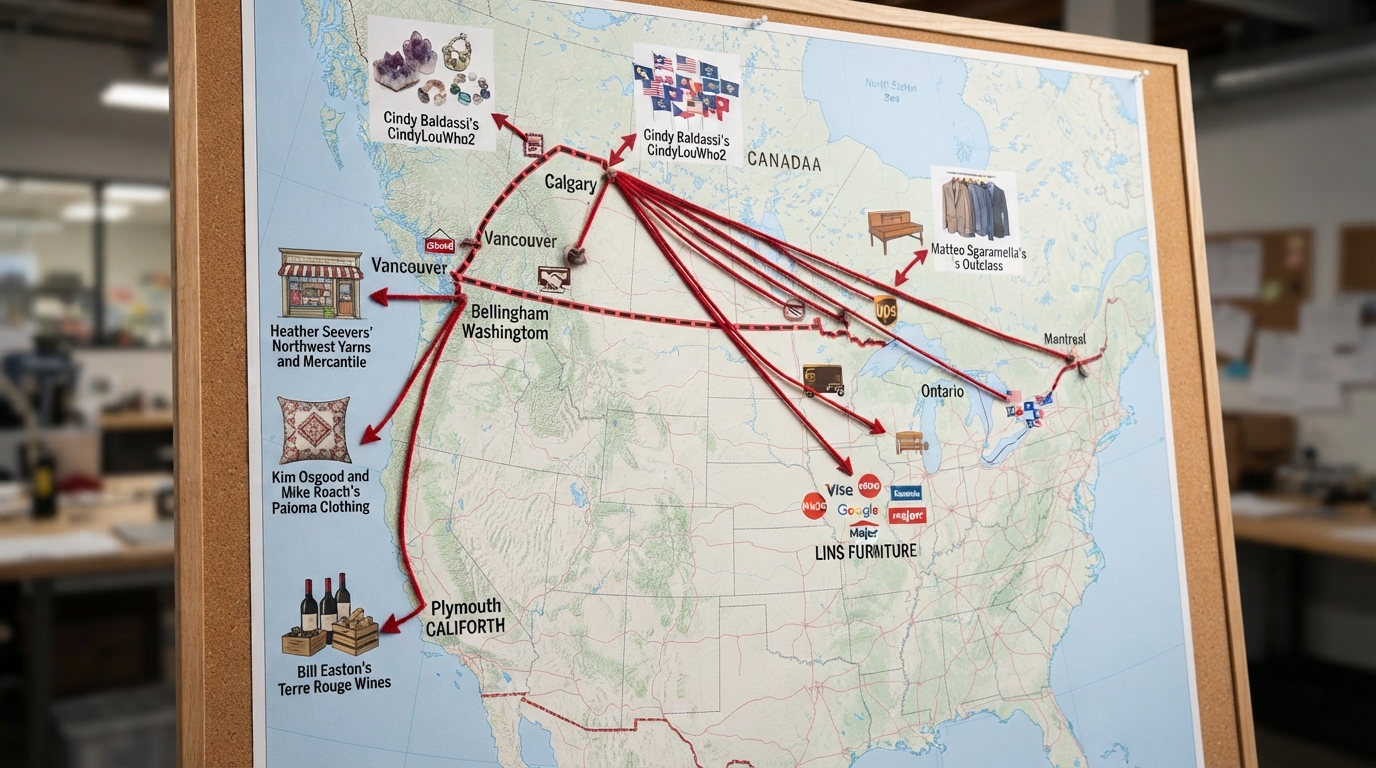
"Half my business will be gone," states Cindy Baldassi, a Calgary, Alberta-based entrepreneur whose stone-and-glass jewelry company, CindyLouWho2, relies on American customers for 75% of its sales. Her products, which include amethyst, sea glass, and agates, are now subject to new 50% tariffs following the collapse of US-Canada trade talks. Baldassi anticipates needing to increase her prices by 50% to remain viable, a move she believes will "wipe out most of my US sales" and eliminate "at least half of my business."
Business owners on both sides of the border are bracing for the economic fallout. Canadian Prime Minister Mark Carney has announced retaliatory levies on US steel, dairy, appliances, and electronics, effective September 8. These measures will mirror the US tariffs that took effect on Saturday, impacting Canadian wine, dairy, cement, clothing, and hockey equipment.
While Canada has grown somewhat accustomed to the intermittent trade disputes, the severity of the current situation remains uncertain. Michael Saifer, general manager of Lind Furniture in Ontario, a company that has sold leather furniture to major retailers like Sears and Costco for nearly 60 years, noted a sales decline when Trump took office in 2025. "As soon as there were tariffs in the air, people put purchases on hold," Saifer told the BBC. His current concern is Canada's ability to prevail in a trade conflict with the US. "Everyone wants to sell to the Americans - they can buy from whoever they want," he said. "I don't know that we're going to win a war with them; we may get killed."
The US tariffs, implemented after talks broke down on Friday, affect approximately $20 billion (£15 billion; C$28 billion) worth of Canadian exports to the US, representing about 5% of Canada's annual shipments to its southern neighbor. These new levies are in addition to existing US tariffs on Canadian steel, aluminum, automobiles, and lumber. Given that 70% of Canada's exports go to the US, the country faces significant exposure if import taxes escalate on both sides.
Navigating this tense environment is proving challenging for some business owners. Matteo Sgaramella, founder of Toronto-based menswear brand Outclass, explained to the BBC that his company collects orders from clothing designers months in advance. Products ordered by US stores in January are due to arrive in September, now with an unexpected tariff. "If I contact them now and tell them, hey, you know, you may get an extra 50% bill from UPS on top of what you need to pay me for this shipment, they're all going to say, 'no way, don't ship it,'" Sgaramella said. He is still determining how to absorb this additional cost. While only 20% of his wholesale sales and 20% of his e-commerce come from the US, Sgaramella fears that "a lot of people that go out of business because of this." He added, "Big business can, you know, always find a way... but small businesses are going to get smashed by this."
The repercussions are not confined to Canada. Prime Minister Carney has pledged that his September tariffs on US products will be "dollar-for-dollar" in response to Trump's measures, with further details to be released soon. In Portland, Oregon, Mike Roach and Kim Osgood, owners of Paloma Clothing, are preparing for a potential significant price increase on one of their best-selling items. Osgood designs pillows that are manufactured by a Montreal-based company and retail for $59. With the new tariffs, a standard markup would push the price to between $86 and $90, Osgood informed the BBC. "Gift items are really price-point sensitive; people have in their mind what they're going to pay for a gift, and they're not going to pay more than that," Roach explained. The couple, whose shop has been in business for 51 years, plans to maintain the original price, hoping the "tariff problem," as Roach calls it, will be resolved. "It would be one thing if we had three months' notice; that would be something you could plan around, do some work with the vendors, but when it happens literally overnight you're really stuck," he said.
While Paloma Clothing faces new challenges, other American businesses are grappling with ongoing issues stemming from Trump's earlier imposition of levies. Bill Easton, owner of Terre Rouge Wines in Plymouth, California, has been unable to ship his wine to Canada for the past year and a half due to a boycott of US alcohol. He currently pays $2,400 monthly to store the wine in a warehouse, hoping to eventually access the Canadian markets he serves. "The wine has just gotten better in the warehouse, but I can't expect my customer in Canada to pay that extra cost that I've assumed over the last year and a half as part of the price, if I was able to sell it tomorrow," Easton told the BBC.
American businesses near the Canadian border are also feeling the impact. Heather Seevers, owner of Northwest Yarns and Mercantile in Bellingham, Washington, has seen a 20% decrease in Canadian customers since the tariff war began over a year ago. Canadian resentment has been further fueled by Trump's suggestions of Canada becoming the 51st US state. Seevers' shop, located 25 minutes from the border, has received emails from Canadian customers stating they could not patronize her business "due to anti-Canadian rhetoric." "We completely understood that," she said. The combined effect of fewer customers and higher prices recently led her shop to launch a fundraising initiative to stay afloat. With the new tariffs implemented over the weekend, Seevers anticipates further difficulties. "It's going to get worse before it gets better," she said. "It's going to take years and years and years to get a relationship back with Canada, and I think these new tariffs are digging us deeper into a hole."