

Russia and NATO: Is there a danger for the Baltic states?
Putin says Russia has no intention of attacking NATO. At the same time, he emphasizes that Russia may respond to the situation regarding the Russian-speaking population in the Baltics on the basis of international law and humanitarian grounds. Meanwhile, countries on NATO's eastern flank are concerned about Russia. Sharp statements between representatives of Poland and Russia are also further escalating the situation.
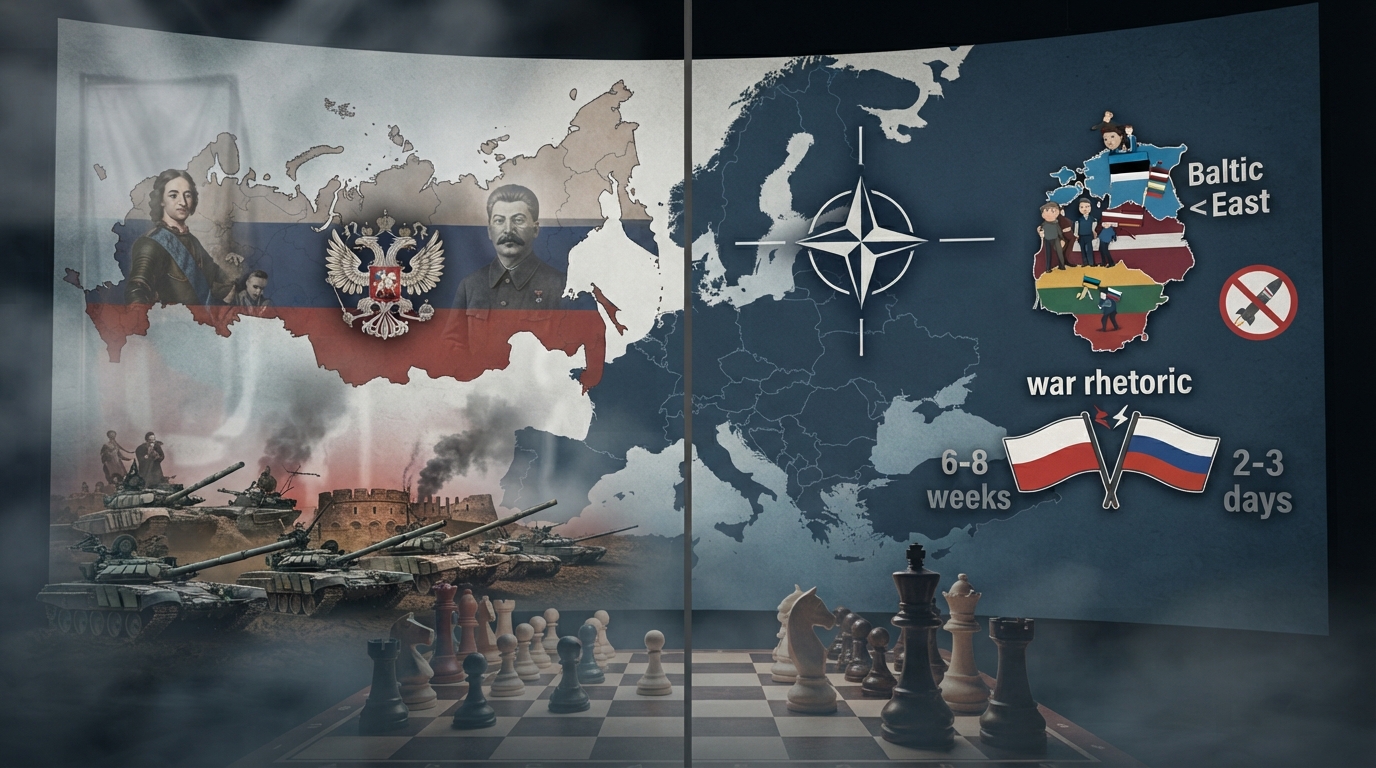
Russia and NATO: Is there a threat to the Baltic states?
Putin says Russia will not attack NATO, but also emphasizes that it is possible to respond within the framework of international law to protect Russian-speakers in the Baltics. What does this mean?
In my opinion, it is difficult to fully agree with this view. Because in the course of the Ukraine war, Russia showed that its military and economic potential is not at the expected level. In addition, just yesterday, Putin himself said that Russia has no intention of going to war with Europe. But the statement regarding the Baltic states has historical reasons. There is an anxiety in these countries that has formed since the time of the Russian Empire. Their territories were annexed to Russia or the Soviet Union during the reigns of Peter I, Catherine II, in the 19th century, and later during the Stalin era. Therefore, their perceptions of a potential threat from Russia are strong.
Even now, the issue of legislation allowing the deployment of nuclear weapons is being discussed in Latvia. But on the other hand, there is also sharp, even bellicose rhetoric in these countries. For example, Sikorski said that if a war with Russia breaks out in Poland, Russia could be defeated within six to eight weeks. He expressed this opinion at a forum in Kyiv. In response, Patrushev also said that if Poland fights Russia, two to three days would be enough for Russia.
Right now, these very ideas about two to three days are being widely discussed in the Western press as well. That is, to a certain extent, political and information games are also going on here. But I am sure of one thing: Russia entering into a direct military conflict with NATO poses a very big risk. NATO has several times, and by some indicators, dozens of times greater capabilities than Russia in terms of economic and military potential. Russia, on the other hand, has a large territory and significant military potential. At the same time, the Russian side poses the question: "If we are so weak, then why are you worried about Russia attacking Europe?"
Russia also openly states that it has no intention of attacking Europe. Therefore, in my view, it is not correct to look at this issue only from the position of one side. On the issue of Ukraine, Russia's main demand was also related to NATO not expanding to the east and Ukraine not joining NATO. At the same time, the position that Ukraine could join the European Union was also put forward.
Firstly, Putin is a politician who cannot be clearly predicted in advance. Secondly, his views, plans, and appetites change depending on the situation. If tomorrow he achieves a certain success in the Ukrainian issue or in another direction, his appetite may increase accordingly. Today, the European Union and the international community do not trust Putin, they cannot trust him. Because for years, Putin has been misleading the international community, using his statements and promises as a tactic. He does not act in the style of political dialogue characteristic of Western politicians. Due to his political experience formed in the KGB system, he often uses statements, promises, and negotiations as tactical tools.