

RTÉ boycotts Eurovision for second year in a row
In a statement, RTÉ said it feels Ireland's participation "cannot be justified given the appalling and ongoing loss of lives in Gaza".
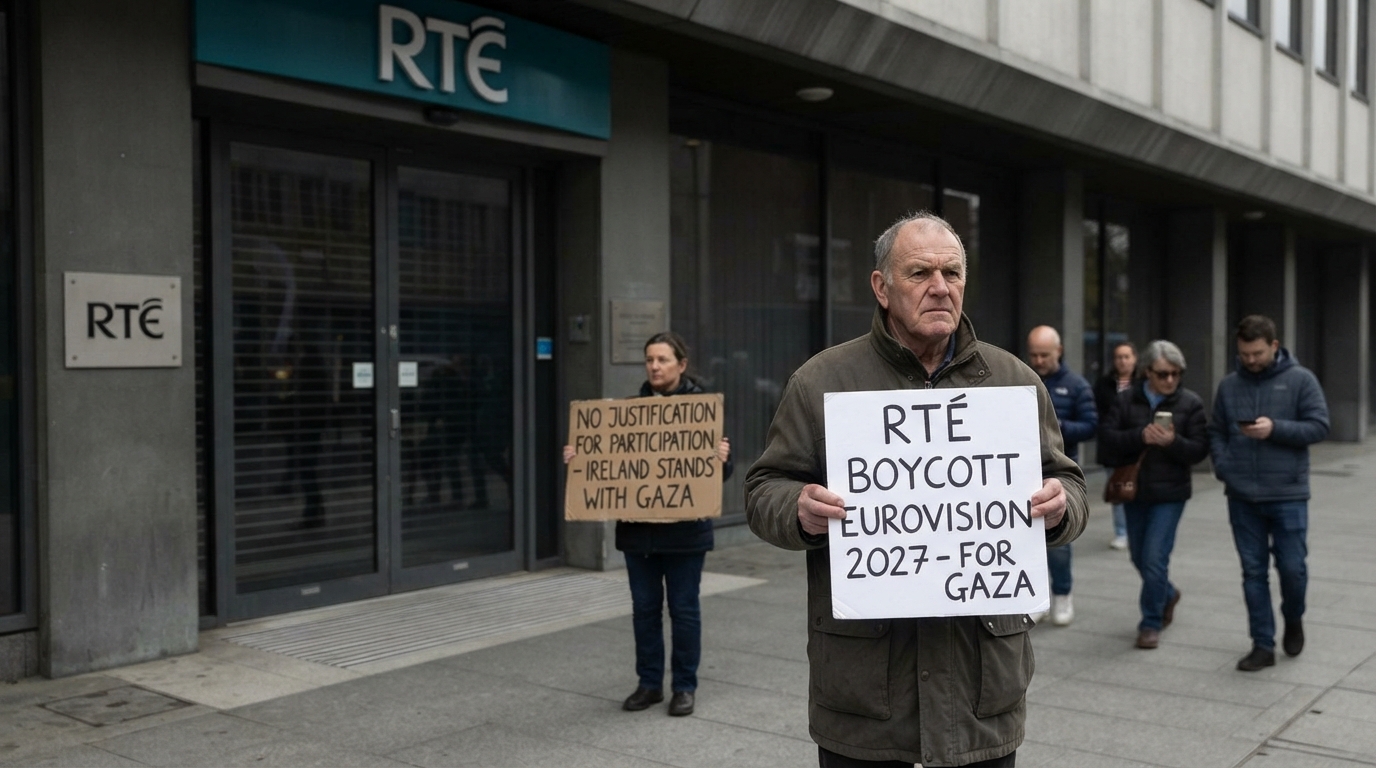
RTÉ will boycott Eurovision for a second consecutive year
In a statement, RTÉ said it believes Ireland’s participation “cannot be justified given the appalling and ongoing loss of lives in Gaza”
Irish broadcaster RTÉ will not air or take part in the 2027 Eurovision Song Contest.
This marks the second year in a row that the broadcaster has stayed out of the competition.
In 2026, RTÉ pulled out of the 2026 contest in Vienna after the European Broadcasting Union confirmed that Israeli public broadcaster KAN would be permitted to compete.
In its statement, RTÉ said: “RTÉ feels that Ireland's participation cannot be justified given the appalling and ongoing loss of lives in Gaza and the humanitarian crisis there which continues to put the lives of so many civilians at risk.”
Last year, Ireland, Spain, the Netherlands and Slovenia boycotted the Eurovision Song Contest after it was decided Israel could compete.
RTÉ also said it remains “deeply concerned by the continued denial of independent access to international journalists to the territory”.
Ireland has won the contest seven times between 1970 and 1996, a joint record it shares with Sweden.
Noam Bettan represented Israel in the 2026 Eurovision Song Contest, finishing in second place
The 2027 contest will be held in Burgas, Bulgaria, with the Grand Final taking place at Arena Burgas on 15 May. The semi-finals are scheduled for 11 and 13 May.
Bulgaria secured hosting rights after DARA won Eurovision 2026 in Vienna with Bangaranga, the country’s first victory in the competition.
Dutch broadcaster AVROTROS has also said it will not take part in Eurovision 2027.
It said the competition can no longer be regarded as neutral while a participating country remains involved in a large-scale military conflict.
Israel rejects genocide allegations. It says its forces carry out self-defence operations in Gaza and the occupied West Bank in line with international law.
The Israeli military began its campaign in Gaza in response to an unprecedented Hamas-led attack on southern Israel on 7 October 2023, in which about 1,200 people were killed and 251 were taken hostage.
During Israel’s military campaign in Gaza, more than 73,780 people have been killed, according to the territory’s Hamas-run health ministry, whose figures are considered reliable by the UN.