

Countries at war officially banned from hosting Eurovision
Eurovision organizers have changed the rules of the international song contest. Now, if an armed conflict or a complex geopolitical situation seriously affects the security of the country or its immediate vicinity, the winning country will not be able to host the next year's contest. The new rules will come into effect in 2027.
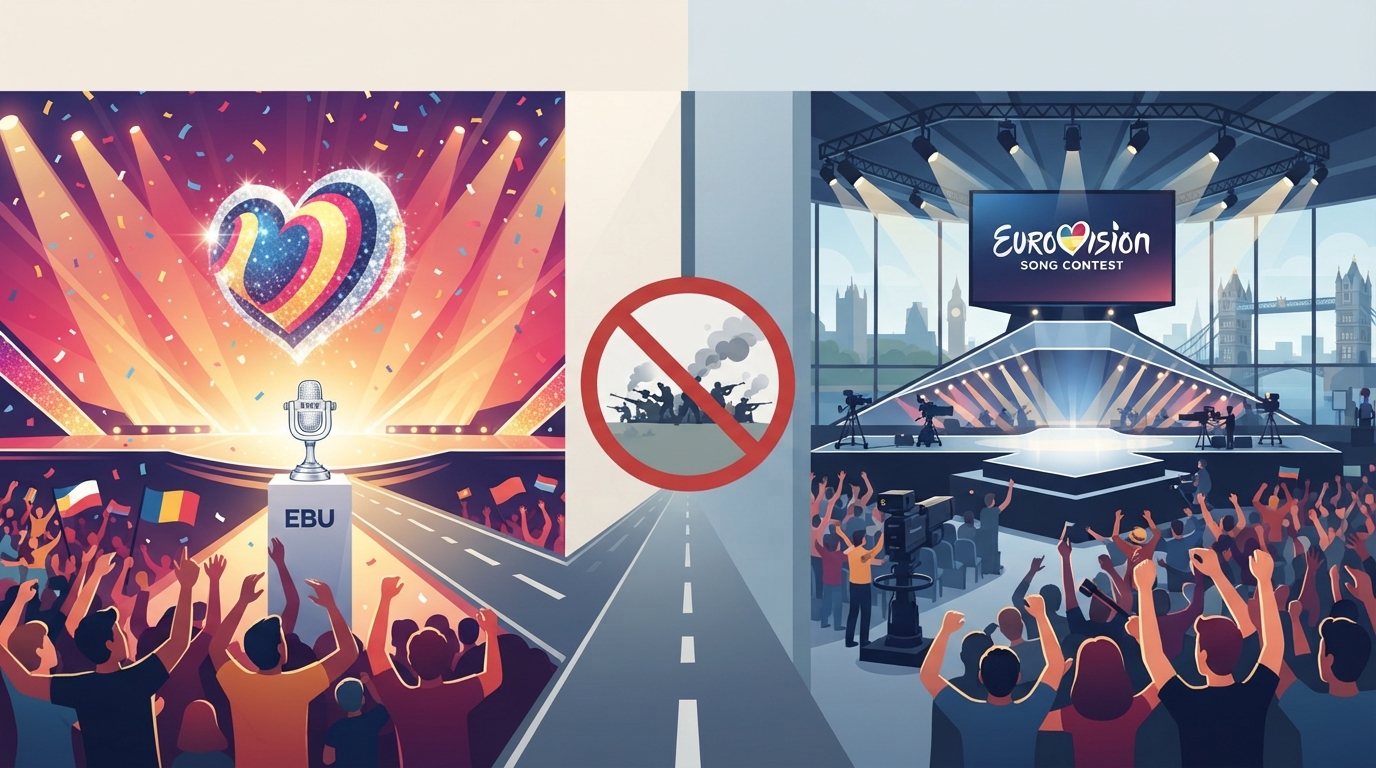
**Countries at war officially banned from hosting Eurovision**
The European Broadcasting Union (EBU), the organizer of the Eurovision Song Contest, announced changes to the international contest rules on August 12.
According to the new rules, the country that wins Eurovision will normally be entitled to host the next contest. However, if there is an armed conflict or a complex geopolitical situation in the country or its immediate vicinity that seriously affects security, the right to host is not automatically guaranteed.
If necessary, the EBU may organize an independent assessment of the level of security in the territory of the winning country. Following the assessment, the EBU, together with the Referendum Group, the executive body of Eurovision, will decide whether the winning country's broadcaster can hold the contest in safe conditions.
If the host broadcaster is deemed unable to hold the contest safely, the EBU will select another broadcaster to host the Eurovision Song Contest.
In fact, this approach has been used in practice before. In 2022, Ukraine won Eurovision, but due to Russia's large-scale war against Ukraine, the 2023 contest could not be held in Ukraine. As a result, Eurovision 2023 was held in the United Kingdom. That is, there was a practice of transferring the hosting rights from the winning country to another country for security reasons, but now this rule has been officially included in the contest regulations.
At the 2026 Eurovision Song Contest, the Israeli representative took second place at a time when the conflict in the Middle East was escalating.
The EBU also clarified the rules for the use of phonograms and pre-recorded voices in the contest. According to the new requirements, the lead singer or singers must perform their part live. The use of phonograms and some pre-recorded elements is allowed within the framework of the established rules. However, such recordings cannot replace the main live vocals or overpower them. The vocals performing the main melody must remain live.
The age limit for the contestants has also been changed. Previously, artists who had reached the age of 16 could participate in Eurovision. According to the new rule, all performers must have reached the age of 18 by the date of the first rehearsal. The organizers noted that this change is a continuation of measures to increase the safety of young artists and protect them from the intense pressure associated with participating in a major international competition such as Eurovision.
The updated rules will come into effect in 2027. The next contest is scheduled to be held in Bulgaria. Dara Bangaranga brought the country a historic victory at Eurovision in May 2026 with her composition.