

RFE/RL closes Dushanbe office after around 30 years of operations
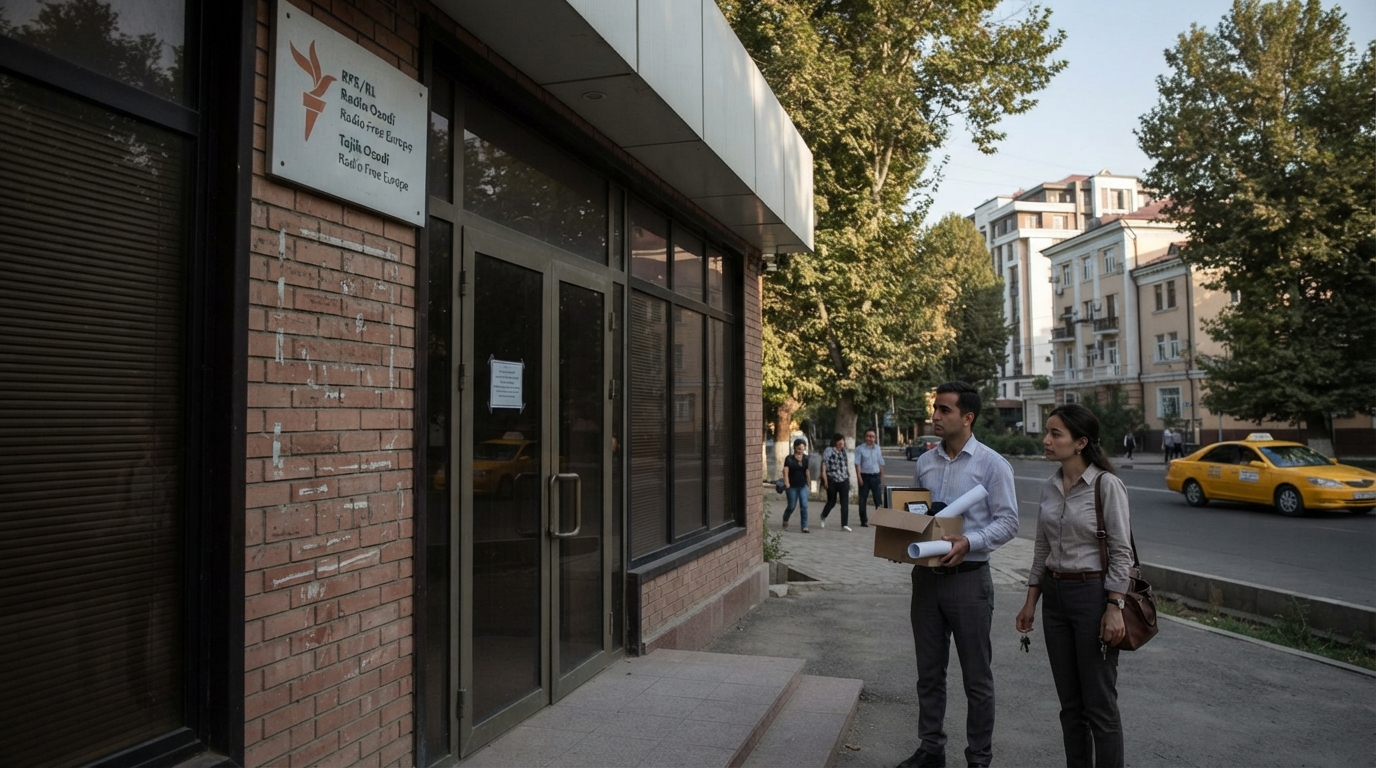
**RFE/RL shuts Dushanbe office after about 30 years of activity**
The Dushanbe office of Radio Free Europe/Radio Liberty’s (RFE/RL) Tajik Service stopped operating on August 17 as part of what the organization called structural changes, according to Asia-Plus. The outlet said its Tajik Service, known locally as Radio Ozodi, would keep working from its headquarters in Prague and preserve a network of journalists in Tajikistan.
“As part of structural changes, RFE/RL has ceased operations at its office in Tajikistan. RFE/RL will continue its work from Prague, maintain its network of journalists in Tajikistan, and continue providing its audience in the country with independent, accurate, and substantive content,” RFE/RL said.
The organization gave no additional explanation for the structural changes that led to the Dushanbe office’s closure. A source at Tajikistan’s Foreign Ministry told Asia-Plus that the office had stopped operating on RFE/RL’s own initiative.
The move has affected journalists who had been working out of the Dushanbe office. Former Radio Ozodi journalist Irshod Sulaymoni told Asia-Plus that he ended his work for the organization on August 17 and was looking for a new job. Based on information obtained by Asia-Plus, at least three journalists who had previously worked in Dushanbe were offered jobs at RFE/RL’s headquarters in Prague.
Other staff members have different arrangements. Some were reportedly offered contract work from Tajikistan, while others kept working until their current contracts expired. Some former employees are now searching for new positions. Nuriddin Karshiboev, head of the National Association of Independent Media of Tajikistan (NANSMIT), said the closure could hurt access to alternative information sources and the country’s media sector.
“For years, Radio Liberty served as a vital source of alternative information for Tajik society, and this move further narrows the space for pluralism in the country,” Karshiboev said.
He also said Radio Ozodi had helped develop young journalists professionally and that independent domestic media outlets had relied on its reporting when covering sensitive issues.
“The experience of our colleagues at Radio Liberty was valuable for training many young journalists. Independent domestic media outlets also frequently cited material published by the station when covering sensitive topics, which helped them avoid a lot of ‘headaches’,” he said.
Karshiboev said the closure could leave more than 20 media professionals without their former jobs. He added, however, that RFE/RL would continue covering Tajikistan from Prague and through journalists inside the country.
“The radio station's headquarters in Prague will continue its operations, and, according to available information, freelance journalists from Tajikistan will maintain their collaboration with it. However, it is clear that the absence of an official office in Dushanbe will limit the speed and capacity for direct, on-the-ground coverage of events,” Karshiboev said.
RFE/RL’s Tajik Service was founded in 1953 and works under the Radio Ozodi name. Its Dushanbe office opened after the collapse of the Soviet Union and Tajikistan’s independence and operated for roughly three decades.
Relations between Tajik authorities and the outlet have been tense in recent years. Radio Ozodi journalists have said they faced difficulties getting comments from government officials, while officials had earlier taken part more often in interviews with the outlet. Even with the physical office closed, RFE/RL said its Tajik Service will continue operating from Prague and through its network of journalists in Tajikistan.