

**Return to the ABCs**
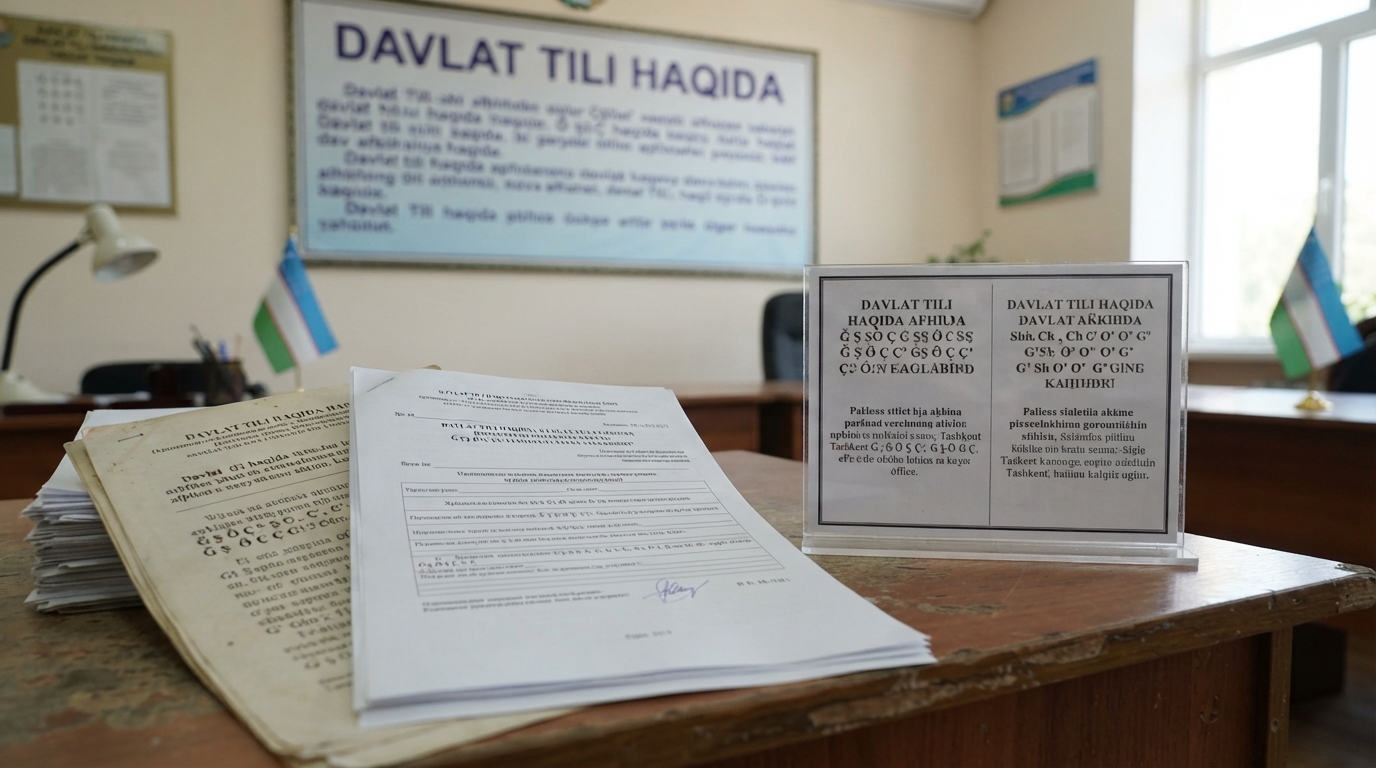
In Uzbekistan, the Latin-based Uzbek alphabet will be changed. Instead of 26 letters and three letter combinations, it will have 28 letters and one tutuk sign (’). The law on the changes was adopted on October 21, when the republic celebrated Uzbek Language Day.
**Which letters will change**
The updated alphabet will include the letters A, B, D, E, F, G, Ğ, H, I, J, K, L, M, N, O, Ö, P, Q, R, S, Ş, Ç, T, U, V, X, Y, and Z. In addition, the tutuk sign (’) will be used.
Passports and ID cards issued earlier will retain their legal validity after the introduction of the new alphabet. There will be no need to replace them specifically — citizens will receive documents with the updated spelling only after the expiration of their current ones.
The same approach will be applied to banknotes. Notes currently in circulation will remain valid, while new letters will appear only on banknotes issued by the Central Bank as part of planned emissions.
State bodies and organizations will also be able to use existing signs, plaques, and indicators with the old letters until they become unusable or their established period of use expires.
Education will also manage without unplanned replacements. Textbooks, which are regularly republished every one to five years, will receive the updated spelling during their next edition. Already published books will remain in circulation.
Signboards, road signs, banners, forms, websites, labels, restaurant menus, tickets, and other printed materials will also be updated gradually. The new orthography is planned to be used only during routine replacements or reprints, without mandatory premature updates.
According to the developers of the bill, such a mechanism will allow the changes to be implemented without a significant financial burden on the state, businesses, and citizens.
The law will take effect six months after its official publication.