

Refugee medic rebuilds his career in ultrasound unit
After enduring torture and imprisonment in Sudan, Ahmed Bakheet is using his skills in the North East.
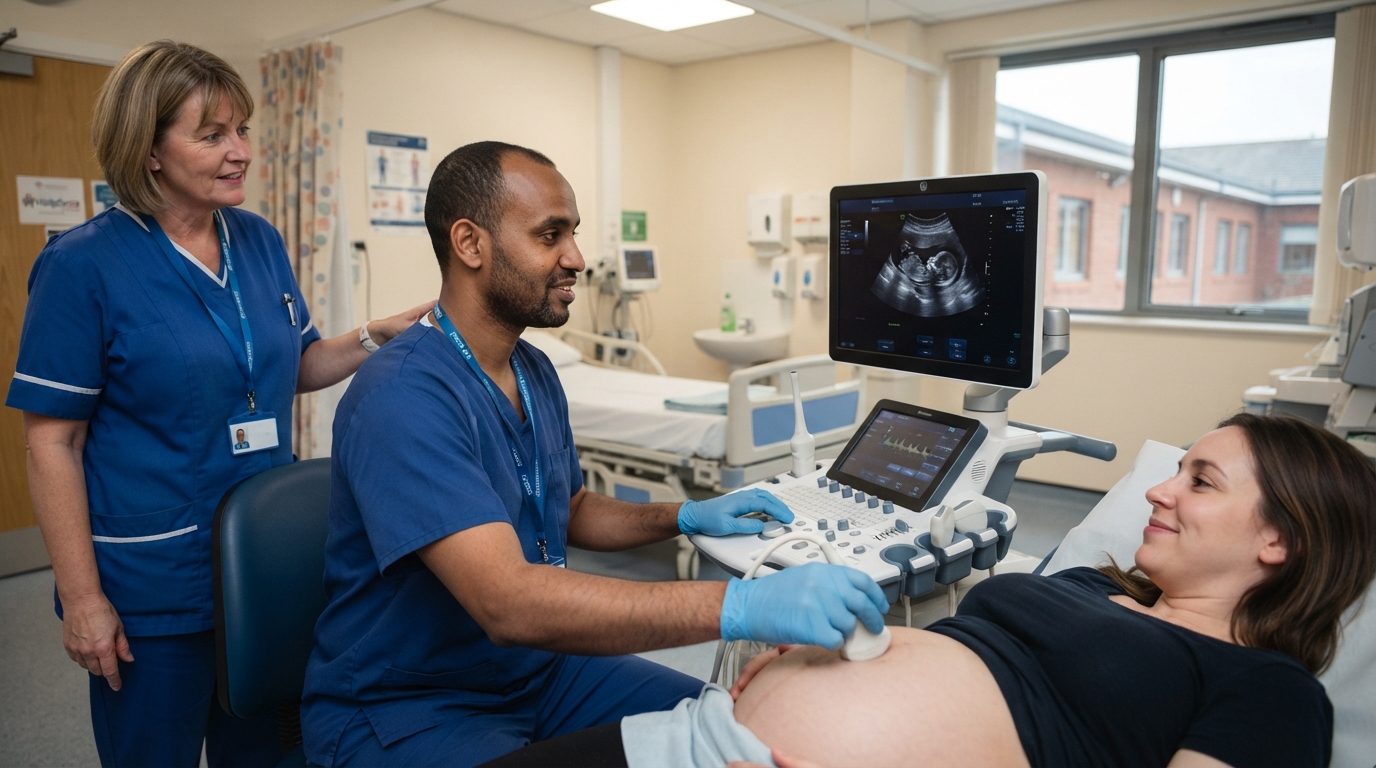
Ahmed Bakheet, a refugee medic, has successfully re-established his career in Stockton, England, after enduring imprisonment and torture in Sudan. He is now working as a sonographer, performing ultrasound scans on pregnant women, a role he secured after volunteering at North Tees Hospital.
Bakheet, 40, initially feared his medical expertise would go to waste after he became homeless and was prohibited from working while his asylum application was being processed. However, upon receiving refugee status in 2025, he began volunteering at North Tees Hospital in Stockton-on-Tees. His abilities were quickly recognized, leading to his current paid position. Bakheet expressed his desire to "give back to this community."
His journey began in 2010 when he left war-torn Sudan due to his opposition to the regime. After training in Saudi Arabia, his medical skills enabled him to obtain a work visa for the UK, where he secured employment. However, concerned for his family's well-being, he returned to Sudan, only to discover that two of his children and his brother had been fatally shot by government forces. He claims he was subsequently arrested for political activism and subjected to torture during a six-month imprisonment.
Following his release, Bakheet returned to the UK, only to find he had lost his job, leaving him without a home, income, or support. He recounted, "I came with a visa, a master's degree and great hope and lots of positivity. But suddenly everything crashed down again." He described the "physical, but also mental, injuries" from his return to Sudan, suffering from nightmares and sleepless nights, questioning what he had done to deserve such hardship.
He initiated an asylum claim, which took over three years to process, during which he was forbidden from working. After his claim was granted, he joined the Volunteer to Career program offered by the national healthcare charity Helpforce. He initially assisted on hospital wards, but his skills were soon identified, leading to his transfer to the radiology department.
Helen Stewart, an advanced radiography practitioner at North Tees Hospital, immediately recognized Bakheet's talent. She stated, "His skills were just obvious straight away. He had that natural gift with patients, qualities that take years for people to build up." Stewart added, "We realised there was great potential and thought how can we help this person back into the job."
With support to update his skills, Bakheet is now employed by a private health provider. His wife, Refga, and teenage son, Mo, have since joined him in Stockton, and earlier this year, their son, Ezzeldin, was born at North Tees Hospital. Bakheet expressed gratitude, saying, "All the members of staff at North Tees were very supportive and, day by day, I am now feeling like myself again. This country has offered me protection and provided lots of things for us, so I feel I now have to give back to this community."
Helpforce, the charity that assisted Bakheet, is now advocating for increased government investment in programs to help medically qualified refugees work in the NHS. Amerjit Chohan, Helpforce's chief executive, believes there is a "torrent of talent" that could help address workforce shortages. Chohan stated, "UK healthcare continues to face significant workforce challenges while many medically qualified refugees are struggling to find routes back into careers they have spent years building." He emphasized that Bakheet's story highlights the "incredible resilience, experience and determination that refugee professionals can bring," and that "Greater investment could help thousands more skilled clinicians rebuild their careers and put their expertise back where it belongs – caring for patients."
A spokesperson for the Department for Health and Social Care noted that volunteering programs are primarily developed by local trusts, but affirmed the government's commitment to supporting refugees in becoming self-sufficient and contributing to the economy.