

Record: 3kg stone removed from man's bladder in Sri Lanka
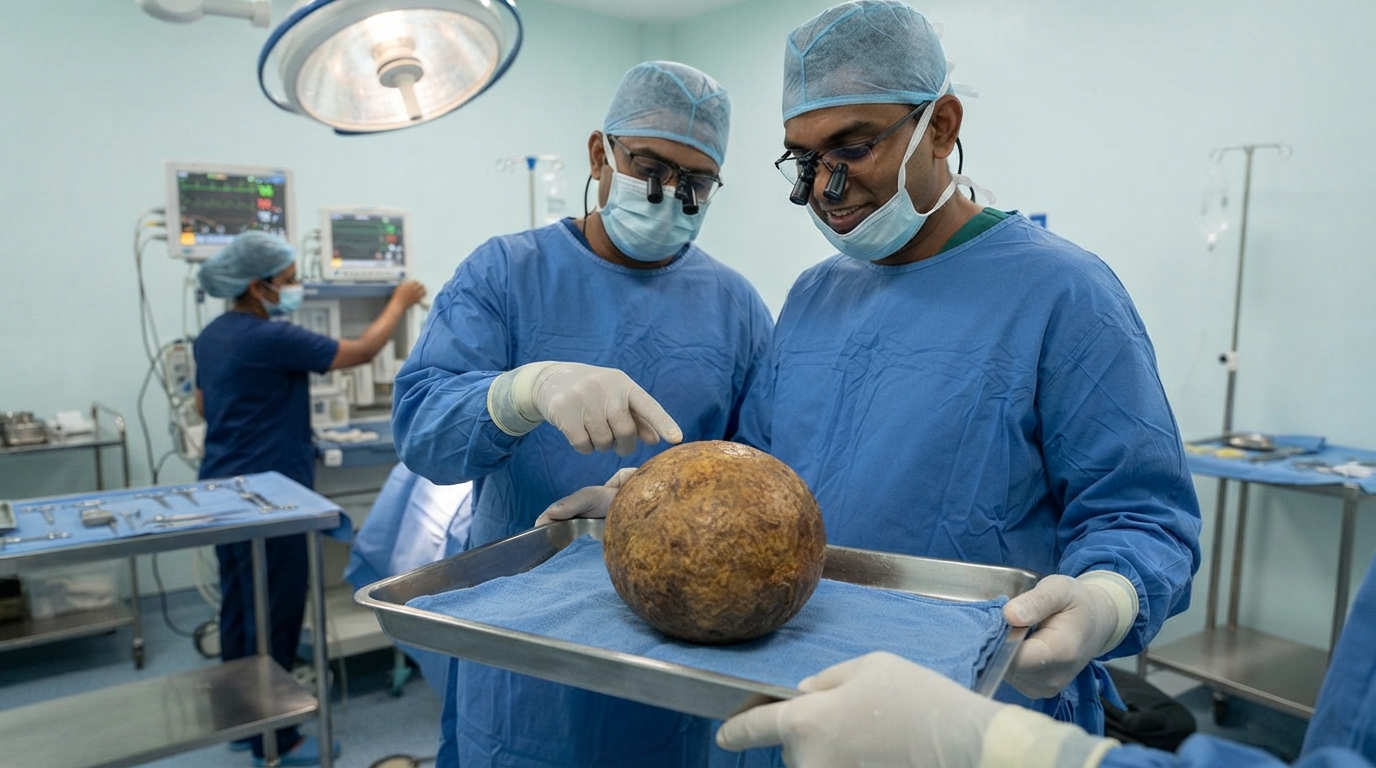
**Record: Sri Lankan surgeons remove 3kg stone from man's bladder**
Sri Lankan surgeons have successfully removed a stone as big as an ostrich egg from a man's bladder. The operation is being described as one of the largest stone removal operations in medical history, The Independent reported.
Last week, a 3.1kg bladder stone was removed from a 55-year-old patient at a Trincomalee district hospital. The patient was undergoing treatment for a stroke. He was reportedly admitted to the hospital about a month ago. During the treatment, doctors noticed that the patient was having difficulty urinating and additional tests were conducted.
According to urologist Pragaladhan Balakrishnan, who led the operation, the bladder stone was as heavy as a newborn baby and as big as an ostrich egg. He said the patient is in good health and is receiving treatment at the hospital for other ailments.
"This success is the result of a united team. Initial tests showed that the patient had a huge bladder stone. After that, the case was referred to our team of specialists. After all the necessary surgical procedures, we successfully removed the stone from the patient's bladder," said Dr. Balakrishnan.
He added that this is the largest bladder stone ever surgically removed and documented. According to the hospital's director, Sandamali Samarakun, this stone can enter the Guinness Book of Records as the largest bladder stone surgically removed.
The largest bladder stone recorded in the Guinness Book of Records was removed from a patient in Brazil in 2003 and weighed 1.9 kilograms and measured 17.9 centimeters.
Bladder stones form when urine is held in the bladder for a long time. As a result, the minerals in it crystallize and turn into stones. Common causes include enlarged prostate, urinary tract obstruction, nervous system-related bladder dysfunction, chronic infections, and prolonged use of a catheter.
Small bladder stones may pass on their own. However, stones larger than 1 centimeter in size block the flow of urine and require treatment. Stones larger than 4 centimeters in size are classified as giant bladder stones.