

Doctors remove 3.1kg stone from man's bladder and claim record
The bladder stone, which weighs as much as a full-term baby, is believed to be the largest on record.
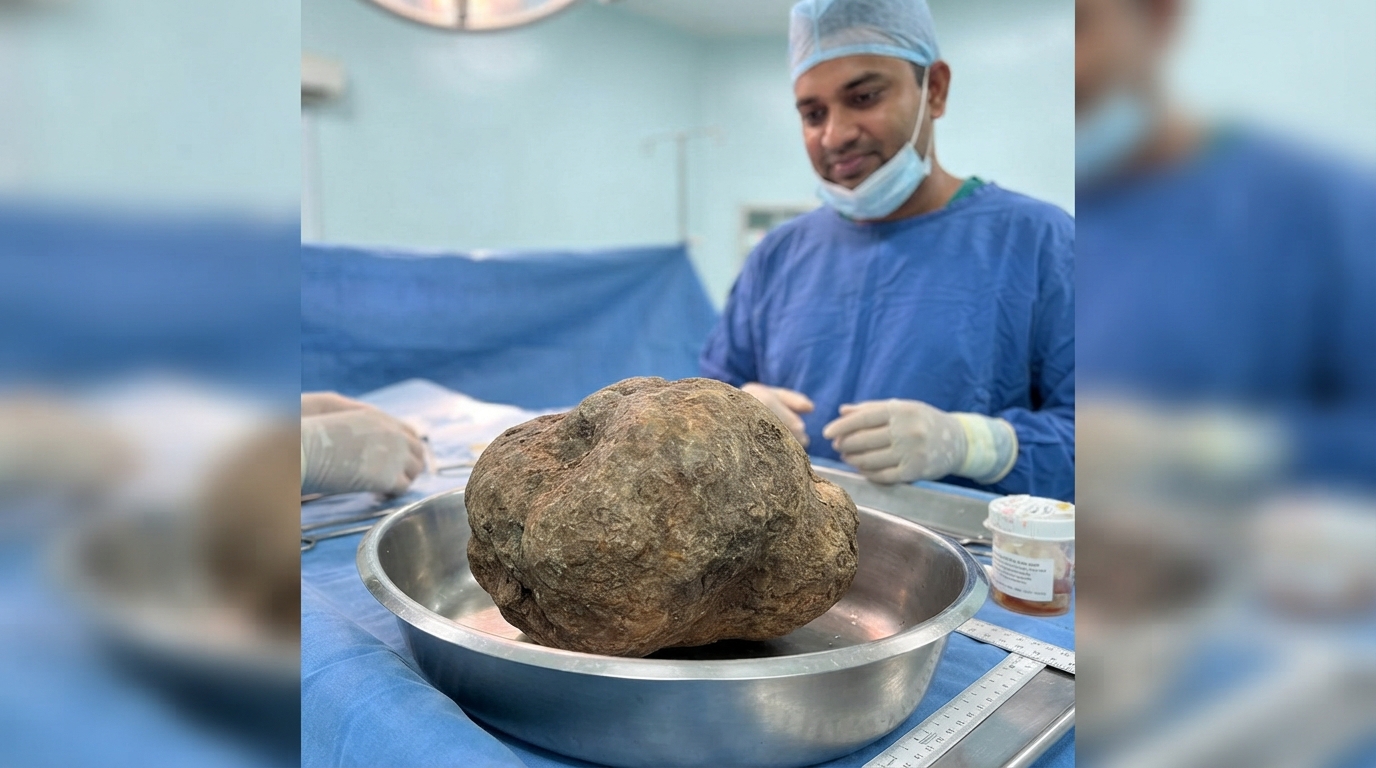
A 3.1kg (6.8lb) bladder stone, believed to be the largest ever recorded, has been surgically removed from a man in Sri Lanka. The procedure took place last week at a hospital in Trincomalee, located in the eastern part of the country.
The 55-year-old patient was initially hospitalized after experiencing a stroke. During his treatment, doctors discovered stones in his urinary bladder after he reported difficulty with urination.
The removed bladder stone weighed as much as a full-term infant and was approximately the size of an ostrich egg, measuring around 17cm in width and length. Dr. Prahalahan Balakrishnan, who headed the surgical team, informed BBC Sinhala that, "According to available records, it is the largest bladder stone ever documented and removed through surgery." He also confirmed that the patient is currently in "very good health."
The patient remains hospitalized to continue treatment for his other medical conditions. Dr. Balakrishnan estimated that the stone had likely been present in the patient's bladder for approximately five to ten years.
Bladder stones develop when minerals in urine crystallize into solid masses. This often happens when the bladder doesn't fully empty, leading to concentrated urine that can form crystals. While small bladder stones, comparable to grains of sand, can pass naturally, stones exceeding 1cm frequently obstruct urine flow and necessitate medical intervention. A bladder stone larger than 4cm is classified as giant.
The Guinness World Records previously recognized a 1.9kg (4.2lb) bladder stone, measuring 17.9cm (7in) in length, removed from a patient in Brazil in 2003, as the largest.