

Purchase, conversation, and a new value: How the "We came. We didn't leave" campaign is changing consumer culture?
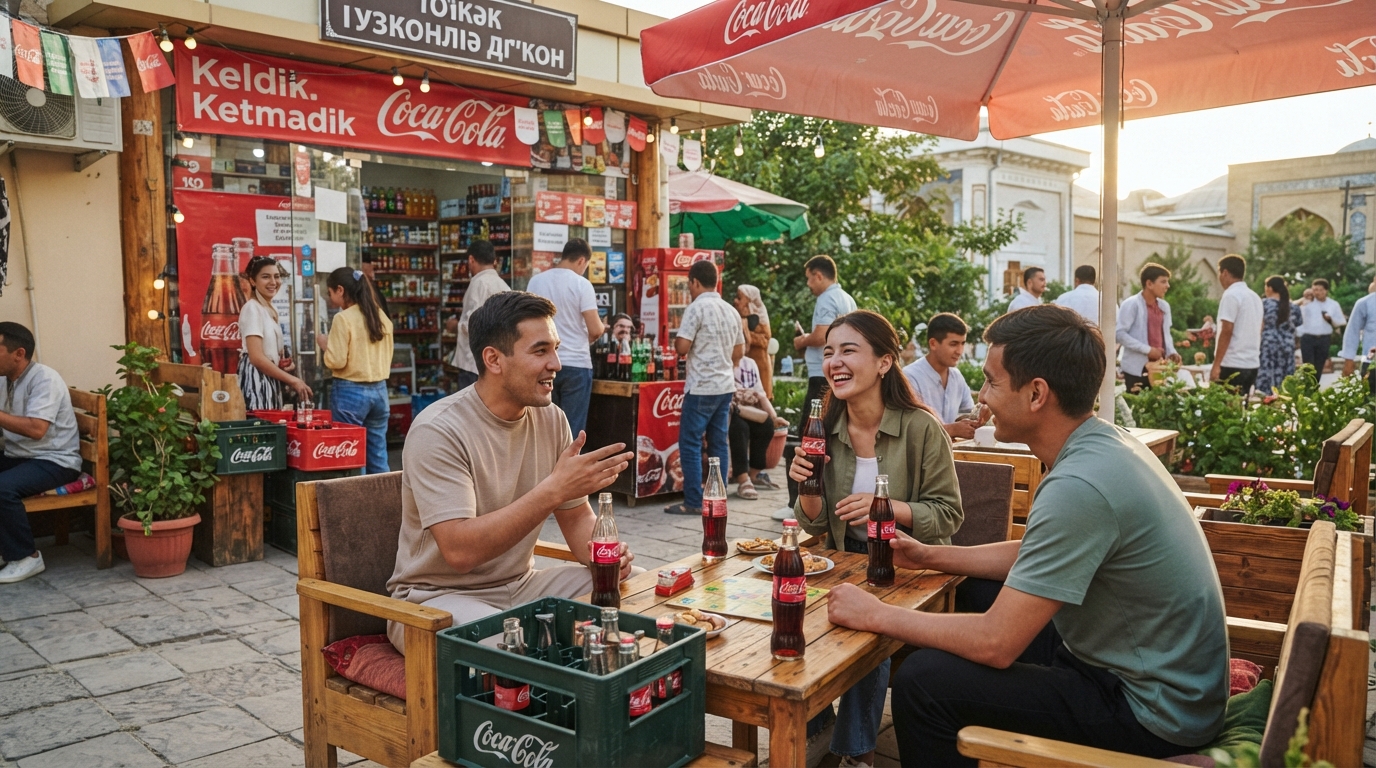
Purchase, conversation, and a new value: How the "Keldik. Ketmadik" campaign is changing consumer culture
Today, the function of retail outlets is no longer limited to just selling products. Especially among young people, a small shop, cafe, or market is becoming a place not only to make purchases but also to meet, converse, and have a good time. Coca-Cola's "Keldik. Ketmadik" (We came. We didn't leave) campaign in Uzbekistan focuses precisely on this changing consumer habit. An important aspect of the project is promoting a reusable packaging model through returnable glass bottles.
Let's imagine: a person leaves their house and enters a nearby shop to buy a drink or daily groceries. The purchase takes a few minutes. But they run into an acquaintance in the shop. A conversation begins. Then another person joins. Someone suggests a game. Or the conversation simply continues around a table in front of the shop. As a result, the place entered for a purchase turns into a meeting space.
This phenomenon is not new. Historically, people have used places like markets, teahouses, neighborhoods, cafes, or streets for communication in addition to trade. What is new is that today's retail business is increasingly focusing on this need. Because a product alone is no longer enough to attract people to a location. How much time a customer spends in a shop, how they feel there, and whether they recommend this place to others are also important for business.
Coca-Cola's "Keldik. Ketmadik" project is interesting at this point. The company is creating special areas for people to spend more time at local retail outlets where products in glass bottles are sold. These include board games, photo spots, and opportunities to converse in the open air.
Smartphones and social networks seem to keep people constantly connected. However, online communication cannot fully replace face-to-face interaction. For this reason, the importance of physical spaces where people meet remains.
Home is a private area. Work or university is a space associated with obligations. A restaurant or entertainment center may require a special plan and expense. A shop or a small retail outlet near the neighborhood offers a more convenient option in this regard: it exists within daily life itself. That is, no special excuse is needed to meet. From this point of view, turning a retail outlet into a small social space can be seen not only as a marketing method but also as an approach aimed at filling a gap in people's daily lives.