

'Proteinflation': Meet the people paying up to £100 for a bag of protein
Consumers are feeling the squeeze from the rising price of protein.
‘Proteinflation’: Meet the people paying up to £100 for a bag of protein
The whey protein Amarpreet Singh buys has nearly tripled in price since 2020
Amarpreet Singh has been drinking protein shakes since he was 16.
The 30-year-old London banker began going to the gym when, he says, protein supplements were mainly linked with bodybuilders.
Fourteen years on, shakes are still part of his routine, but they have become much more expensive.
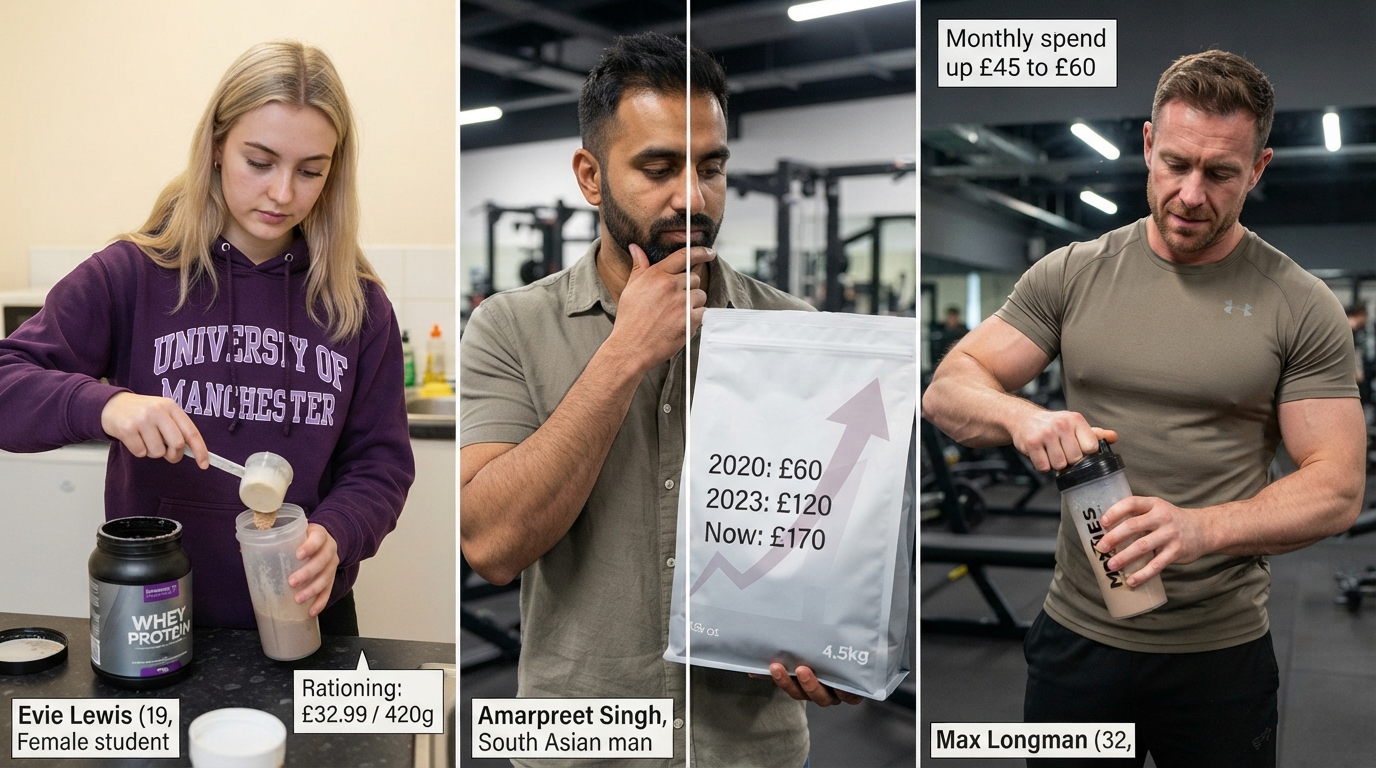
He says a 4.5kg bag of the whey protein he buys cost about £60 in 2020.
By last year, that had risen to £120, although he managed to find one on eBay for £90.
Now the same bag costs £170.
"I was a bit gobsmacked," he says.
Among his gym friends, the rising prices have even earned a nickname - "proteinflation".
Student Evie says the tub she buys is quite expensive for the size of it
Over time, protein powders and shakes have drawn a much wider customer base, while food makers now sell high-protein versions of everything from bagels to water.
Evie Lewis is a more recent protein powder buyer.
The 19-year-old University of Manchester student started using it a few months ago because she felt she was not getting enough protein in her diet.
"You hear a lot more about protein now on social media," she says.
But at £32.99 for a 420g tub, she feels the cost and tries to make it last.
"I've been rationing it and using less than what's suggested," she admits.
Max Longman, 32, from Manchester, works in real estate and has been taking protein supplements for 10 years, originally to help him put on weight.
He now drinks a protein shake every day and says his monthly spending on whey protein has climbed from about £45 a year ago to £60 now.
"Loads of foods have protein added to them now. Up until a few years ago, I'd never heard of high-protein yoghurt, and now I eat it three or four times a week," he says.
Max Longman has been taking protein supplements for 10 years
More recently, weight-loss drugs such as Wegovy and Mounjaro have created another source of demand.
People using these drugs usually eat less, and are often advised to make sure they get enough protein while losing weight to help preserve muscle.
But that growing appetite for protein is meeting a problem - supply has not kept up.
The result has been a steep rise in the wholesale price of some key ingredients, and consumers are feeling the pressure.
High whey protein prices take chunk out of THG profits
Food firms scramble to meet the high-protein craze
According to global market intelligence platform Expana, the European price of one widely used type of high-protein whey was 130% higher in late August than a year earlier, and more than four times its level three years ago.
There is no equivalent UK measure, but Expana says the UK market is closely tied to mainland Europe, where some British businesses source their whey protein.
Other dairy proteins have also become more expensive, with another type of whey protein up 60% over the year, while one type of milk protein concentrate was up 80%.
Manufacturers say boosting production takes time and money, because making high-protein whey requires specialist processing and drying equipment.
So some are beginning to change what they produce, by altering recipes or seeking cheaper protein sources.
Kieran Fisher's company Warrior is launching a product using cheaper sources of protein
Warrior, a UK sports nutrition company, is one of those looking for alternatives.
"Our whey protein powder was £12.50 on the shelf last year. We've put that up to £17.99 and we're still subsidising that from other aspects of the business," says its founder Kieran Fisher.
The company is now launching a product using other sources of protein, which Fisher says costs around half as much as whey.
The impact is also being felt beyond the fitness market.
Dairy proteins are used in infant formula, and Expana says higher dairy protein costs have also helped push up prices there.
There are, however, early signs that the market is beginning to adjust.
Wholesale prices for high-protein whey have started to level off over the past couple of months, although they are still far above where they were a few years ago.
For now, though, the higher prices are not putting Max off.
"It feels like protein is so important now, a lot more than it used to be. It's pushed out everywhere," he says.
"If you're doing exercise and not taking any, you feel like you wouldn't be recovering properly."
But for students like Evie, who are working to a much tighter budget, it is a different matter.
"It was affordable on my gap year [when she was working], but now I'm at university, I don't think I'll continue buying it. It's not a necessity right now," she says.
Amarpreet says he will keep buying protein, but admits "it's becoming a luxury". He says £170 for a bag is too much for him, so he is switching to a cheaper brand, which he can get for about £100 a bag.