

Drivers rethink spending as fuel prices climb
Drivers and firms in the West Midlands say rising prices are hitting budgets and forcing cutbacks.
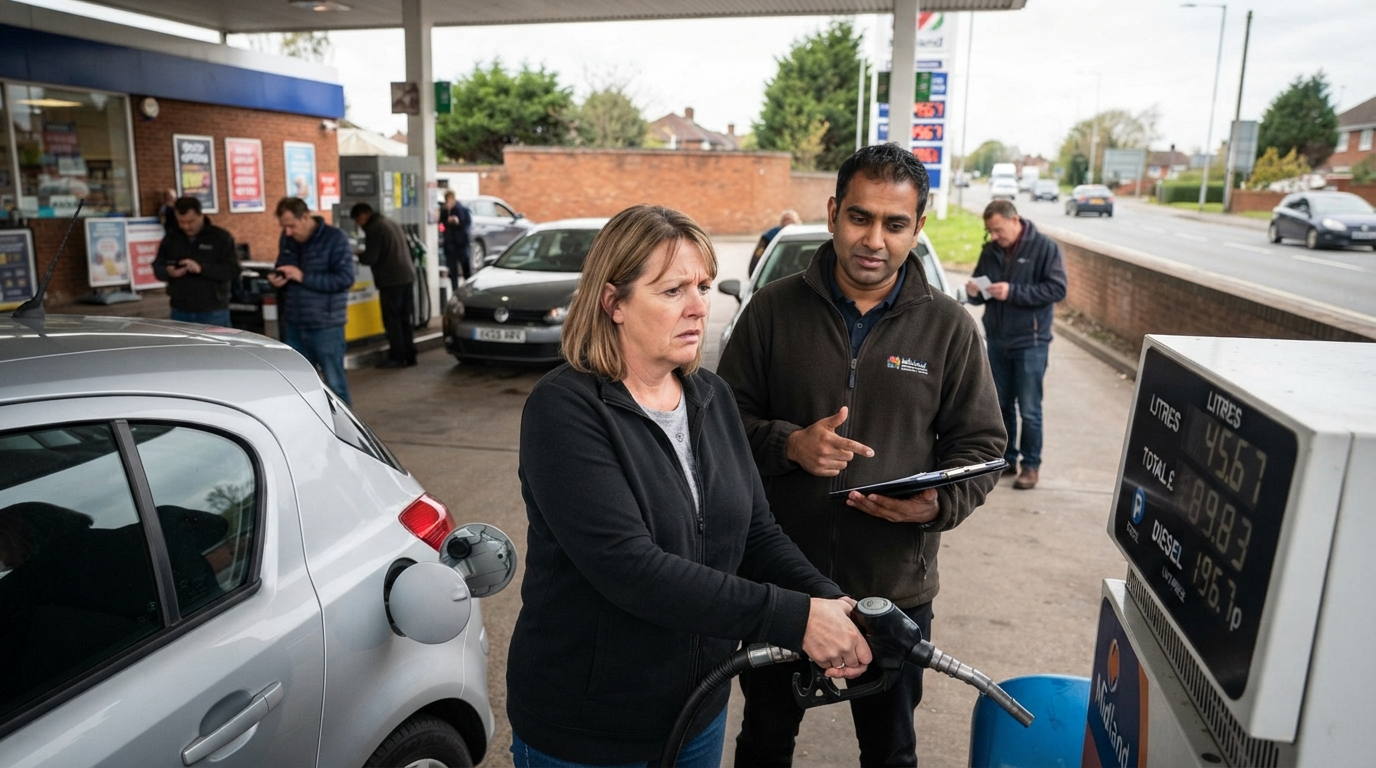
Drivers are rethinking their spending as fuel prices continue to rise
Motorists are confronting higher costs at the pump as global oil prices climb
Surging fuel prices are pushing motorists to trim everyday spending and are adding tens of thousands of pounds a week to business expenses, with petrol now at its highest point since November 2022.
Drivers say they are altering their spending patterns to manage the rising cost of filling up, while businesses warn that bigger fuel bills are putting growing strain on their finances.
According to the Office for National Statistics (ONS), petrol prices climbed to an average of 161.3p per litre between July and August, the highest level seen since November 2022, when Russia's invasion of Ukraine drove up global energy costs.
Diesel is also forecast to exceed £2 per litre in the next few days.
One person feeling the pressure is Arvander Pabla in Willenhall, in the West Midlands, who drives extensively every day and says higher fuel costs have forced him to cut back in other areas.
"I do nearly 70, 75 miles per day, and it has really affected me price wise, because it has nearly gone double," he said.
To make more room in his budget for fuel, he said he had cut back on takeaways and eating out, and was thinking about swapping his car for a more fuel-efficient model.
Arvander Pabla said rising fuel prices had forced him to cut spending elsewhere.
Motorist Sue Willis said the increasing cost of filling up was becoming harder for households to bear.
"It's absolutely ridiculous, how we are expected to keep paying for it, I don't know," she said.
"It goes up daily.
"How people are coping as families I don't know, I really don't know."
Sue Willis said the cost of filling up was putting pressure on household budgets.
At a petrol station in Willenhall, fuel retailer Shailesh Parekh said higher wholesale prices were affecting both businesses and customers.
Parekh, director of Midland Motor Fuels Ltd, which runs seven petrol stations across the region, said: "We certainly don't have any control over it, we just have to try and mitigate as much as we can the price increases.
"We do so by filling our tanks up when the prices are going up or delaying the purchase of fuel when prices are going down.
"Most people have a budget for how much fuel they have per week so as prices go up, the number of litres that are sold, drops."
Fuel retailer Shailesh Parekh said customers were buying fewer litres as prices rise
The rise comes as conflict in the Middle East continues to disrupt global oil supplies.
The price of a barrel of oil has climbed to about $91, compared with $73 before hostilities began earlier this year.
Overall, motor fuel prices were up 23% compared with August last year.
Rising fuel costs are also feeding inflation, adding pressure to the prices of other goods and services.
Haulage firms are among the businesses most exposed.
BJS Haulage, based in the West Midlands, employs more than 1,100 people and runs 140 trucks and 350 vans. The company said fuel accounts for about a third of its costs and has raised spending by about £40,000 a week.
Sales director David McWilliams said: "It is a cost we try and pass on to our customers but our customers are under their own cost constraints at the moment.
"I think only the government can intervene now, whether it's a VAT reduction.
"Horrifyingly we're hearing of the fuel levy getting increased in the next budget, that would just be disastrous for this industry."
BJS Haulage sales director David McWilliams said only government intervention could ease pressure on the industry.
The rising costs have reignited political debate over fuel duty.
The government has delayed a planned increase in fuel duty until the end of December, while Liberal Democrat leader Sir Ed Davey has urged an immediate 10p-a-litre cut until Christmas, arguing motorists need help with the cost of living.