

Police officer admits to closing missing person cases to avoid work
The officer falsely claimed he contacted missing persons and prematurely closed their cases on the South Korean holiday island of Jeju.
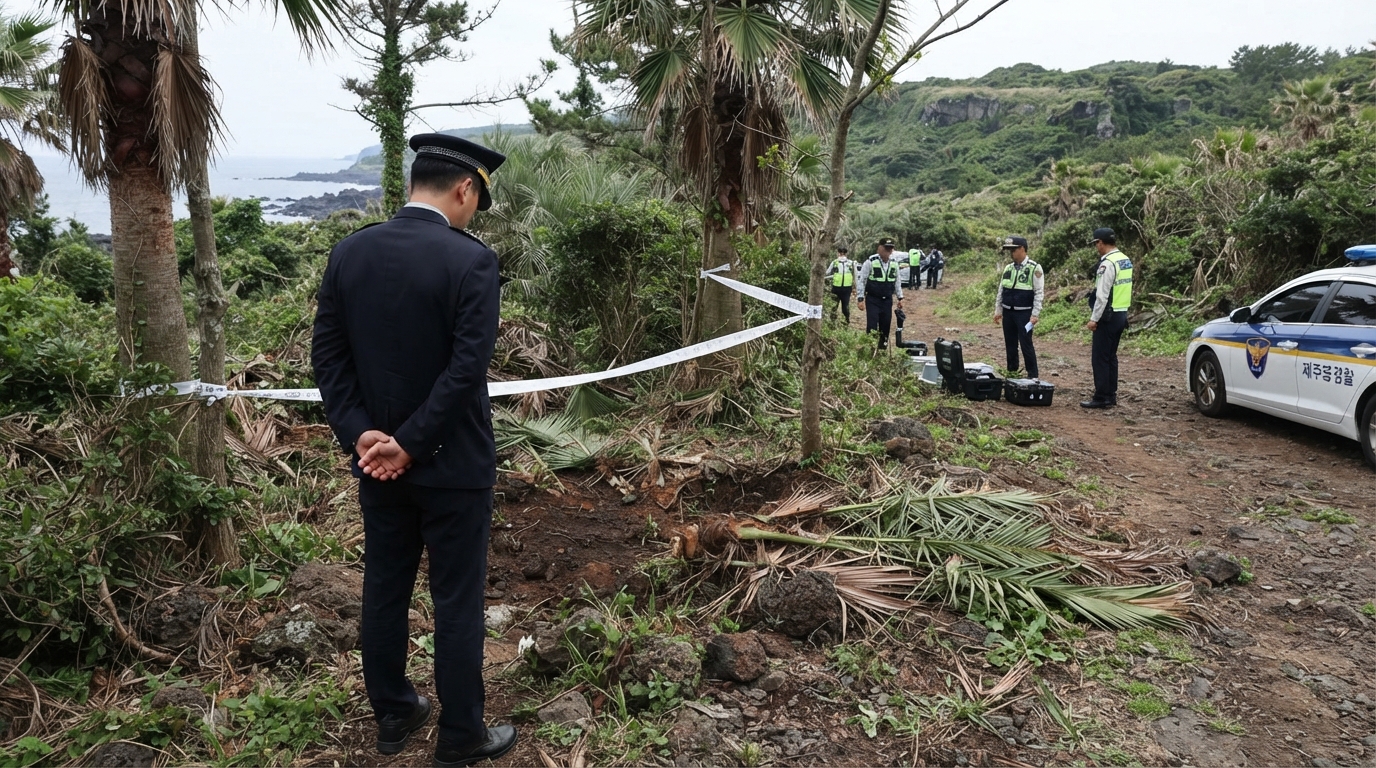
A South Korean police officer, identified by his surname Bu, has confessed to deliberately closing missing persons cases without proper investigation to avoid additional work, according to official reports. Bu was taken into custody earlier this month following accusations that he prematurely terminated cases on the popular tourist island of Jeju and misled the families of those reported missing.
In response to growing public outrage, police initiated belated searches for several missing individuals on the island, leading to the discovery of four bodies in recent weeks. This unfolding scandal has prompted President Lee Jae Myung to pledge police reform, particularly as the government prepares to grant law enforcement expanded powers.
On Tuesday, the Jeju Provincial Police announced that Bu had falsely closed at least two high-profile cases. He now faces charges of forgery of public electronic records, obstruction of official duties, and dereliction of duty. In both instances, Bu falsely asserted that he had contacted the missing individuals before prematurely closing their cases without verifying their whereabouts or safety.
A police statement detailed Bu's confession during their investigation: "the missing person was a typical adult so I thought about it carelessly. If the case was not closed, there would have been a lot to take care of, and out of a sense of pressure over the case handover, I falsely closed it."
One of the cases involved 37-year-old Jang Mi-ran, who disappeared in May and was reported missing by her boyfriend. At the time, Bu informed Jang's boyfriend that he had spoken with her and that she did not wish to meet the police or be contacted by her boyfriend. Authorities later confirmed this statement to be entirely fabricated by Bu. According to authorities, Bu entered this false information into the system and also logged that Jang had died in a traffic accident before closing the case. Jang's body was discovered last week near a palm tree plantation on Jeju.
In another case from July, involving a man in his 60s reported missing, Bu similarly made the false claim that he had spoken to the man and that the man did not wish to be contacted. This man was subsequently found deceased earlier this month.
Police also indicated their belief that Bu may have prematurely closed an additional 25 missing persons cases, though some of those individuals were later confirmed to be alive and safe.
The discovery of bodies on the South Korean holiday island has deepened the missing persons scandal. Violent crime is uncommon in South Korea, which has one of the world's highest suicide rates. While over 70,000 adults are reported missing annually in South Korea, 99% of these cases are typically resolved within a month.
This scandal emerges at a politically sensitive juncture for the nation's police force. The government recently enacted laws to transfer full investigative authority from prosecutors to the police, a move intended to curb prosecutors' political influence. However, this shift has been met with public disapproval, as the police have long faced accusations of corruption and incompetence.
President Lee has committed to reforming the police in light of the recent criticism. On Tuesday, President Lee expressed his regret that "the honour and pride of the majority of diligent police officers are being damaged" by a few "loach-like figures who muddy the well water."