

Bodies found on S Korean holiday island as missing persons scandal deepens
A police sergeant has been arrested following accusations that he lied to victims' families and prematurely closed missing persons cases.
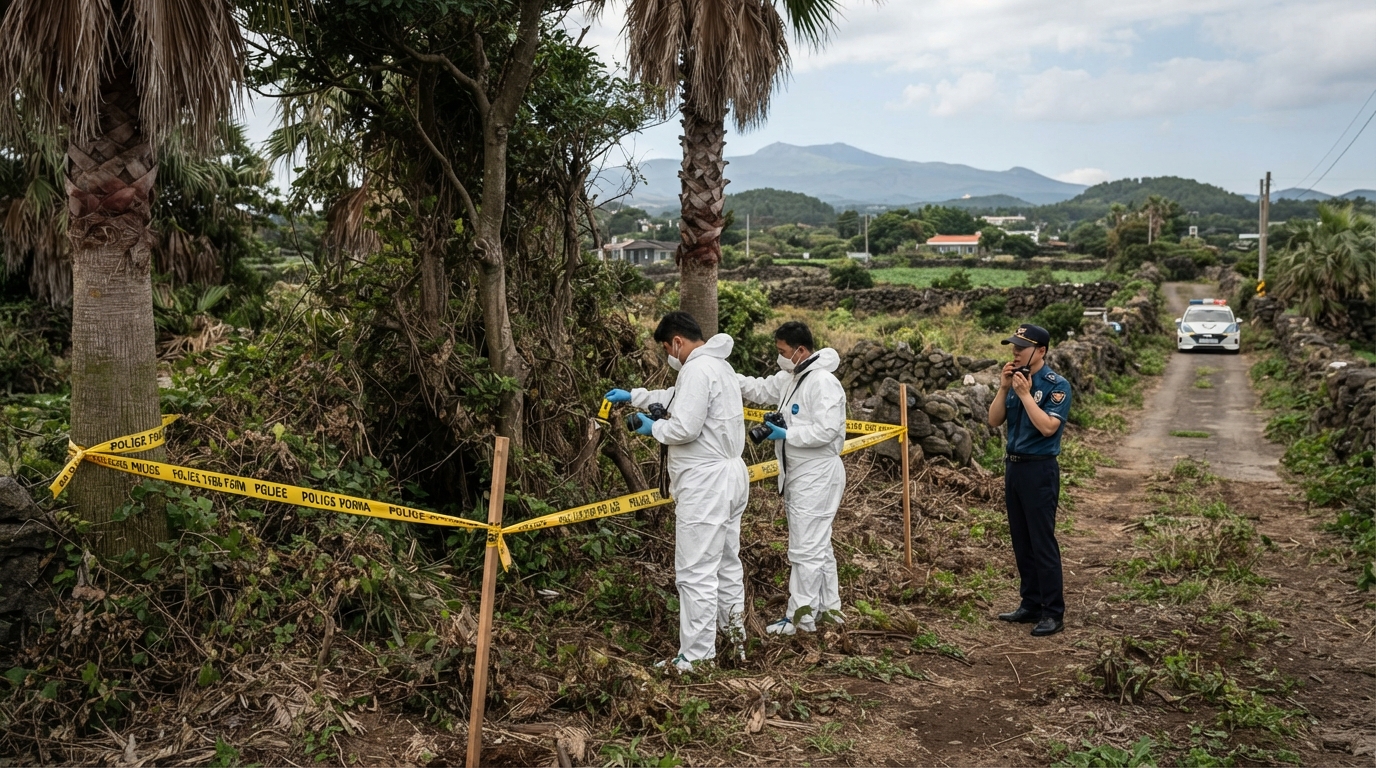
Four individuals who had been reported missing have been discovered deceased on Jeju, a South Korean holiday island. This development comes as the local police force faces increasing public scrutiny over allegations of mishandling missing persons investigations.
Last week, reports surfaced indicating that authorities had initiated a belated search for a woman who had been reported missing several months prior. This revelation sparked criticism directed at the police for their failure to commence the search sooner.
The controversy has since intensified with the apprehension of a police sergeant, identified by the surname Bu. He stands accused of providing false information to the families of victims and prematurely closing missing persons cases. In response, four officers within Sergeant Bu's chain of command have been placed on administrative leave. On Tuesday, President Lee Jae Myung issued an order for a comprehensive overhaul of the police force.
Since Saturday, law enforcement officials have located four bodies on the island. Among them is 37-year-old Jang Mi-ran, who had disappeared in May. Her body was found on Monday at a palm tree farm, approximately 500 meters (547 yards) from her last known residence. It is believed she died by suicide.
Sergeant Bu is suspected of having closed Jang's case prematurely without verifying her whereabouts. Local reports suggest that Bu allegedly informed Jang's boyfriend that he had spoken with Jang via phone, and that she had expressed a desire not to communicate with her boyfriend.
Police also discovered the body of a man in his 60s from Jeju City on Saturday. This man had been reported missing on June 28. Bu had closed his case, reportedly informing the family that the man had been found "safe" but "does not wish to disclose his location to the family." The man's son told reporters, "We believed the police when they said my father was safe and waited, but after 51 days, what returned was his body."
It remains unclear whether Bu was involved in the missing persons cases pertaining to two other bodies recently found in coastal villages. Police are currently reviewing all nearly 300 missing persons reports that Bu had handled.
Jeju is a prominent tourist destination in South Korea, known for its palm tree-lined landscapes and clear waters. Last year, the island attracted over 13 million foreign and domestic visitors. While violent crime is uncommon in South Korea, the country has one of the highest suicide rates globally.
Some experts suggest that the low crime rate contributes to missing persons cases not being treated with sufficient seriousness. Lee Yung-hyeock, a professor specializing in police science at Konkuk University, told Yonhap news agency, "After experiencing on the field that the absolute majority of missing adults are found quickly, [the officers] tend to assume all cases are like that." Annually, more than 70,000 adults are reported missing in South Korea, with 99% of these cases marked as resolved within a month.
During a Cabinet meeting on Tuesday, President Lee stated that "the recent breakdown in police discipline and irresponsibility in public safety matters have become serious problems." He highlighted that the police are likely to wield the most power among all state institutions, adding that "the Korean people are questioning whether [the police] deserve this large power."
On Monday, South Korea's national police chief faced questioning from lawmakers at an emergency National Assembly hearing, where he acknowledged that "there is a fault in the system."
This scandal emerges at a politically sensitive juncture for South Korea's police force. The government recently enacted reforms to transfer full investigative authority from prosecutors to the police, a move intended to curb the prosecutors' political influence. However, these reforms have been unpopular with the public, who have long accused the police of corruption and incompetence.
Reporting by Hosu Lee and Leehyun Choi in Seoul contributed to this report.