

Plan to illuminate the night from space has worried astronomers
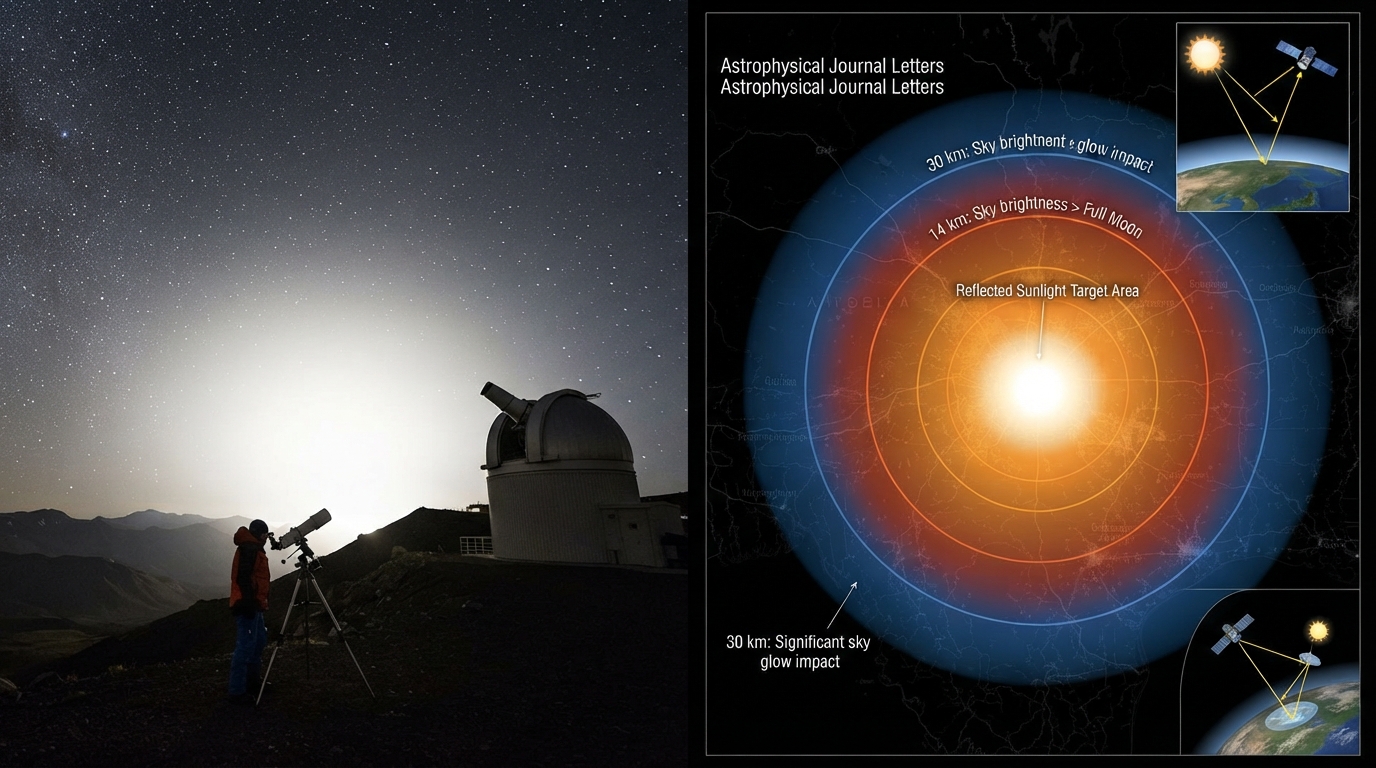
Reflect Orbital plans to direct light to selected areas of the Earth even after sunset through mirrors in orbit. According to astronomers' calculations, even a single large future reflector could alter the brightness of the night sky for dozens of kilometers around.
Plan to illuminate the night from space raises concern among astronomers
In October, the company conducted a ground-based demonstration of the planned illumination system in California. Prior to this, the US regulator had authorized the operation of the first experimental satellite, EARENDIL-1.
The test, conducted on October 10 near Lone Pine near Mount Whitney, used powerful searchlights. They simulated the spot of light expected to be created by the orbital spacecraft. Volunteers from search and rescue services took part in the demonstration.
This test did not use a mirror in space: the light was provided by equipment installed on the ground.
The Reflect Orbital project is based on the idea of reflecting sunlight from orbit to designated points on Earth. The company aims to use such illumination for energy generation and other tasks requiring additional light.
The first experimental spacecraft is expected to deploy an 18 × 18 meter mirror. On July 9, the US Federal Communications Commission (FCC) granted permission to deploy and operate this demonstration satellite using the requested radio frequencies. This decision does not imply approval for a full future constellation of satellites.
The American Astronomical Society, however, had requested the application to be rejected as early as March. The organization, representing the interests of more than 8,500 professional and amateur astronomers, expressed concern over interference with ground-based astronomical observations and other potential consequences.
In a study published in September in Astrophysical Journal Letters, Miroslav Kocifaj, Gáspár Bakos, and František Kundracik calculated how the light would scatter in the atmosphere. The model also accounted for air molecules, aerosols, and light reflected back from the illuminated ground surface.
In one scenario, a 54 × 54 meter mirror was studied. According to calculations, for an observer inside the targeted area, it could appear significantly brighter than the full Moon.
The scattered light could have a noticeable impact on the night sky at distances of up to approximately 30 kilometers. Even at a distance of 14 kilometers, the light generated by a single such mirror has the potential to exceed the sky brightness during a full Moon across a large portion of the sky.