

Can fragment even without a collision: Dozens of pieces detected around Starlink
Following a malfunction on the Starlink-34343 satellite, dozens of separate objects appeared around it. LeoLabs, which tracked them, stated that the incident may have been caused by a process involving an internal energy source, rather than a collision with another spacecraft or space debris.
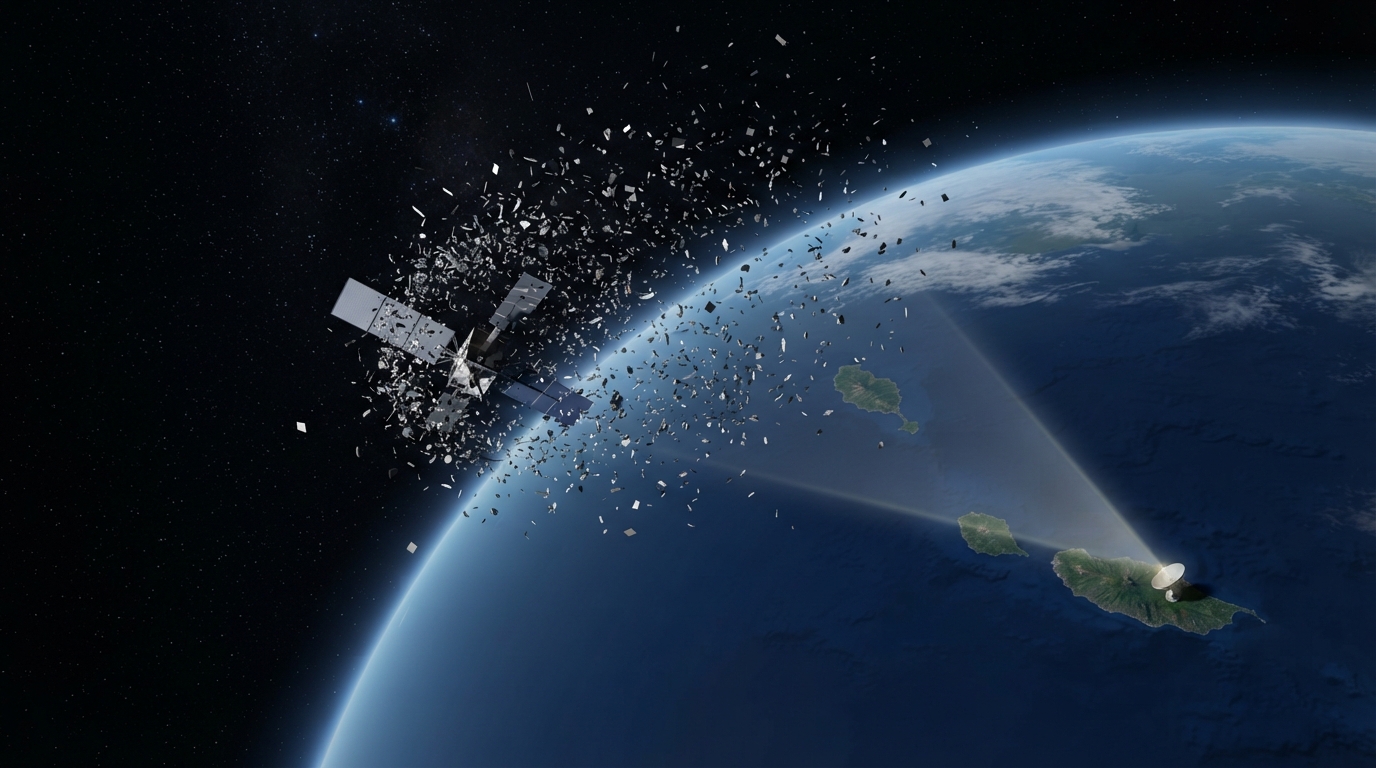
Can disintegrate even without a collision: Dozens of fragments detected around Starlink
The incident was recorded on March 29, 2026. Initial observations were obtained while the spacecraft was passing over a radar in the Azores.
The picture recorded by the LeoLabs radar network showed that fragments had detached from the satellite. However, this data alone is not sufficient to determine what exact malfunction occurred inside the spacecraft.
According to the company, it is highly likely that an internal energy source caused the incident. However, it was not disclosed which equipment failed. Therefore, technical inspection results and data received from the spacecraft will be required to draw a conclusion about a battery explosion or a tank rupture.
According to LeoLabs' initial assessment, the fragments were expected to decay from orbit within a few weeks due to the relatively low orbit. This was a forecast rather than a confirmation that all of them had already burned up in the atmosphere.
How long the fragments remain in orbit depends on their mass, surface area, and attitude in space. For this reason, parts formed at the same time can also gradually disperse into different trajectories.
Experts compared this incident to the malfunction observed on the Starlink-35956 spacecraft on December 17, 2025. However, external similarities do not mean that the technical cause of the two events was the same.
Such accidents differ from collision risks. An operational satellite can maneuver to avoid other objects, but this does not resolve the spacecraft's internal malfunctions. Therefore, orbital safety also requires structural reliability, monitoring of technical condition, and tracking of generated debris.
A report by the European Space Agency published on September 14, 2026, provides additional information about the overall situation in orbit. According to the report, which relies on data through the end of 2025, more than 300 launches were carried out that year, delivering over 4,000 payloads into space. At the same time, the number of debris fragments and non-operational spacecraft in orbit also increased.
As tracking tools improve, more objects are being detected. However, reliably determining which spacecraft each fragment separated from is not easy. Beyond seeing an object on radar, it is also necessary to calculate its trajectory and evaluate how close it will come to other spacecraft.