

"Out of 64, only three survived." In Uzbekistan, a man sent to the war in Ukraine from a Russian penal colony was sentenced
In Kashkadarya Region, a man was sentenced to 4 years and 6 months of restriction of liberty for mercenarism. According to him, he was sent to the war against Ukraine from a Russian penal colony following physical and psychological pressure. The court agreed that the man had signed the military contract under duress.
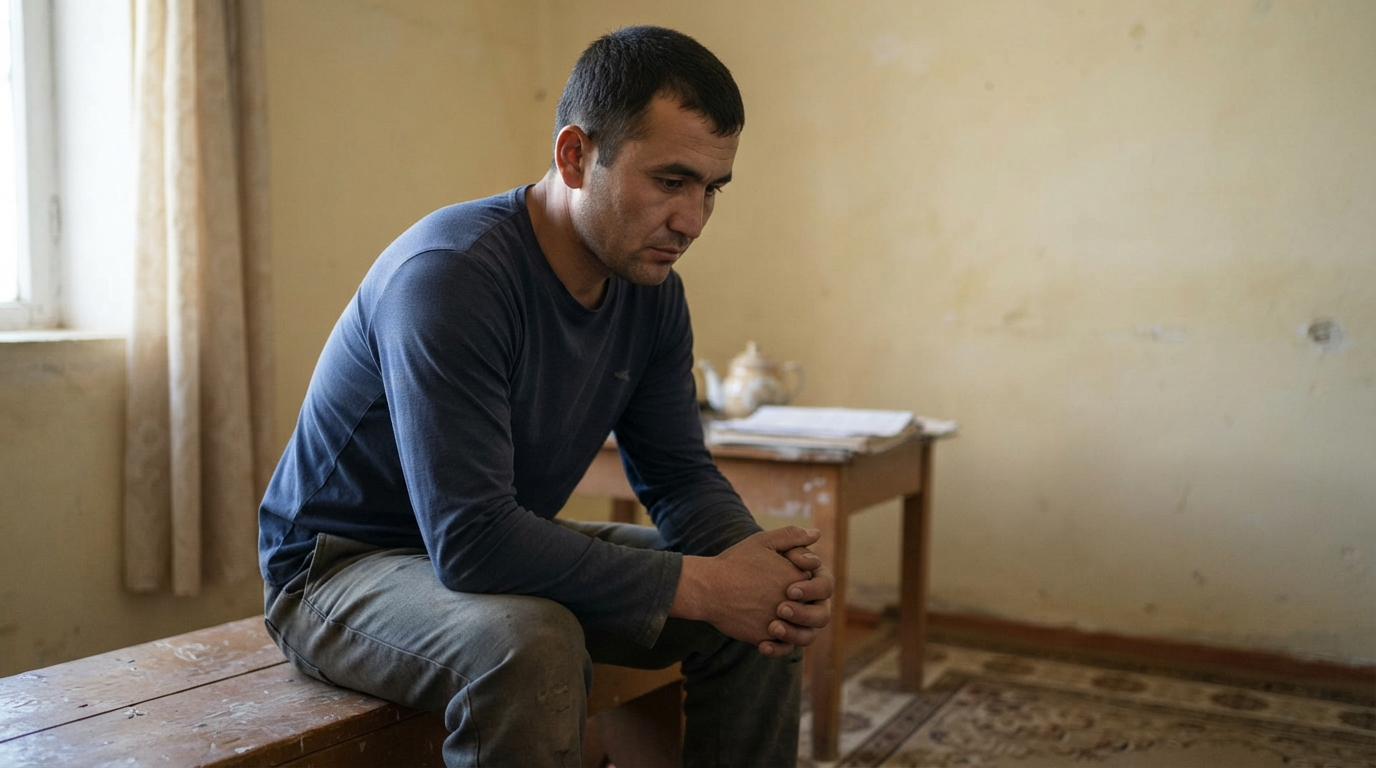
“Out of 64, only three survived.” Man sent to war in Ukraine from Russian penal colony sentenced in Uzbekistan
In the Qashqadaryo Region, a man was sentenced to restriction of freedom for participating in the war against Ukraine on the side of Russia. In court, he stated that he was forced to sign a contract.
A. N. went to work in Russia, where he worked at a construction site. According to him, he later met a person via Telegram on whose instructions he began delivering psychotropic substances to specified geolocations. In 2023, while handing pills to another person, he was detained by Russian law enforcement.
As the defendant testified, in April of the same year, a Russian court sentenced him to seven years of imprisonment for illicit trafficking in psychotropic substances.
He served his sentence in Correctional Colony No. 5 in Tambov. According to A. N., the institution’s staff sent him to punishment cells without reason, forced him to perform grueling physical exercises, kept him awake at night, and coerced him into signing a contract to participate in the war against Ukraine. He also claimed that the colony staff, knowing he was Muslim, intentionally fed him pork.
In September 2025, he signed the contract and was sent to a training ground near the Russian-Ukrainian border. There, he was issued a military uniform and an AK-74 assault rifle, and underwent 30 days of training.
The defendant denied participating directly in combat operations. Nevertheless, the court established his participation in the “special military operation” from September 1 until the end of October 2025.
According to A. N., at the end of October, he escaped from the training ground along with two other men, after which he made his way to Moscow and again found a job at a construction site.
The defendant also claimed that out of 64 Uzbek citizens who were forcibly sent to the training ground to participate in the war, only three escaped and remained alive, while the rest died. Information to this effect is cited in the verdict as his testimony.
The man’s wife told the court that in September 2025, he informed her of his release from the colony in exchange for an obligation to participate in the war. They maintained contact via audio and video calls. The man sent photographs wearing a military uniform and holding a weapon. In October, he told her that he had escaped and was in Moscow.
After the escape, A. N. contacted the Uzbek Embassy in Moscow, as he did not have an international passport. According to him, the staff told him that a return certificate would be ready in seven days. However, he did not wait and obtained a forged document through acquaintances.
In November 2025, he was detained in Novosibirsk. At Tolmachevo Airport, authorities established that the certificate was forged. Until May 25 of this year, A. N. was held in a temporary detention facility.
Then the Embassy of Uzbekistan issued him a genuine certificate of return to his homeland, after which he was deported to Uzbekistan.
Initially, A. N. was charged under Part 1 of Article 154 of the Criminal Code of Uzbekistan (Mercenarism) and Part 1 of Article 154−1 (Enlistment in the military service of a foreign state).
Following the trial, the court dismissed the second charge. The verdict notes that enlistment in such service implies a voluntary decision. The court deemed it established that A. N. signed the contract under duress, subject to physical and psychological pressure.
At the same time, the court found him guilty of mercenarism.
When determining the sentence, the verdict states, the court took into account that the man voluntarily ceased his participation in the war and escaped, repented, is the sole breadwinner for his family, and supports four children.
The court sentenced A. N. to 4 years and 6 months of restriction of freedom. He is prohibited from leaving his home, except during work or study hours. Furthermore, he is forbidden from visiting restaurants and cafes, participating in mass events, consuming alcohol, changing his place of residence, or traveling outside the Qashqadaryo Region.