

OSCE supports water quality monitoring in the Syr Darya River basin
Water is of key importance for public health, food security, and the well-being of local communities. Regular water quality monitoring makes it possible to track its changes, identify pollutants, and make informed decisions on environmental protection. The OSCE Project Co-ordinator in Uzbekistan, in close cooperation with the National Center for Environmental Monitoring, supports the monitoring of transboundary watercourses in the Syr Darya River basin. As part of this […]
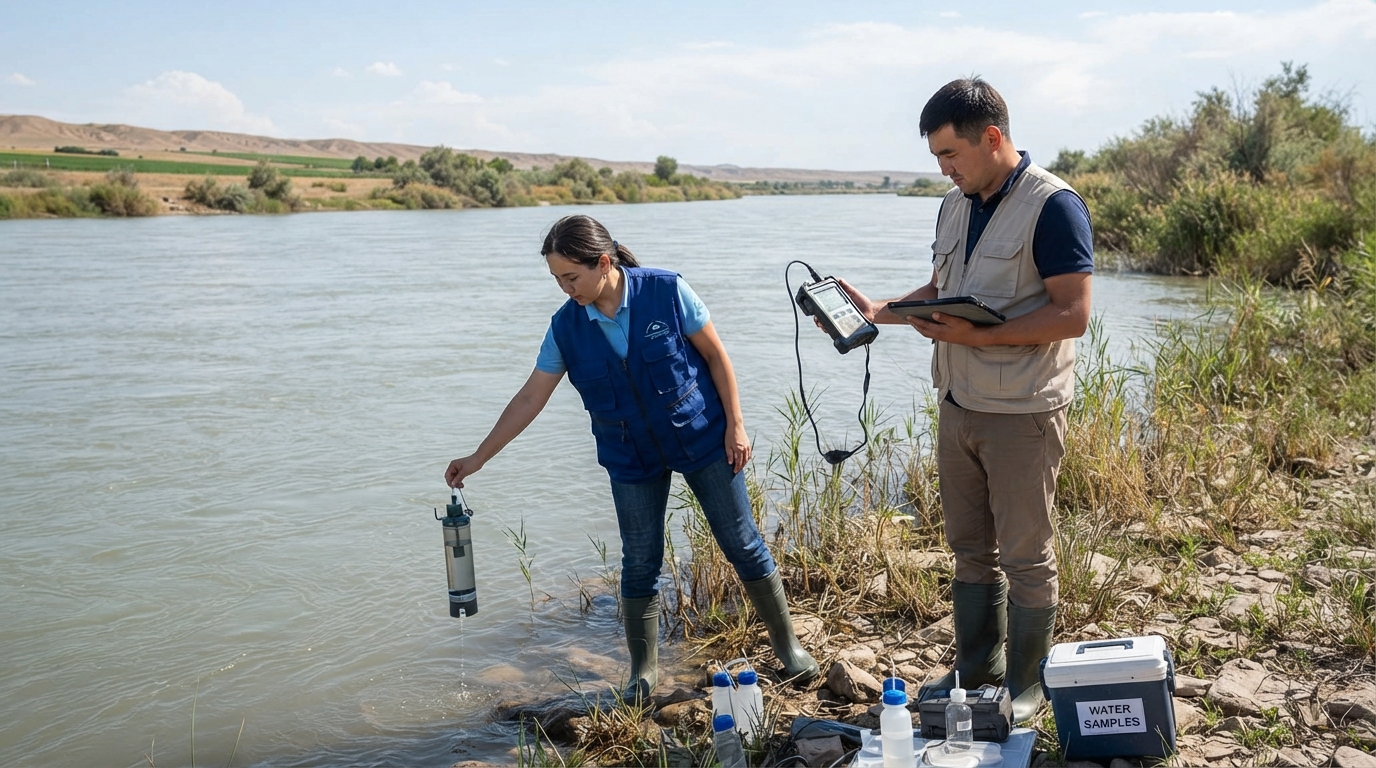
OSCE supports water quality monitoring in the Syr Darya river basin
Water plays a key role in public health, food security, and the well-being of local communities. Regular water quality monitoring allows tracking changes, identifying pollutants, and making informed decisions to protect the environment. The OSCE Project Co-ordinator in Uzbekistan, in close cooperation with the National Environmental Monitoring Centre, supports the monitoring of transboundary watercourses in the Syr Darya river basin.
As part of this work, the chemical composition of surface waters and bottom sediments is being studied. This enables specialists to assess potential contamination risks associated with waste from upstream mining and industrial enterprises, as well as other pollution sources.
"For several years, we have been supporting our national partners in monitoring water quality and pollution levels in the Syr Darya river basin," noted Ambassador Antti Karttunen, OSCE Project Co-ordinator in Uzbekistan. "Water and natural resources know no state borders. Our national partners work closely with colleagues from neighboring countries and exchange data obtained through OSCE-supported monitoring. This contributes to increasing transparency and helps find solutions to shared environmental problems."
As noted by Zafar Kayumov, First Deputy Head of the National Environmental Monitoring Centre, long-term cooperation with the OSCE has contributed to strengthening national capacity in the field of environmental analysis. The results obtained serve as a scientifically sound basis for tracking pollution trends, assessing potential risks to the population and ecosystems, and making decisions in the field of environmental protection.
By continuing to provide support for water quality monitoring and transboundary data exchange, the OSCE Project Co-ordinator in Uzbekistan helps national partners identify emerging environmental risks in a timely manner and promotes the sustainable management of shared water