

Origins of sore throat, its symptoms, and mistakes made in its treatment
**Causes, symptoms of sore throat and mistakes made in its treatment**
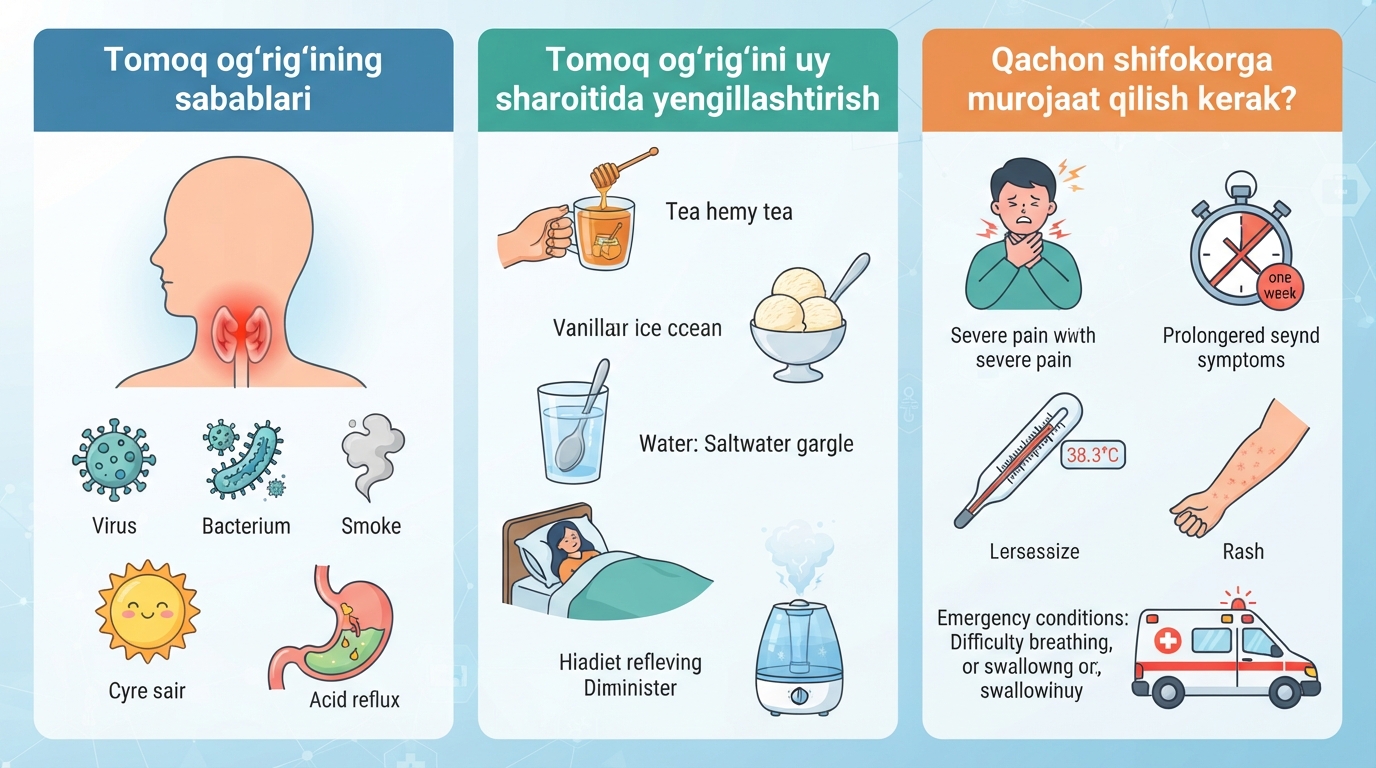
Inflammation and swelling in the mucous membrane of the pharynx, larynx, or trachea is the main cause of a sore throat. Most often, sore throats are caused by viral infections, but other factors can also be involved, including: bacteria; allergies; strain on the vocal cord muscles; dry air; inhaling toxic substances; gastroesophageal reflux disease, and others.
For this reason, sometimes only a doctor can relieve a sore throat.
**When does a sore throat require medical attention?**
Usually, a sore throat goes away on its own within a few days, but in some cases, a doctor's examination is necessary.
**When to call an ambulance?**
Call for emergency medical assistance if the following symptoms are observed: difficulty swallowing or breathing; excessive salivation (which can be a sign of inability to swallow); a whistling sound or noise when breathing; if the pain is very severe and the condition worsens over time.
**When to make an appointment with a doctor?**
You should consult a general practitioner or an otolaryngologist if you have the following symptoms: the sore throat is very severe and does not ease for more than a week; hoarseness lasts for more than two weeks; the patient has difficulty swallowing; breathing becomes difficult; pain occurs when opening the mouth; swelling is observed in the neck or face; the ear also hurts; coughing up blood; a skin rash appears; body temperature exceeds 38.3°C.
If your child's sore throat does not decrease even after a warm drink at breakfast, such as tea, you can take them to a pediatrician.
**Relieving a sore throat at home**
If there are no additional symptoms listed above, a sore throat can be treated at home. To do this:
**Drink more warm liquids**
Tea, compote, milk — these drinks moisturize the mucous membranes and relieve sore throat. If a cough is also bothersome, you can add honey to the tea. However, remember that honey should not be given to children under one year of age.
**Eat some ice cream**
Many people think that ice cream causes a sore throat. In fact, the cold reduces inflammation.
**Gargle your throat**
Add half a teaspoon of regular table salt or baking soda to a glass of warm water and mix well. Gargle your throat with the solution. Saltwater helps reduce swelling and pain in the throat. Soda soothes the throat and dissolves phlegm.
**Take over-the-counter antihistamines**
Antihistamines prevent blood vessels from dilating, thereby reducing swelling and inflammation.
**Use a humidifier**
Dry air draws moisture from the mucous membranes and worsens the pain. Moisture, on the other hand, prevents the throat from drying out. If you do not have a humidifier, you can place a wet towel on a hot radiator or try other ways to humidify the air.
**Stay away from harmful smoke and odors**
Cigarette smoke, the smell of cleaning products, or other chemicals (paint, varnish, gasoline) irritate the throat.
**Get enough rest**
The body needs more strength to fight the infection, so try to rest at the first signs of illness.
**Mistakes made in relieving a sore throat**
**Hot inhalations**
Inhaling hot air increases blood flow, which increases swelling in the throat.
**Inhaling essential oils**
Essential oils can cause a severe allergic reaction and even anaphylactic shock.
**Drinking very hot water**
Hot liquids increase blood flow and burn the mucous membrane.
**Taking antibiotics**
In most cases, a sore throat is caused by acute respiratory viral infections, and antibiotics do not affect viruses. Therefore, antibiotics should not be taken without a doctor's prescription.