

OpenAI will implement an invisible watermark in texts created using ChatGPT
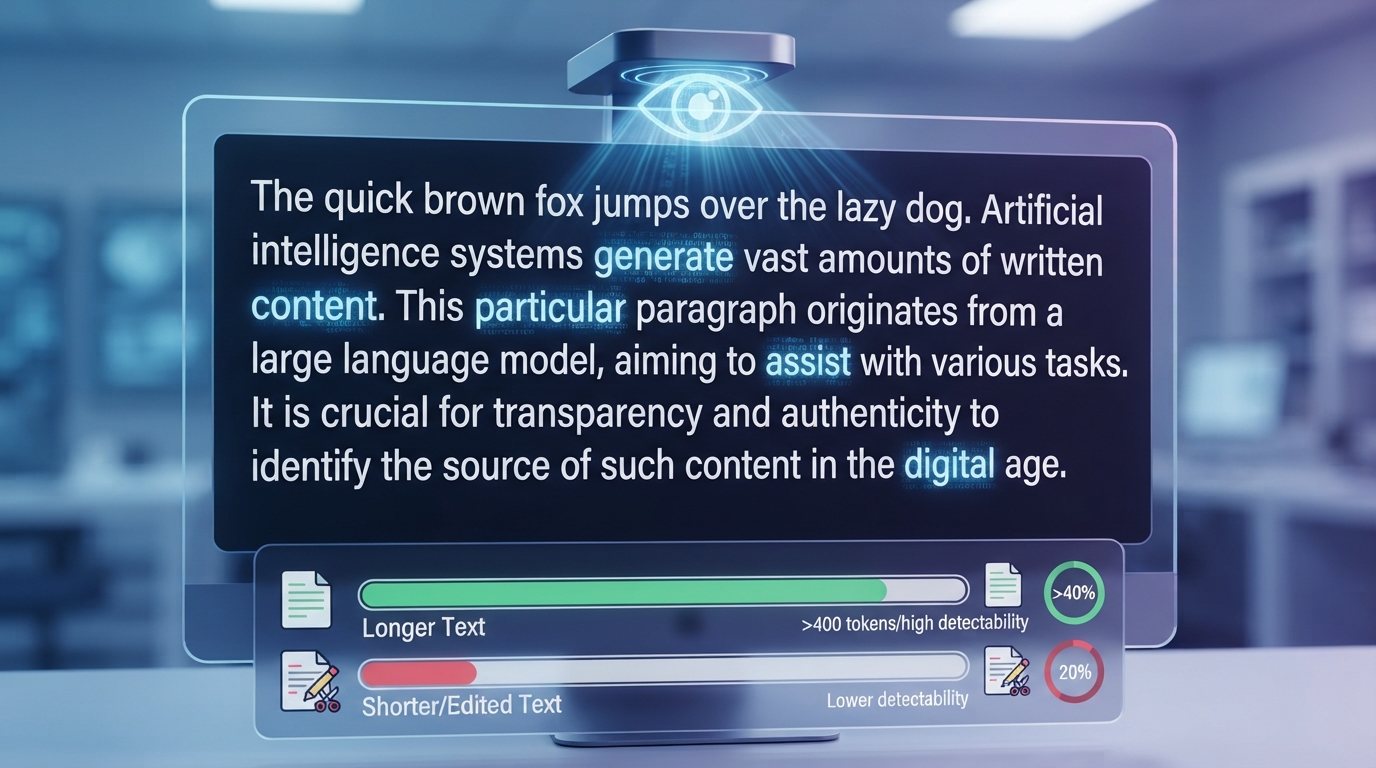
In the coming weeks, OpenAI will begin implementing an invisible watermark into texts generated by ChatGPT and Codex, complying with the requirements of the European Union's Artificial Intelligence Act, which mandates the capability for machine detection of AI-generated content.
OpenAI announced this on October 5. The company emphasized that text watermarking and AI-content detection technologies are still in the early stages of development and have serious limitations.
The watermark will be covertly embedded into the text using textGrain technology. It alters word choice according to a specific statistical pattern, forming a hidden signal. A special detector then analyzes the text and determines whether such a watermark is present.
In parallel, OpenAI will begin accepting applications from researchers and expert organizations for access to the detector. In the first phase, only approved specialists will be able to use it, helping the company assess the reliability of the technology and options for its responsible application.
For API clients, text watermarking is already available as an option for selected models worldwide, but it is disabled by default.
At the same time, OpenAI warns that the watermark does not provide 100% certainty in establishing the origin of a text. The shorter the material or the stricter the requirements for phrasing, the harder it is to detect. Furthermore, editing can significantly weaken the signal.
In OpenAI's tests, the detector found the watermark in approximately 80% of texts of about 200 tokens — which is roughly 130–160 words — and in 95% of materials of about 400 tokens (260–320 words). For mathematics texts, the rates were noticeably lower due to less freedom in word choice.
Paraphrasing also sharply reduced detection effectiveness. Replacing 10% of words with synonyms reduced the detection rate from approximately 92% to 66%, and when replacing a quarter of the words, it dropped to 17%.
OpenAI claims that in its own tests, textGrain performed as well as or better than other tested approaches, including SynthID for text. At the same time, the company intends to make the technology open-source so that other developers can use it and develop their own solutions.
The EU's requirements for labeling AI content are part of a broader approach to transparency in the use of generative artificial intelligence. OpenAI separately noted that existing tools for verifying the origin of images and audio will continue to be available to organizations wishing to determine whether such materials were created by its systems.
Earlier, New York University mathematician Tristan Buckmaster claimed that OpenAI could have copied an approach that he, along with colleague Levent Alpoge, had been developing for nearly a year to solve a "Millennium Prize Problem."