

Online business lending in Uzbekistan is only taking its first steps.
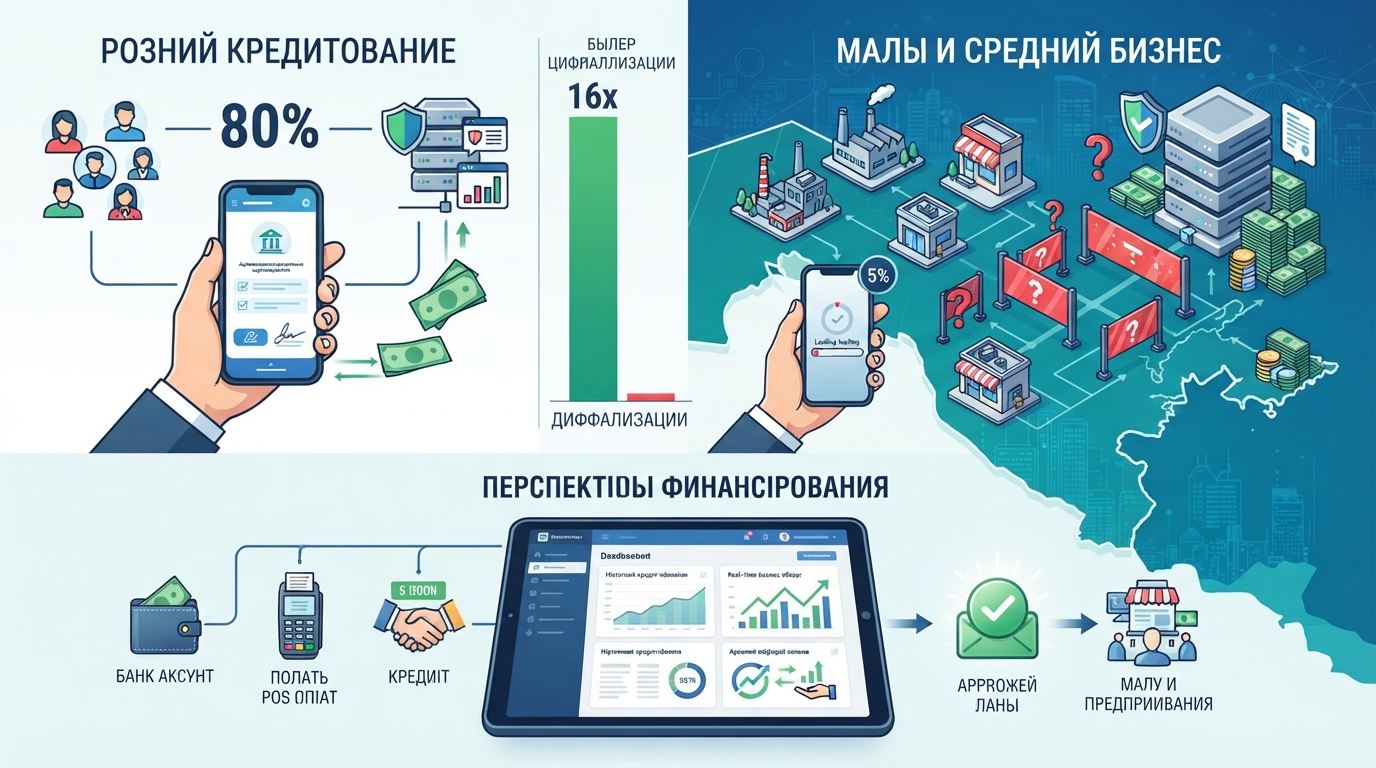
Only 5% of microloans for small and medium-sized businesses in Uzbekistan are issued entirely through online channels, compared to 80% of retail loans to the population.
Online lending for entrepreneurs in Uzbekistan is in its infancy.
According to the Central Bank of the Republic of Uzbekistan, the digitalization of retail lending in the country significantly outpaces similar processes for small and medium-sized businesses. While 80% of new retail loans are issued through automated systems, only about 5% of microloans for SMEs are processed entirely online.
According to the pilot Financial Inclusion Index, this sixteen-fold gap in the level of digitalization of retail and business lending is observed against the backdrop of the country's developed credit infrastructure. Credit bureau coverage covers 98% of the adult population and approximately 68% of small and medium-sized businesses.
The Central Bank notes that this combination—high credit information coverage with a low share of digital business loan processing—indicates that the process of obtaining financing for companies is only just beginning to shift to a digital format.
The report emphasizes that the combined use of credit history and company turnover data can expand financing options for solvent entrepreneurs. Transaction data combined with credit information allows for a more accurate assessment of not only a company's past payment discipline but also its current cash flow and ability to service debt obligations. This is especially important for businesses with limited collateral or without an established credit history.
Among the priority development areas, the Central Bank highlights expanding the coverage of credit information, transitioning to financing models based on companies' actual cash flows, and developing "embedded finance" solutions that integrate accounts, payment acceptance, and lending into a single digital path for businesses.