

Almost half of bank cards in Uzbekistan are not used.
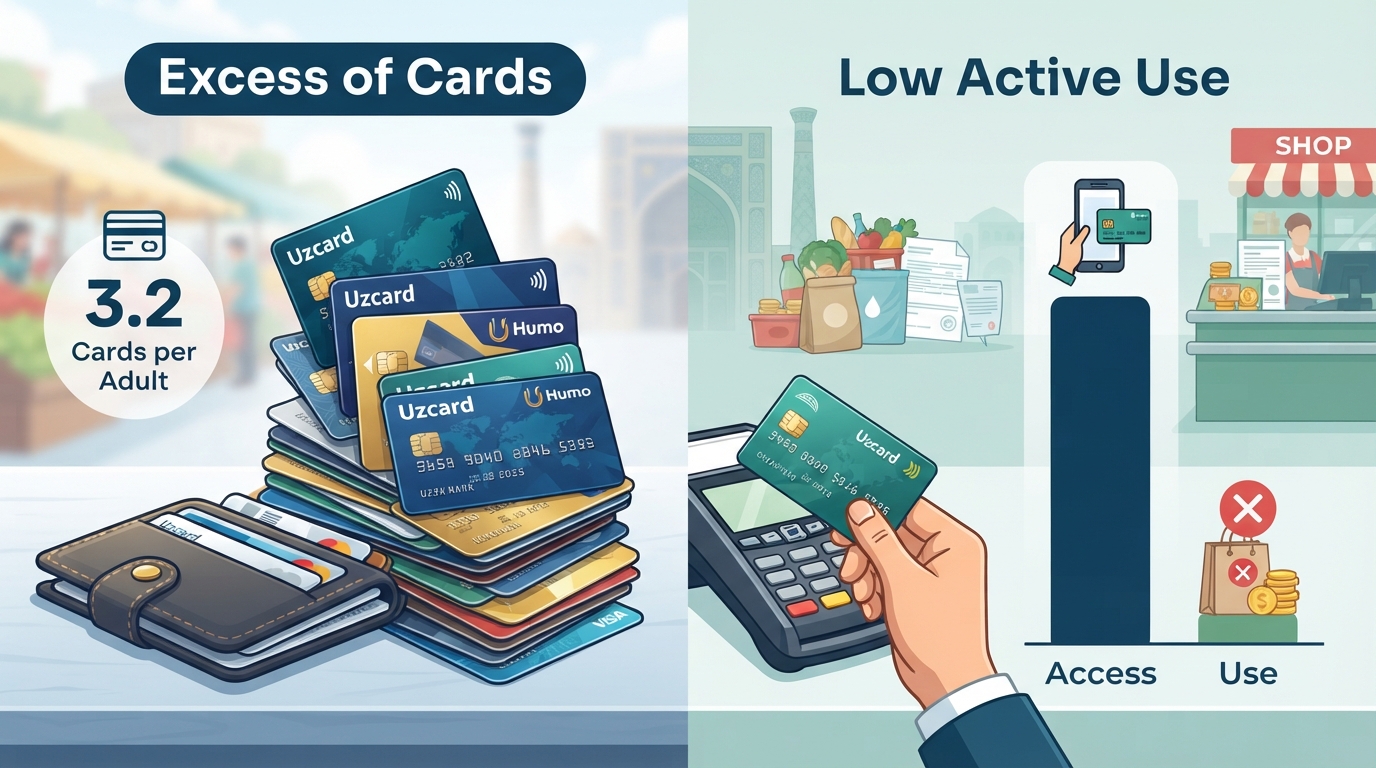
With an average of 3.2 cards per adult resident of Uzbekistan, only 53% of cards are actively used, according to the Central Bank's Financial Inclusion Index.
Here's the text rewritten in Russian:
Almost half of bank cards in Uzbekistan remain inactive.
Uzbekistan has an oversupply of issued bank cards, but their usage lags significantly: on average, every adult has 3.2 cards, but only 53% of them are actively used. These data are provided by the Central Bank of the Republic of Uzbekistan.
According to the results of the pilot financial inclusion index, payment services are the most accessible to the population. For example, 83% of adults own bank cards, approximately 77% use online banking, and 86.3% can make payments via mobile internet.
However, actual usage of payment instruments is the lowest among all products – only 34 points out of 100, while the accessibility of these same services is rated at 69 points.
This gap is explained by the fact that the increase in the number of issued cards is not accompanied by a proportional increase in their active usage. The report shows that only slightly more than half of national cards have been used at least once over the past 12 months.
Meanwhile, 69% of all payment transactions in the country are person-to-person (P2P) transfers, while card payments for goods and services remain relatively rare.
The Central Bank notes that further expansion of the card market will have a limited impact on financial inclusion.
Instead, priorities should be the development of merchant acquiring, expanding cashless payment options for everyday transactions—such as utility bills, purchases, and regular payments—and improving digital financial literacy.