

"One percent error is a million dollars": where does an entrepreneur lose big money?
Most entrepreneurs who want to invest in commercial real estate follow the same path: buy land, contact a designer and build. But commercial real estate expert Aziz Shermukhamedov says that this very approach can lead entrepreneurs to multi-million dollar mistakes. In an interview with Kun.uz, he spoke about the mistakes entrepreneurs make before building a facility, using the example of such famous projects as "Tashkent City", "Magic City" and "Boulevard", and how to avoid them.
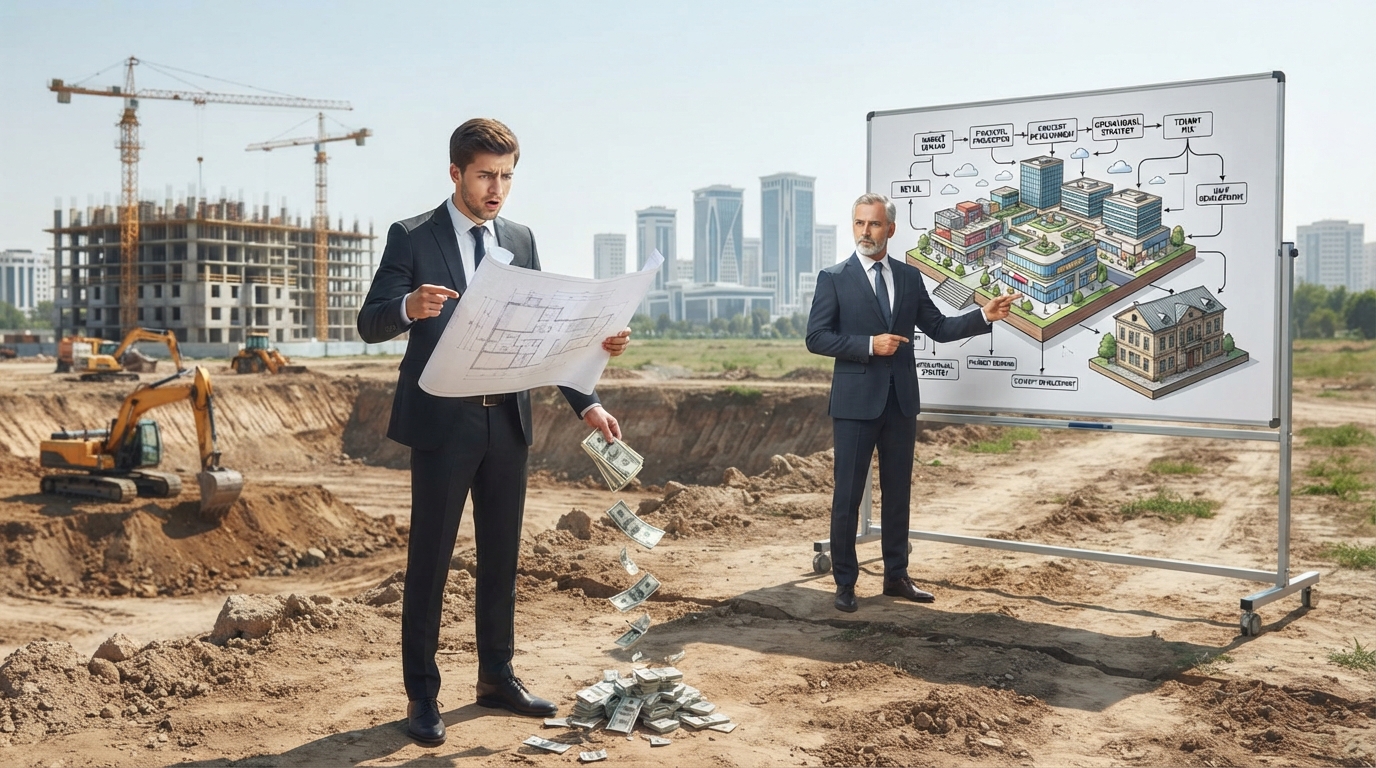
"One percent mistake - one million dollars": where does an entrepreneur lose big money?
Most entrepreneurs who want to invest in commercial real estate follow the usual path: they buy land, contact a designer and start construction. However, commercial real estate expert Aziz Shermukhamedov notes that this very approach can lead entrepreneurs to millions of dollars in mistakes. In an interview with Kun.uz, he spoke about the mistakes that entrepreneurs make before building a facility, using the example of such famous projects as "Tashkent City", "Magic City" and "Boulevard", and how to avoid them.
**It is necessary to start the project with a specialist, not an architect**
One of the most common mistakes of an entrepreneur planning to build a commercial facility is to hand over the project directly to the architect. The investor chooses a plot of land, then contacts an architect and asks him to draw up a project for a hotel, shopping mall or business centre. However, Aziz Shermuhamedov notes that the technical and aesthetic correctness of the architectural project is not enough for the subsequent successful operation of the facility.
“When many of our people get sick, they run straight to the pharmacy, do not go to the doctor, but diagnose themselves and start taking medication on their own. They go to the doctor only after their condition worsens. This is also a classic mistake among developers – they go straight to the designer and say, ‘Design me a hotel.’ It is not right to blame the designer for this. Because the role of an architect and the role of a consultant are different,” he says.
**What should an investor know before buying land?**
One of the most expensive mistakes in a commercial facility is made when the land is being purchased, not after construction begins. Therefore, the investor should first calculate not only what can be built here, but also who will need the facility to be built, how it will work, and how much income it will bring in the future. Aziz Shermuhamedov says that not only the construction of the facility, but also its “second life” after opening must be thought out before the project begins.
“You don’t need to think about what I bought the land, what will I do now. Before buying the land, you should have answers to the questions “what will I do here, for whom will I do it, how will it work, how much income will it generate?”. Building the facility is the first part. It has a second life. The main issue is how it will work after it opens, people come and start paying.”
**Millions are lost in decisions, not construction**
In commercial real estate, large sums of money are not lost overnight – it often starts with seemingly insignificant decisions at first glance. In a project where tens of millions of dollars are spent on construction, a small mistake in location, land use, concept of the facility or its future management can later turn into a huge financial loss. Therefore, the main task for an investor is not only to control construction costs, but also to identify wrong decisions at the very beginning of the project.
“After you bet $50 million, $100 million on a single project, your one percent error there can turn into a million dollars. Therefore, the role of a consultant is like insurance. For example, he will prevent mistakes that you may make in the future.”
According to the expert, this is why it is important to contact a consultant not after the project is ready, but at the very stage of making the first decisions. Because after the start of construction, it takes more time and money to correct the mistake.
**"Second life" - reuse of the object**
Another important issue in commercial real estate is that it is not necessary to build every project from scratch. According to Shermuhamedov, there are many objects on the market that were previously built, but do not meet today's requirements. Instead of demolishing them, reworking them and giving them a new purpose can be an effective solution for both the developer and the city.
"Sometimes it makes more sense to give a second life to an existing object than to build a new building. Because there is a foundation, there are communications, there is a location. You just need to process it correctly."
The specialist sees this approach not only as cost savings, but also as a rational use of existing resources. In particular, well-located but outdated buildings can be turned into economically active objects again by bringing them into a modern format.
"The second life of an object does not mean just cosmetic repairs to an old building. To see its potential, to understand what it can be transformed into, and to give it new functionality.”
So the question for a developer is not always “What can I build?” In some cases, the more important question should be “What can I create from what I have?”