

NZ apologies to children forced to live in bush for years with fugitive dad
A public inquiry has found that agencies "missed key opportunities" to recover the children sooner.
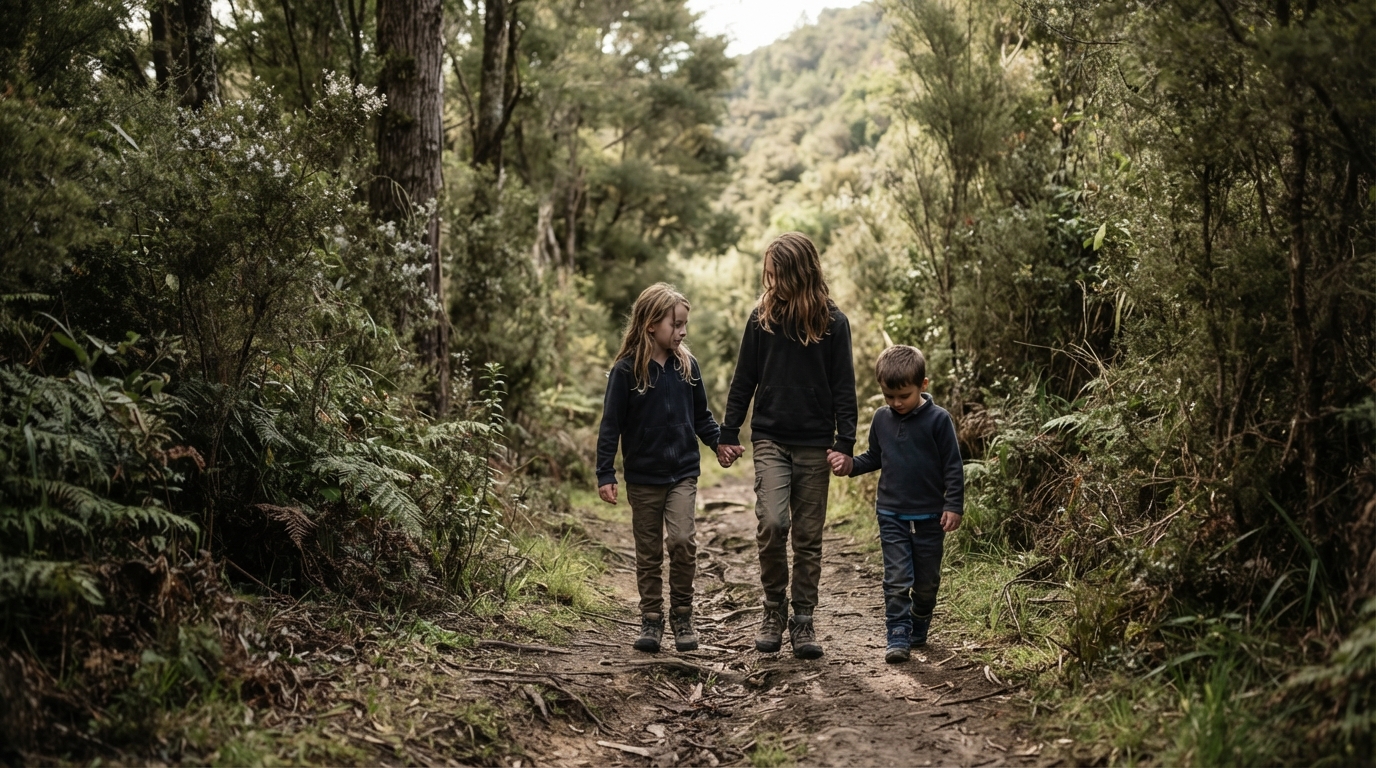
New Zealand has apologised to the three children of Tom Phillips, who disappeared with their father for years before he died in a police shootout, after an inquiry concluded that authorities failed to protect them.
“There were missed opportunities... and we’re sorry about the impact that it’s had on those children,” Prime Minister Christopher Luxon said on Wednesday.
The inquiry found that agencies involved had “underplayed, minimised or overlooked” the way the children were harmed by long stretches of isolation.
When Phillips took his children, then aged five, seven and eight, into the bush in December 2021, it was not the first time he had vanished with them. But they would not be located for almost four years.
According to the inquiry’s findings, published on Tuesday, police did not initially begin a search and rescue operation because of a “misconceived view that there were no concerns for the children’s welfare”.
The report was written by former High Court justice Simon Moore, who was the inquiry’s sole member.
It also criticised the agencies involved for “often minimising” the mother’s concerns, including worries about firearm safety, as “being part of a parenting dispute”.
Phillips was killed in a shootout with police on 7 September 2025 in the small town of Piopio in New Zealand’s North Island. The three children have been in the care of authorities since then.
Police later released images of what they believe was one of several filthy campsites where Phillips hid with his children, showing a stockpile of firearms, ammunition and cans of beer amid thick vegetation.
Phillips’ case has gripped New Zealand since the day he disappeared. It has also sparked public anger over how a fugitive father with three children could evade authorities for so long.
Among the “missed opportunities” identified by the inquiry were several reported sightings of Phillips and the children during the years they were missing, which agencies could have pursued more quickly.
After interviewing Phillips’ family members, among others, the inquiry found that he was not entirely cut off from the outside world.
For example, he visited his mother without the children in February 2022, and she gave him NZ$1,000 ($575; £426) in cash and food.
He also moved around the community during an hours-long shopping trip in August 2023, visiting several businesses in the Waikato region.
The inquiry found that he spent nearly NZ$6,000 in a single day on a load of goods including food, children’s clothing, gardening supplies, fishing gear, knives and lighters, among other items.
It also said the agencies involved — police, the national child protection agency Oranga Tamariki, the defence force and the ministry of education — could have communicated and coordinated better with one another to protect the children’s welfare.
On Wednesday, Luxon also apologised to the children’s mother, saying they were “let down through this process that spent four years in the bush”.
In addition to the prime minister, other government figures have apologised and accepted the inquiry’s findings.
“To the Phillips children directly, this report has found that our agencies did not take all practical steps to protect you. For that we are deeply sorry,” Social Development Minister Louise Upton said on Tuesday.
Upton said the children spent four years “in squalid conditions which deprived them of... a happy and healthy childhood”.
Deputy Police Commissioner Jill Rogers acknowledged police failings, but said the officers involved in the case had “put [in] their hearts and souls”.
“Did it take too long? Did we miss opportunities? Yes, we did. You know, you can’t unsee the images of where those children were living in those campsites... It’s heart-breaking,” Rogers told Breakfast, a talk show produced by local news service 1News.
She added: “We have to be better in this. But at the end of the day, our responsibility was to recover the children, and that is what we did.”