

No cash registers? Unorganized trade in Uzbekistan is growing faster than the rest of retail
Over the eight months, informal trade grew by 23.9% — faster than the sales of large, medium, and small enterprises. This segment already accounts for 10.3% of the country's retail trade turnover. According to the National Statistics Committee, during January–August, the volume of informal trade in Uzbekistan reached 38 trillion soums, increasing by 23.9% compared to the same period last year. This is the [...]
No cash register? Unorganized trade in Uzbekistan is growing faster than the rest of retail
In eight months, unorganized trade grew by 23.9% — higher than the sales of large, medium, and small enterprises. This segment already accounts for 10.3% of the country's retail turnover.
According to data from the National Statistics Committee, in January–August, the volume of unorganized trade in Uzbekistan reached 38 trillion soums, which is 23.9% more than in the same period last year.
This is the highest growth rate among the key categories of retail trade. For comparison, large enterprises sold goods worth 73.8 trillion soums — 20% more than a year earlier. The turnover of medium and small enterprises amounted to 258.6 trillion soums, increasing by 17.8%.
The share of unorganized trade rose to 10.3% of the total retail turnover. Simply put, this segment accounts for approximately every tenth soum spent on retail purchases.
What lies behind unorganized trade?
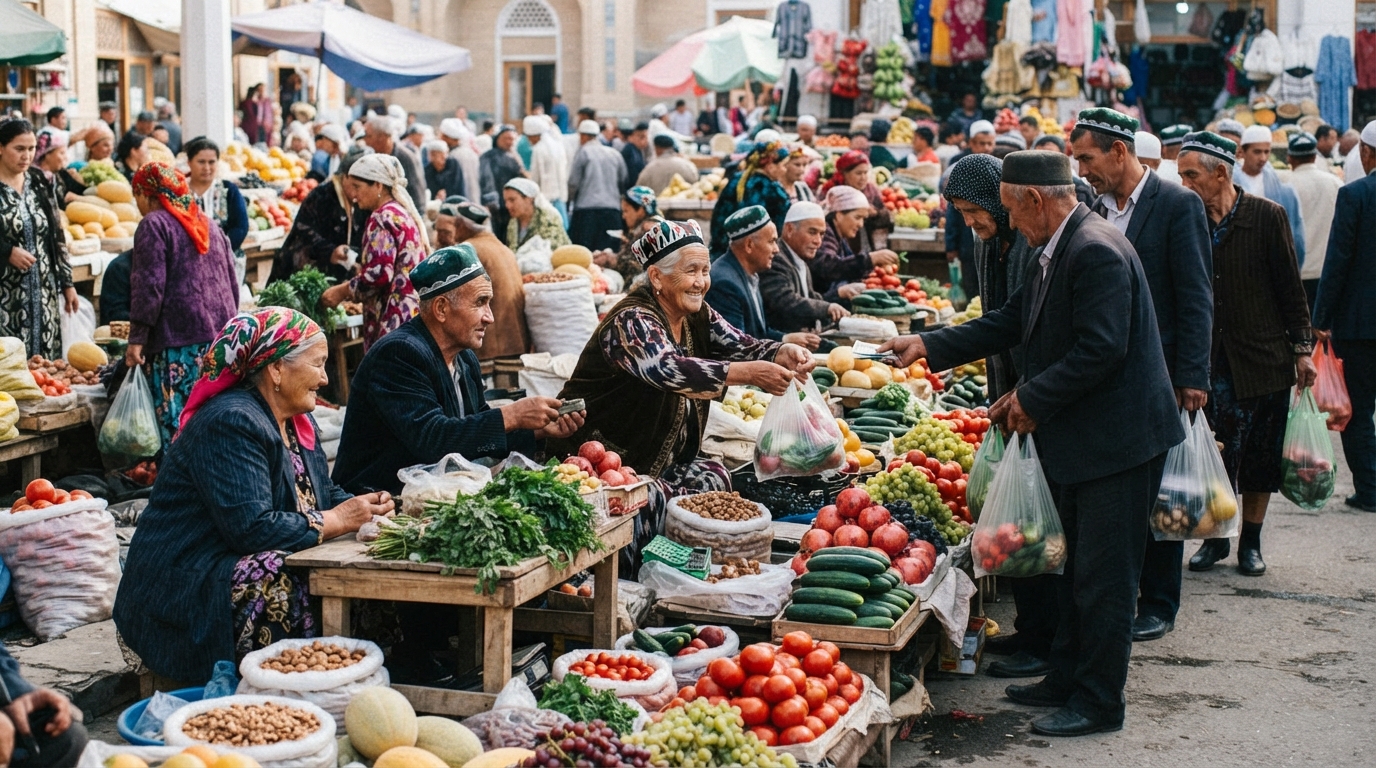
In official statistics, it primarily refers to the sale of goods by individuals at dehkhan (farmers') markets, as well as at livestock, poultry, and other animal markets.
The basis of this turnover is the sale of surplus agricultural products grown by the population on household plots and in personal subsidiary plots. These are vegetables, fruits, herbs, and livestock products that citizens sell independently, without establishing a legal entity.
Unlike large retail enterprises, this segment does not generate tax and accounting reports comparable in structure. Therefore, its volumes are estimated based on sample surveys and observations of trade by individuals in markets.
The rapid growth of this segment raises the question of how fully the state sees what is happening in retail trade. At the same time, unorganized trade in itself does not imply a violation of the law: the sale of their own agricultural products by the population is part of the legal market.