

NI saw largest rise in disposable income of any UK region
The figures estimate the amount of money that people have for spending or saving after they have paid taxes and received benefits.
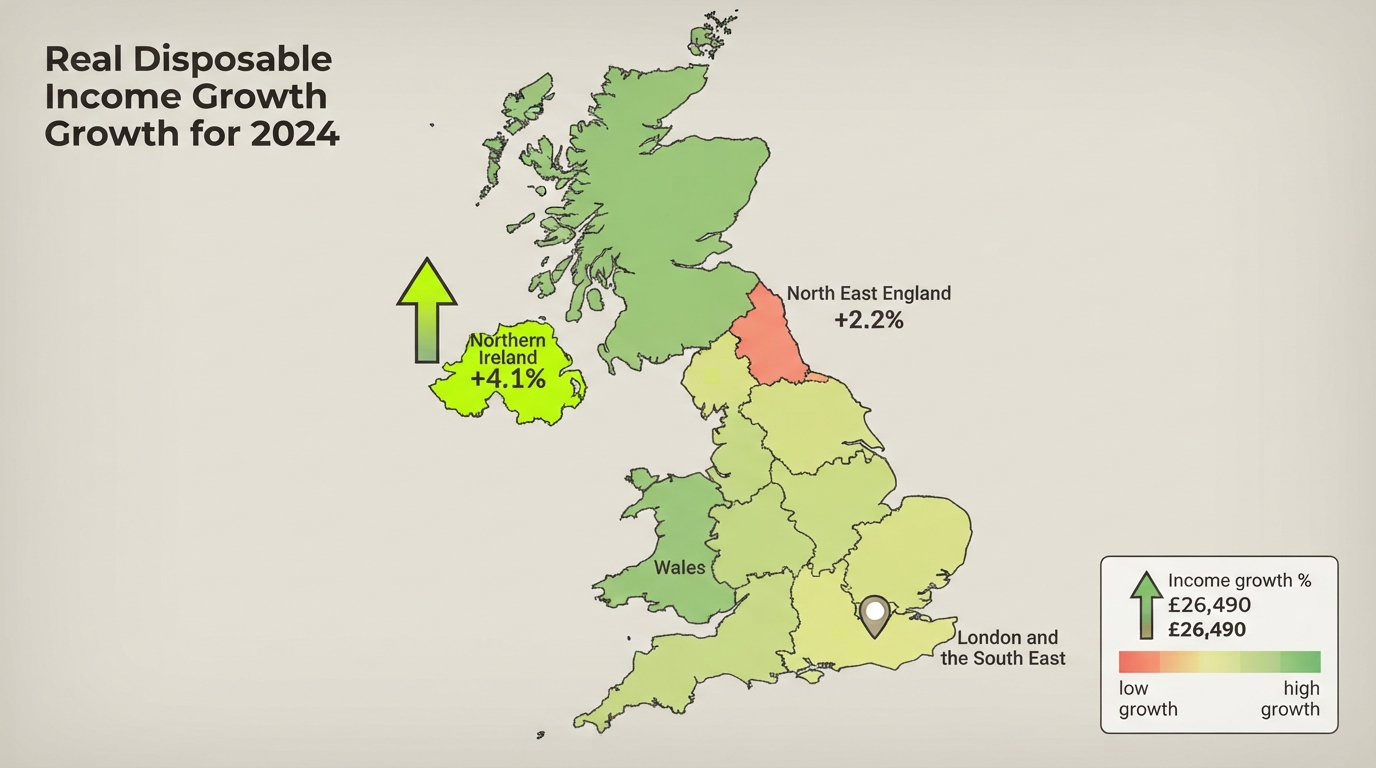
Northern Ireland experienced the most significant increase in disposable income across all UK regions, according to a recent report.
In 2024, real disposable income per person in Northern Ireland saw a 4.1% rise, marking the largest growth among all UK regions, as indicated by new data. This surge was likely driven by substantial, inflation-adjusted increases in benefits, pensions, and the minimum wage.
These figures, compiled by the Office for National Statistics (ONS), calculate the amount of money individuals have available for spending or saving after taxes are paid and benefits are received. Northern Ireland has a comparatively high percentage of its population earning minimum wages and receiving benefits. Consequently, fluctuations in these payment rates can have a disproportionately large effect on the region.
However, the data also likely reflects an increase in real wages within Northern Ireland's private sector during 2024.
Across the UK, the average real disposable income per person grew by 3.1%. The North East of England recorded the smallest increase at 2.2%.
With a real disposable income per person of £22,258, Northern Ireland ranks in the middle overall, slightly below the North West of England. The West Midlands, Yorkshire, Wales, and the North East of England all reported lower disposable incomes.
London stands out with an average disposable income exceeding £36,000 per person, though there are considerable disparities among its boroughs. The UK average is £26,490 per person, with only London, South East England, and East of England surpassing this figure.
Northern Ireland's standing within the UK ranking has improved over the past decade, primarily due to a weaker performance in Wales and some English regions.
Within Northern Ireland itself, Lisburn and Castlereagh recorded the highest average disposable income per person at £24,515, while Derry and Strabane had the lowest at £20,375.
(Related studies have compared waiting lists and taxes in Northern Ireland and the Republic of Ireland, noted that the average house price in Northern Ireland is now above £200,000, and projected that the Northern Ireland economy is expected to outperform the UK average over the next five years.)