

NASA's operation to save the telescope on the brink of collapse ended in failure
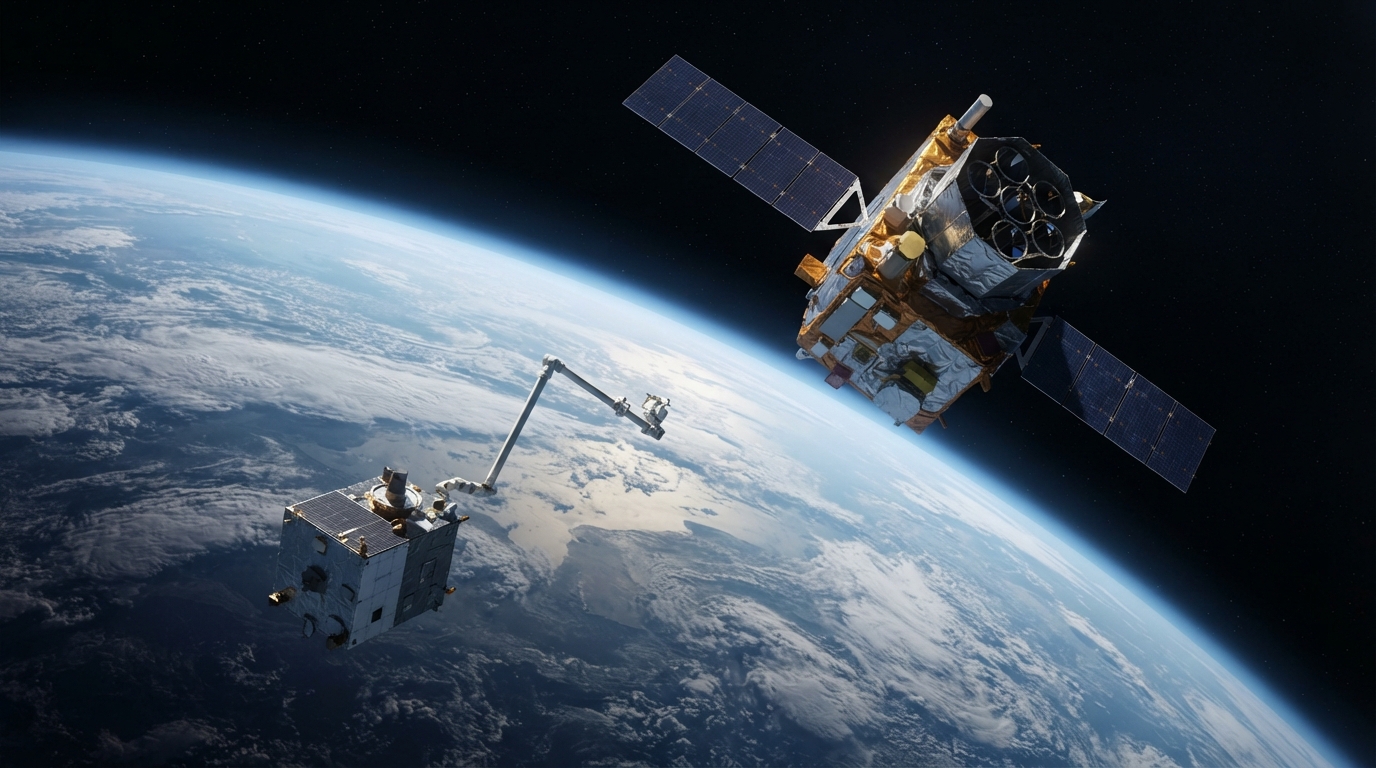
NASA's attempt to save the endangered telescope ended in failure
A private spacecraft sent to save NASA's Swift space observatory, which is at risk of crashing into Earth's atmosphere, approached within 15 kilometers of the telescope.
The Link spacecraft, created by Katalyst Space Technologies, reached its closest distance to Swift on September 2 and photographed it. However, the spacecraft did not have enough fuel left to boost the telescope into a higher orbit.
Although the mission to save Swift was canceled as early as mid-August, the Link spacecraft continued to be used to test subsequent space servicing technologies.
NASA allocated $30 million for this operation. The mission was prepared in a very short timeframe — within nine months. During the flight, Link encountered control issues and began to spin uncontrollably. A large portion of the fuel was consumed during attempts to stabilize it.
The Swift observatory was launched in 2004. It is primarily designed to observe gamma-ray bursts and other high-energy cosmic events.
In recent years, due to increased solar activity, the upper layers of Earth's atmosphere have expanded, increasing the drag affecting low-orbit spacecraft. Because of this, Swift is descending faster than planned.
The observatory does not have an engine designed to independently raise its orbit. According to NASA's calculations, Swift could enter Earth's atmosphere and burn up between October 2026 and the end of that year.
Despite this, NASA has restarted some of the observatory's scientific instruments and is continuing observations until it deorbits.
Earlier, NASA sent a special robotic spacecraft into orbit to stop the Swift telescope from falling to Earth. The plan was for Link to approach the telescope, capture it, and raise it from an orbit of approximately 360 kilometers to an orbit closer to 600 kilometers.