

Mission Impossible: NASA Fails to Save Space Telescope from Falling to Earth
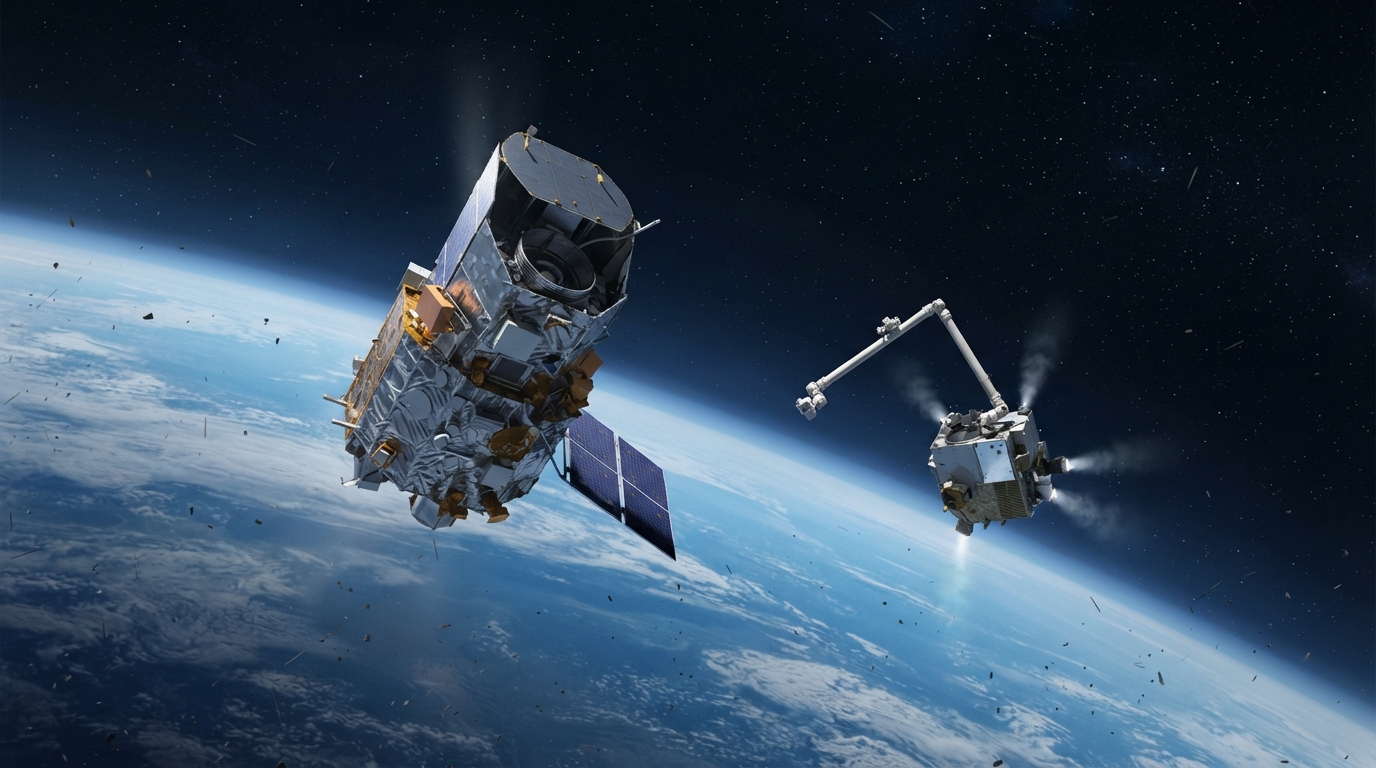
The mission to rescue the Neil Gehrels Swift Observatory space telescope from falling to Earth has failed, NASA announced. Efforts to prevent the spacecraft from deorbiting were abandoned after the LINK rescue module experienced technical problems. The telescope, which has operated for more than two decades, is expected to reenter Earth's atmosphere and disintegrate before the end of 2026.
Launched in 2004, Swift operates in low Earth orbit, specializing in the study of gamma-ray bursts—powerful, short-duration bursts of energy in space. Originally designed for a two-year lifespan, the spacecraft has significantly exceeded expectations, becoming a key instrument for observing high-energy phenomena in the universe.
The problem was caused by the telescope's declining orbit. Increased solar activity led to heating of the Earth's upper atmosphere, increasing aerodynamic drag and accelerating Swift's loss of altitude. NASA had previously suspended most scientific observations to buy time for a rescue operation.
For the rescue mission, NASA awarded a $30 million contract to the American company Katalyst Space Technologies. Over the course of nine months, the company developed and prepared the LINK spacecraft, which was intended to rendezvous with Swift, capture it with robotic arms, and raise it to an altitude of approximately 600 kilometers.
However, shortly after launch, on July 3, LINK experienced problems with its attitude control system. The spacecraft began spinning uncontrollably, and communication with it became unstable. Engineers managed to partially slow the rotation, but were unable to fully restore control.
As a result, NASA and Katalyst decided to abandon the capture and recovery of Swift. However, LINK will not be decommissioned: the spacecraft is still planned to rendezvous with the telescope and test technologies that could be applied to servicing other satellites.
Now, Swift, which is more than 20 years old, is effectively doomed to deorbit. NASA predicts that the telescope will reenter the atmosphere and disintegrate upon impact later this year. There is currently no direct replacement, so its scientific missions will be partially distributed among other space observatories.
Nevertheless, the failure of the mission could prove beneficial for future space missions. NASA views the experience gained as a first practical step toward developing technologies that allow for the repair, relocation, and life extension of satellites in orbit.
NASA previously estimated the first demonstration mission with a nuclear electric propulsion system to cost at least $2.1 billion. The launch of the Space Reactor-1 Freedom spacecraft to Mars is scheduled for late 2028, with the mission of delivering three research helicopters to study the planet's surface.