

More than a quarter of surveyed doctors in Central Asia are unfamiliar with delayed antibiotic prescribing
More than a quarter of general practitioners in Central Asian countries who participated in the study are not familiar with the strategy of delayed antibiotic prescribing. This is evidenced by the results of a survey involving 1,231 medical specialists from Kazakhstan, Kyrgyzstan, Uzbekistan, and Tajikistan. According to the study, 27.1% of the surveyed doctors were unaware of the approach in which an antibiotic is prescribed with a recommendation to start taking it […]
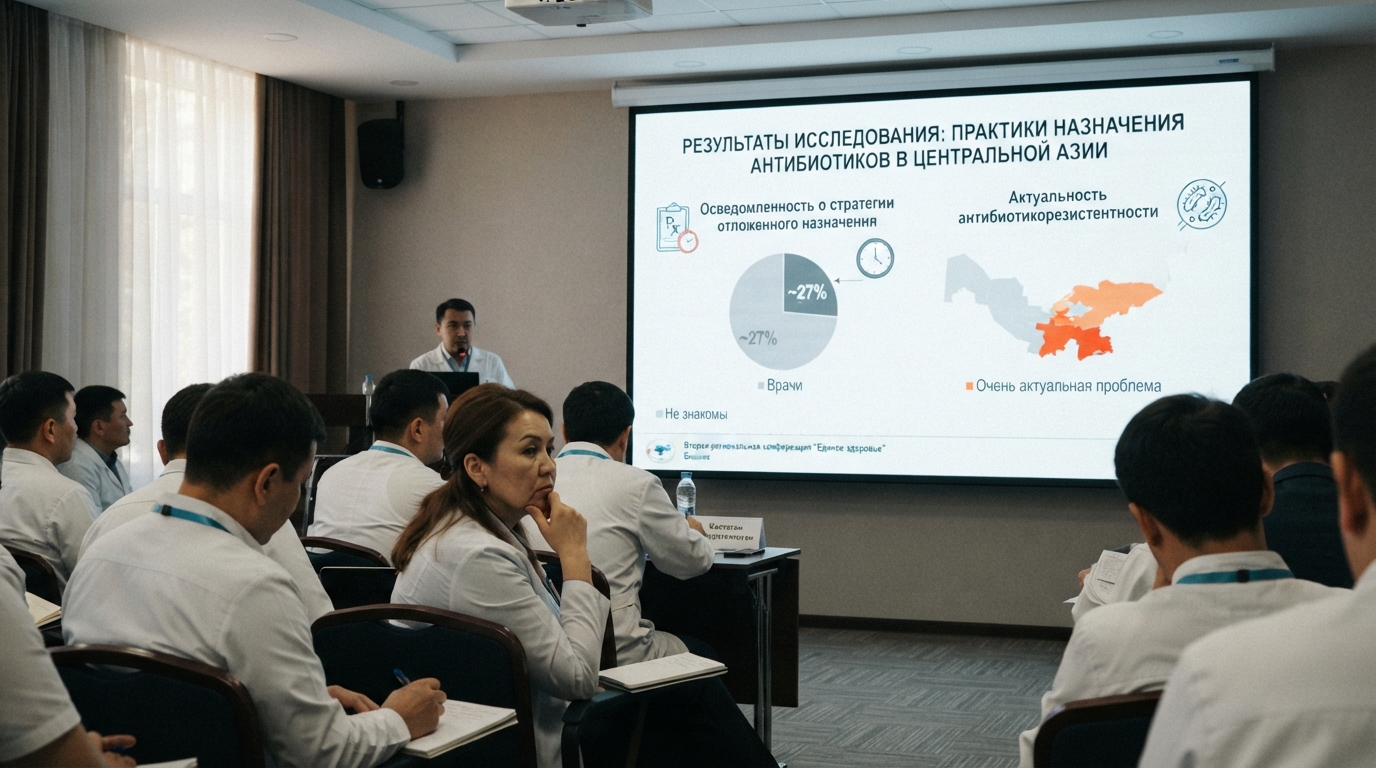
More than a quarter of surveyed Central Asian doctors are unfamiliar with delayed antibiotic prescribing
More than a quarter of general practitioners from Central Asian countries who participated in a study are unaware of the delayed antibiotic prescribing strategy. This is according to the results of a survey of 1,231 medical specialists from Kazakhstan, Kyrgyzstan, Uzbekistan, and Tajikistan.
As the study showed, 27.1% of respondents were not aware of the approach in which an antibiotic is prescribed with the recommendation to start taking it only if symptoms persist or worsen.
The results of the work were presented at the Second Regional Conference of the "One Health" program in Bishkek.
In Tajikistan, 119 doctors participated in the study. Of these, 27.7% reported that they were unfamiliar with the delayed antibiotic prescribing strategy.
At the same time, 71.4% of Tajik participants called antibiotic resistance a highly relevant issue in their daily practice. Another 65.5% of doctors stated that they frequently use clinical guidelines for antibiotic therapy — the highest rate among the four countries represented in the study.
31.9% of the surveyed specialists from Tajikistan reported that they daily encounter patients who are found to have microorganisms resistant to multiple antimicrobials.
The authors note that in Kazakhstan, Kyrgyzstan, and Uzbekistan, doctors more frequently described such cases as rare.
When interpreting the results, the authors point to the study's limitations. The survey was conducted voluntarily in an online format, so its results cannot be automatically generalized to all doctors in Central Asia.
Furthermore, the researchers did not verify actual antibiotic prescriptions using medical records. The obtained data reflect the responses of the survey participants rather than the statistics of all prescriptions in the region's countries.
The study was published in March 2026 in the scientific journal Antibiotics. Among its authors are specialists from the Tajik National University.
Antibiotic resistance remains one of the challenges of modern medicine, as the resistance of microorganisms to drugs can limit the effectiveness of treating infections. The study's results point to the need for further research into antibiotic prescribing practices and the dissemination of modern approaches to antibiotic therapy among healthcare professionals in the region.