

More than 900 killed in Gaza this year despite ceasefire, Hamas-run health ministry says
The ministry says the total number of people killed in the Strip since 10 October is now more than 1,300, including 301 children.
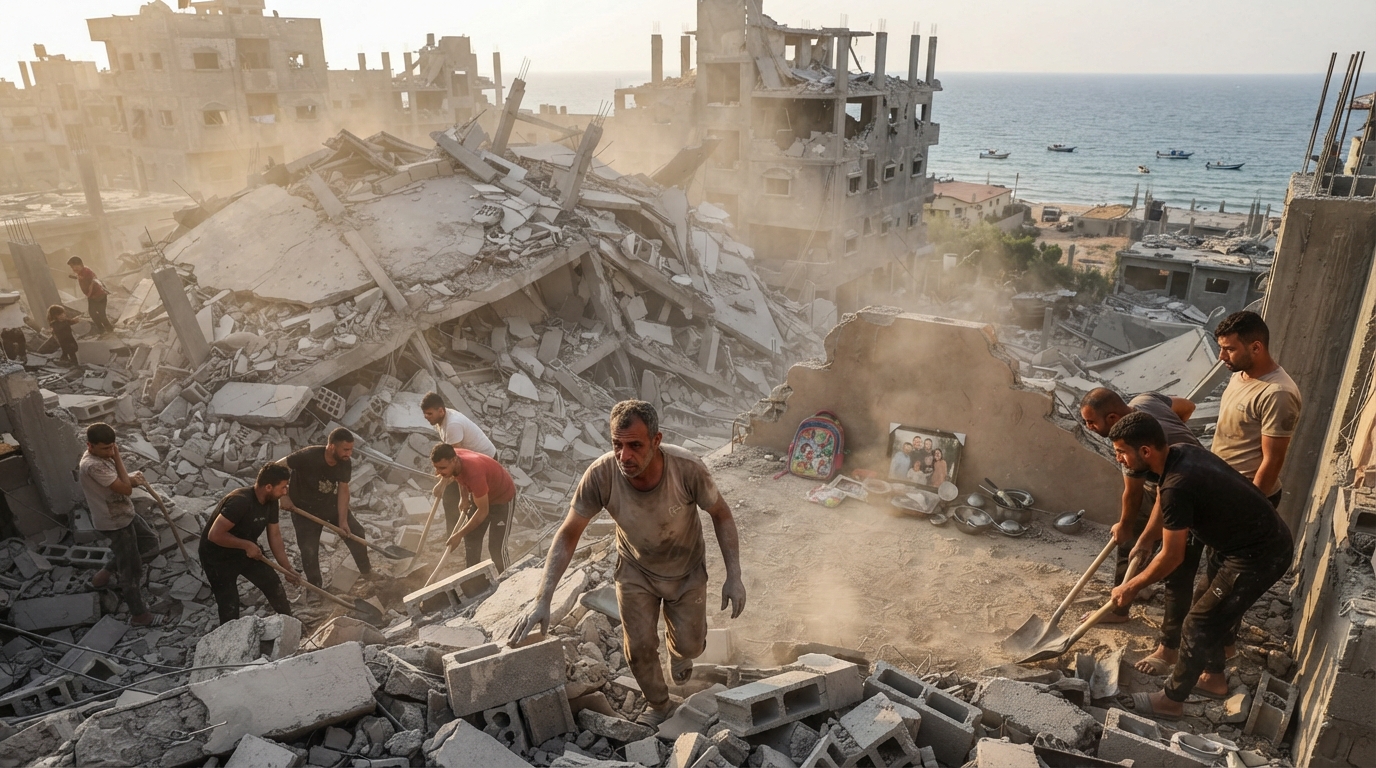
Despite a declared ceasefire, over 900 individuals have been killed in Israeli assaults in Gaza this year, according to the latest statistics from the territory's Hamas-run Ministry of Health.
This brings the total fatalities in the Strip to over 1,300 since the ceasefire was announced on October 10, including 301 children, the ministry reports. The truce was established after Hamas and Israel accepted US President Donald Trump's 20-point peace proposal, which mandated a halt to "all military operations, including aerial and artillery bombardment."
Since the ceasefire, BBC Verify has examined numerous videos depicting the aftermath of Israeli strikes on various locations, such as a beachfront cafe, shelters for displaced persons, and a reported funeral procession in central Gaza.
Recent months have been particularly lethal, with over 100 deaths recorded each month from April to August. The health ministry attributes these deaths directly to Israeli military actions but does not differentiate between civilians and combatants. The UN considers these figures reliable, and independent analyses by experts align with the ministry's data, according to BBC Verify.
The Israel Defense Forces (IDF) disputes these figures, telling BBC Verify there is "no basis to assume" all listed deaths resulted from IDF activity. The IDF stated it operates "in a precise manner to remove threats and protect its troops and Israeli civilians, in accordance with the agreement," and strives to minimize civilian harm "to the greatest extent possible."
Earlier this year, Israeli media reported an Israeli security official acknowledging over 70,000 deaths in the Gaza war, including more than 20,000 combatants.
From the ceasefire's start on October 10 to the end of that month, the ministry recorded 251 deaths. Since then, deadly Israeli attacks have persisted monthly. July saw the highest monthly death toll this year, with 152 people killed, including 21 children.
The IDF reports five of its soldiers have died in combat since the ceasefire, and one contractor was killed in an "operational accident." It also claims to have killed hundreds of military operatives since October.
Armed Conflict Location and Event Data (Acled), a conflict monitoring group that verifies attacks using official statements, media reports, and social media, has recorded approximately 200 Israeli strikes during the ceasefire that reportedly killed Hamas operatives or other armed "militants" in targeted attacks. Acled noted these include commanders involved in planning the Hamas-led October 7, 2023, attack on Israel, which initiated the war, killing around 1,200 people and taking 251 hostage.
Hugh Lovatt, a senior policy fellow at the European Council on Foreign Relations, stated that "Gaza has seen a ceasefire in name only" since last October. He observed that the Israeli military has continued its almost daily air and drone strikes, and "though it claims to be targeting Hamas or imminent threats, it is Gaza's civilians that have continued to bear the brunt." This situation could become a "central stumbling block" in international efforts to implement Trump's ceasefire deal, he added.
The IDF informed BBC Verify it "remains committed" to the ceasefire agreement, citing "continued violations and threats posed by Hamas and other terror organizations" in Gaza.
BBC Verify has analyzed numerous videos of attacks in Gaza since the ceasefire. One video shows emergency services responding to a strike at a Gaza City beachfront cafe on August 18, where six people were killed, according to the health ministry. The following day, nine people, including a 13-year-old, were reportedly killed in a strike on a police headquarters in the al-Tuffah neighborhood. The IDF stated it was targeting Hamas commanders and terrorists in both incidents and that "steps were taken to mitigate harm to civilians."
One of the deadliest single incidents in July was a strike on a reported funeral procession in Nuseirat, killing seven people and injuring 22, according to Al-Awda Hospital. Verified images show nine blood-covered individuals on the street, with two appearing alive and receiving aid from bystanders. The IDF claimed it was targeting a "significant military operative" of the Palestinian Islamic Jihad group involved in the October 7, 2023, attacks.
In an August 1 overnight strike on an apartment block on Gaza City's western edge, a pregnant woman, her husband, and their young son were killed, local reports indicate. Verified footage showed the body of an unborn baby in the rubble. A man searching the ruins described hearing a strike, seeing smoke, and finding "dead bodies scattered" after breaking down the door. The IDF stated it had targeted an acting Hamas commander.
UNICEF has also reported over 300 child deaths since the ceasefire, tracking incidents affecting children in Gaza through UN personnel. James Elder, UNICEF global spokesperson, called the number of child deaths "absurd and devastating," adding that hundreds more have been injured. "A ceasefire that paints such a grim picture can only be failing children," he remarked.
UNICEF and other humanitarian organizations in Gaza have also reported Israeli strikes on their workers since the ceasefire, including two UNICEF-contracted water truck drivers killed in April by Israeli fire at the Mansoura water filling point in northern Gaza. The IDF stated its soldiers "identified suspects approaching" the Yellow Line area, later identified as UN contractors who had not "coordinated in advance." UNICEF maintained the drivers were conducting routine water trucking operations with "no changes in movement or procedures."
The Aid Worker Security Database, whose figures are cited by the UN and UK government, told BBC Verify it has recorded 22 aid worker deaths in Gaza since October 10, 2025.
Airwars, an independent research group that identifies civilian deaths from open sources, including news agencies, NGOs, and social media, matches names to those published by the health ministry. Director Emily Tripp told BBC Verify that the ministry's death toll data aligns with their own tracking, noting over 60 deadly incidents in July. "This is the highest number of fatal incidents we've seen in a month since the ceasefire," Tripp said. "Our own findings point to an increasing number of civilian harm incidents a month."
Professor Michael Spagat from Royal Holloway, University of London, chair of Every Casualty Counts, a charity studying war death tolls, told BBC Verify that the health ministry's figures are "testable" due to its publication of names, ages, and ID numbers of the deceased. He noted that since April, the monthly death toll in Gaza has been roughly double that of December. "July was the worst month but even August's lower toll is still high compared with the November to March period," he added.