

Mirziyoyev outlined seven priorities for the new stage
In his speech marking the 35th anniversary of independence, President Shavkat Mirziyoyev outlined seven national programs and key development goals for Uzbekistan.
On August 28, President Shavkat Mirziyoyev, speaking at a ceremony marking the 35th anniversary of Uzbekistan's state independence, outlined seven key priorities for the country's new development. In his speech, the head of state summarized the transformations of recent years and presented seven national programs to be implemented in the coming years.
The event took place in New Tashkent, where the New Uzbekistan University, the Nizami National Pedagogical University of Uzbekistan, and the National Library of Uzbekistan were opened the day before. The president emphasized that New Tashkent is destined to become a future center of science, education, and culture, demonstrating the country's potential.
According to Mirziyoyev, independence gained in 1991 has enabled Uzbekistan to preserve and strengthen its national identity, language, religion, and values. He also noted the country's rich historical heritage, connected with the First and Second Renaissance periods, the names of Muhammad al-Khwarizmi, Ahmad al-Farghani, Abu Rayhan Beruni, Abu Ali ibn Sina, Mirzo Ulugh Beg, and Alisher Navoi, as well as the state of Amir Temur.
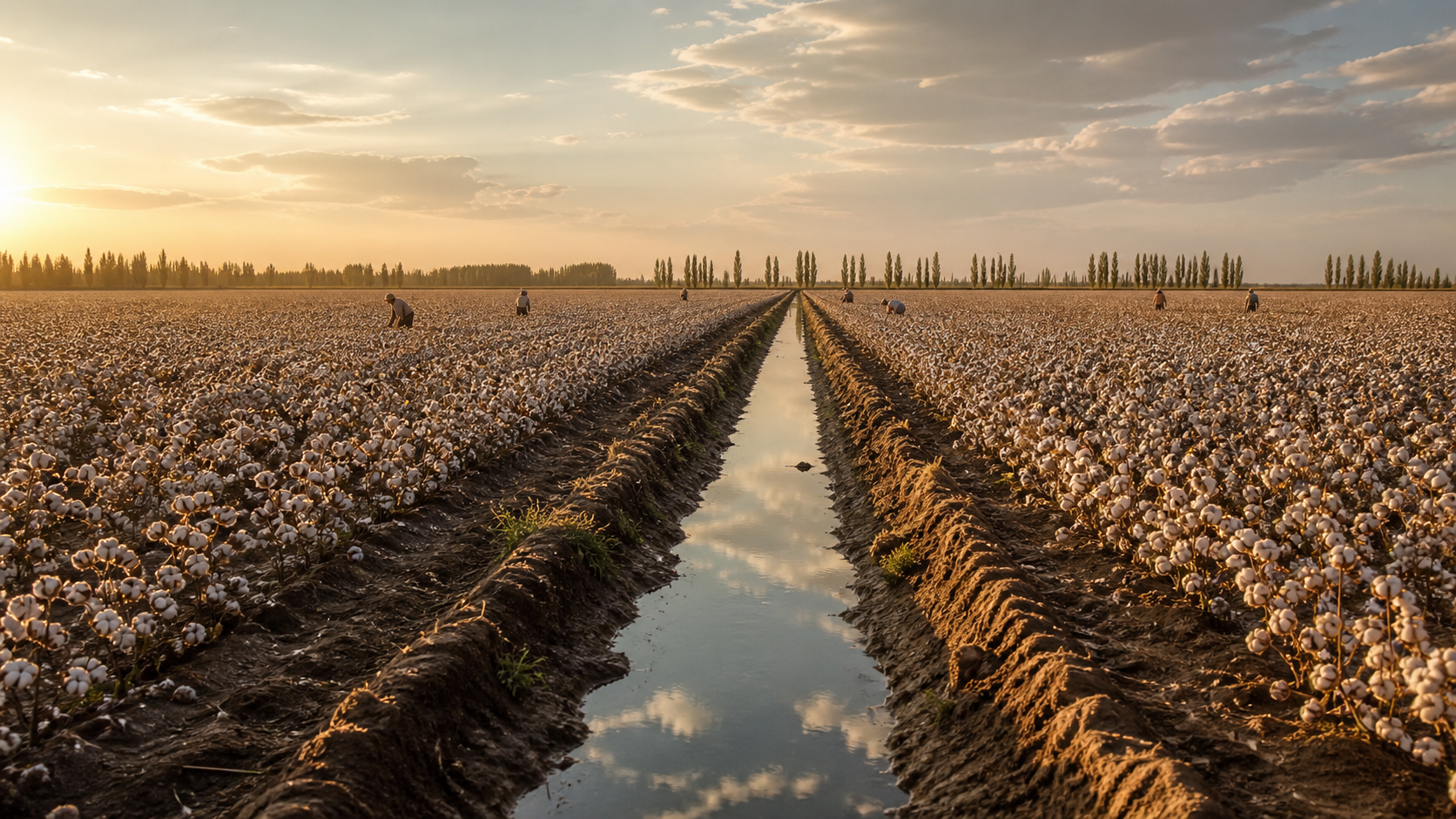
The head of state emphasized that the reforms being implemented are based on the idea of "Inson Qadri Uchun" (For the Sake of Human Dignity). Among the significant reforms, he highlighted the eradication of "cotton slavery," forced and child labor, the lifting of currency conversion restrictions, and the abolition of the "propiska" (residence registration) system.
Mirziyoyev reported that annual foreign investment in the economy has increased from $2-3 billion to $40-50 billion. He noted that the goal set three years ago to increase the country's GDP to $160 billion by 2030 will be exceeded this year, despite global logistical disruptions and global instability. The president declared that Uzbekistan should join the group of upper-middle-income countries.
The head of state also focused on poverty reduction, which, according to him, has dropped from 35% in 2017 to 4%. The country has implemented the "mahallabai" system, which aims to increase the incomes of needy families, their employment, and improve health, children's education, and housing conditions. These changes, the president noted, have impacted approximately 10 million people.
In education, Mirziyoyev spoke about expanding preschool and higher education. Despite the country's population growing by 8 million people over the past ten years, preschool enrollment has reached 78%. An additional 1.5 million school places have been created, and the number of university students has increased to 1.6 million.
According to the President, science, artificial intelligence, information technology, and the creative economy will be key factors in further development. The goal has been set to engage 10 million young people in the digital industry and master the professions of the future. On the eve of Independence Day, the Samarkand-2028 satellite was launched jointly with Chinese partners.
In healthcare, according to the President, funding has increased more than eightfold in recent years. 652 new medical facilities have been built, and the volume of medical services has tripled. More than 100 complex diagnostic and treatment methods, previously available only abroad, are now used in Uzbekistan. Life expectancy has increased from 66.4 years in 1991 to 75.4 years in 2025, while infant and maternal mortality rates have decreased fourfold.
As part of the new stage of development, the President outlined seven national programs:
1. **Transforming knowledge and professional skills into the country's primary development capital.** It is planned to increase the enrollment of six-year-old children in preparatory groups to 100%, transfer technical schools to international educational standards, and increase the number of young people studying high-income professions to 1 million. The goal is to bring at least 10 Uzbekistani universities into the top 1,000 global rankings.
2. **Further development of the healthcare system.** Over the next five years, public spending on healthcare is planned to reach 5% of GDP. Public health insurance should cover all households, and at least five leading global clinics are expected to be involved in specialized medicine.
3. **Transitioning the economy to a model based on high technology and high labor productivity.** Over the next decade, it is planned to attract $450 billion in foreign investment, increase GDP to $300 billion by 2030, and create 2 million high-paying industrial jobs. Startups, venture capital, and artificial intelligence are identified as priorities. As a result, per capita GDP should exceed $10,000.
4. Water Resources and the Environment. Over the next five years, the coverage of cultivated areas with water-saving technologies is planned to reach 100%. Green spaces around schools, kindergartens, hospitals, and multi-story buildings will be protected as inviolable public property. The share of green spaces in district and city centers is planned to increase to 30%.
5. Strengthening the independence of the judicial system and further developing the rule of law. It is planned to strengthen legal education, guarantees of the rights of citizens and entrepreneurs, as well as measures against cybercrime, drug addiction, human trafficking, the shadow economy, organized crime, and discrimination against women and children. 6. **Increasing the role of the mahalla in social development.** District budgets, investment programs, and infrastructure projects will be formed taking into account the needs identified by the mahallas. The primary criteria will be citizen demands and the well-being of the mahalla.
7. **Strengthening Uzbekistan's authority as a country of peace, friendship, interethnic harmony, and tolerance.** The President noted that representatives of more than 130 nationalities and ethnic groups, as well as followers of 16 religious faiths, live in the country.
Speaking about foreign policy, Mirziyoyev declared his intention to continue an open, pragmatic, and peace-loving approach. The number of countries that have established diplomatic relations with Uzbekistan has approached 170. In 2027–2029, the country will chair the Non-Aligned Movement for the first time. The President also noted the continued development of good-neighborly relations and cooperation with the states of Central Asia, the CIS, the European Union, the Americas, the Asia-Pacific region, the Arab-Muslim world, Eastern Europe, Africa, and Latin America.
Concluding his speech, the head of state declared that the next decade should be a period of national revival for Uzbekistan. He stated that achieving these goals will depend on the intellectual potential, hard work, and unity of the people. The President called on citizens to work together to build a new future for the country and congratulated the people of Uzbekistan on the 35th anniversary of state independence.