

Mining giant joins fight to stop killer toad march across Australia
Rio Tinto is jointly funding a A$28m "toad containment zoe" to protect the Pilbara region.
Mining giant joins effort to halt killer toad advance across Australia
Rio Tinto is investing millions of dollars to stop the poisonous cane toad from reaching the Pilbara region of western Australia, where the mining giant operates a huge iron ore business.
Together with Curtin University in Perth and others, the company will spend A$28m (£14.5m) creating a "toad containment zone" to stop the pest moving south.
Although the cane toad is not a direct danger to Rio Tinto's business, it releases toxins that are deadly to native wildlife and threatens the Pilbara ecosystem.
Rio Tinto has previously been criticised for destroying two sacred Aboriginal rock shelters in Pilbara that sat above tonnes of iron ore.
That decision led to the former chief executive losing his job, triggered widespread backlash and prompted Rio Tinto to pledge to rebuild trust with Indigenous communities.
Speaking about the proposed containment zone, Roberta Hunter, a ranger in Australia's Nyangumarta Warrarn Indigenous Protected Area, said: "Cane toads destroy the water and animals.
"When toads come close to our country, we want to be there to stop them because we don't want the country to be destroyed."
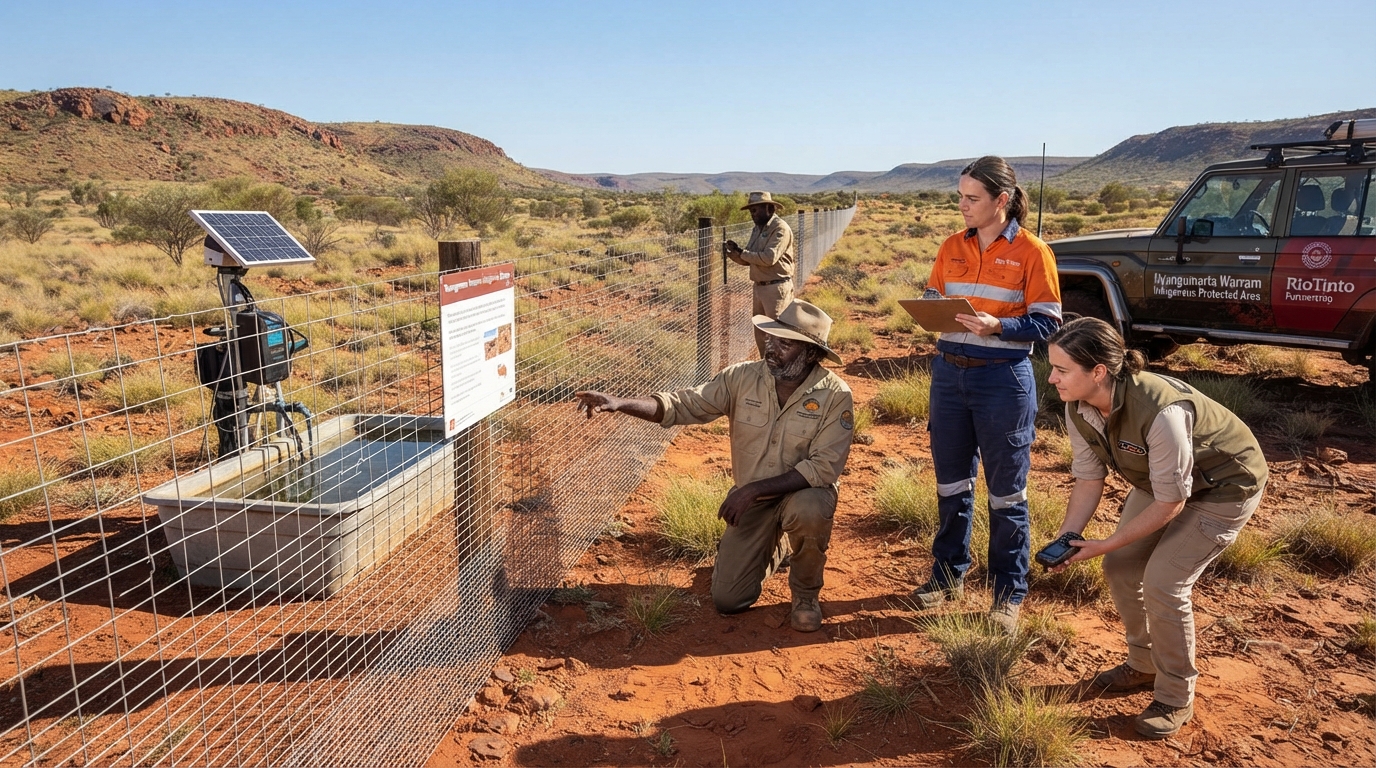
The plan is to block the toad's water supply by constructing a barrier across 7,500 sq km (2,895 sq m) of land between the Great Sandy Desert and the Indian Ocean.
During drier months, the cane toad needs water every few days to survive.
If no natural water sources are available, the toad depends on artificial water points usually used for cattle and irrigation.
The money will be used to prevent the toad from reaching dams, storage tanks or other ground-level water sources. The five-year project is due to start in 2027.
Several native species would be at risk if the toad reaches Pilbara. These include the northern quoll, whose numbers have been falling, the goanna lizard and the ghost bat.
The toads were brought into Australia in 1935 to control beetles in the sugar cane industry.
Since then, according to the Australian government, they have slowly marched west across the country's northern landscape, moving between 40 km and 60 km a year.
There are no predators or diseases that keep the toads in check, and they defend themselves with poison.
Ben Phillips, a professor at Curtin University, said the toads would reach Pilbara within two decades without intervention.
He said: "The toad containment zone is a once in a lifetime opportunity to stop one of the world's worst invasive species in its tracks and protect the region's unique wildlife."