

Military police prevented from following evidence in SAS murder probe, inquiry hears
Military police investigator tells an inquiry that the probe into suspected murders was "dictated" from above.
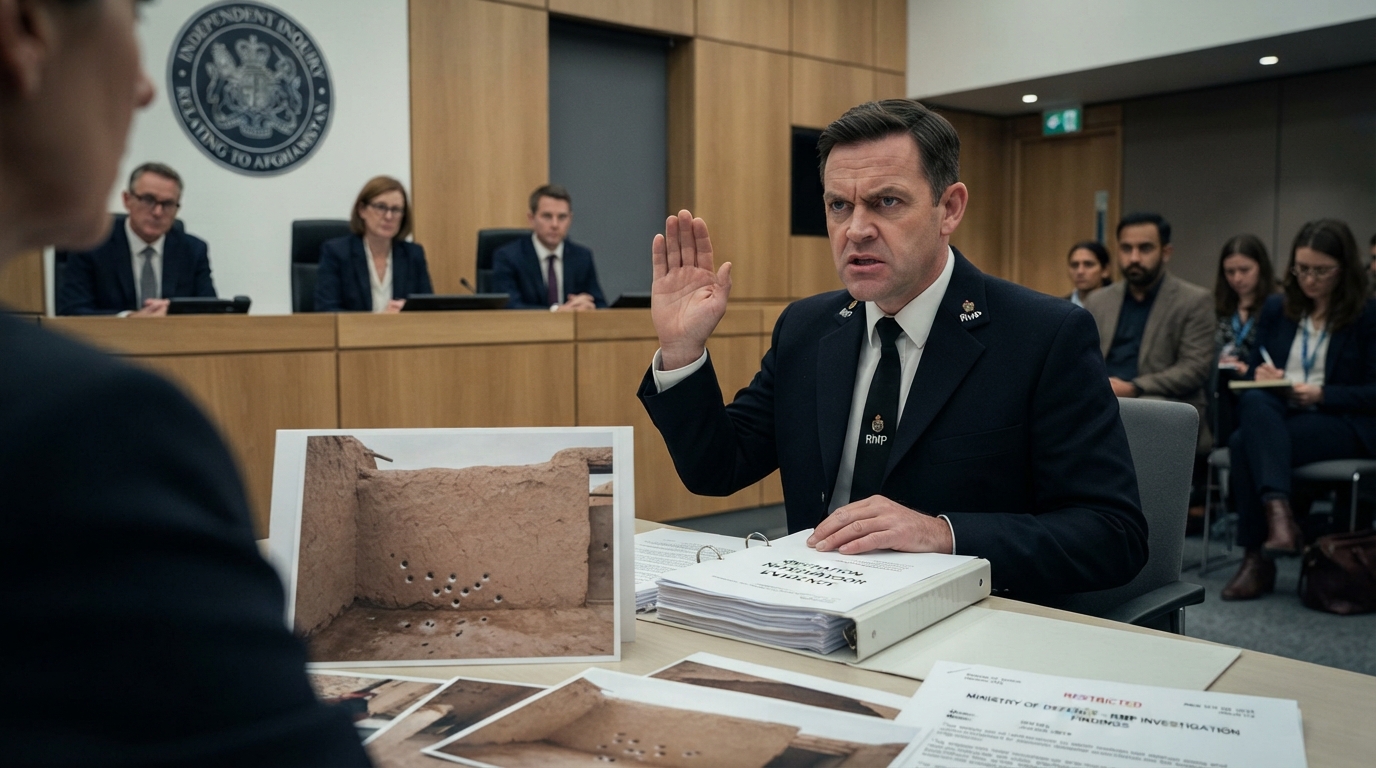
**Military police blocked from pursuing evidence in SAS murder probe, inquiry hears**
A military police investigator has criticised a murder investigation into alleged SAS executions, saying senior officers stopped his team from following the evidence.
Delme Williams, who examined allegations against one SAS unit, told a public inquiry: "It was not a standard investigation where investigators were making decisions based on where the evidence led them."
He said he still believed members of British special forces should have faced criminal charges.
This is the first time the inquiry, which is looking into allegations that the SAS committed murders in Afghanistan that were then covered up, has heard from people involved in military police investigations into special forces operations.
Williams, who was deputy senior investigative officer for Operation Northmoor, which examined 11 SAS operations, told the inquiry on Monday that the direction of the investigation was being "dictated" to his team from above.
He also said he wondered whether the senior Royal Military Police officer in charge, known as the Gold commander, was being "influenced to close the investigation".
Williams described an occasion during Operation Northmoor when investigators were discussing photographs from one of the 11 SAS operations they were examining for suspected murder.
The operation involved the fatal shooting of nine people at a home in Nad Ali district, Helmand Province, in February 2011. The youngest person killed was 14.
Williams told the inquiry that, based on his experience as an experienced crime-scene investigator, he wanted to show the images to a forensics expert.
Operation Northmoor investigators suspected the people shot had been killed unlawfully, and the photographs showed bullet marks low to the ground, which appeared to challenge the SAS account that those killed had been standing and had fired at British forces first, before the SAS returned fire.
Williams told the public inquiry: "A picture paints a thousand words - photos are ideal evidence."
The military police officer said he was "quickly shut down in an abrupt matter" by the Gold commander and that when he tried to push back, his senior officer pulled rank and it would have been "insubordinate" to go any further.
He said he still believed the photographs should have been examined by an expert.
BBC Panorama investigated the same incident and travelled to Helmand to visit the shooting site.
An RMP investigator told the BBC they had seen photographs from the scene and that the bullet mark patterns had raised concern among the Operation Northmoor team.
"You can see why we were concerned," the investigator said. "Bullet marks on the walls so low to the ground appeared to undermine the special forces' version of events."
Panorama's team examined what appeared to be bullet holes from the raid, still visible, clustered together on the walls low to the ground.
BBC showed photographs from the scene to forensics and ballistics experts, who said the clusters suggested multiple rounds had been fired downward from above and did not appear to indicate a firefight.
This supported the account given by bereaved family members of some of those killed. Those relatives have told the BBC that the dead were all unarmed civilians shot in their beds, and that appears to back up the RMP investigators' suspicions.
The BBC reported in 2022 evidence from another Operation Northmoor investigator, who told Panorama: "I believe there was pressure from above to shut down the investigation. It became increasingly clear to me that it didn't matter what evidence we were able to gather, these cases were never going to be allowed to go to court."
At the time, the Ministry of Defence said the incidents had undergone "extensive and independent investigation" by the RMP, and no prosecutions had followed.
Operation Northmoor, set up by the RMP's serious crime team, was investigating 45 killings by an SAS squadron in 2011 during a single tour of Afghanistan.
The military police officer told the inquiry the investigation team believed the operational photographs could be important evidence and looked at them "in quite some detail", and that the dismissal of this evidence showed how the investigation was being handled.
Williams told the inquiry there were "outside forces" that seemed to him to be directing the investigation's course.
"I do recall a general feeling that inquiries were being stopped too soon and that there was no appetite... to pursue all lines of inquiry or for anyone to be referred for prosecution."
During his sworn testimony, Williams was shown several internal military documents by the inquiry's lawyers.
These records showed it was "confirmed Op NORTHMOOR must end" during an RMP meeting of senior staff in September 2017, while his team was still gathering evidence.
Williams said he was "not surprised" but that criminal investigations "should never be guided by an end date" imposed on them.
The military police are meant to be independent from the wider armed forces, but Williams said he was shown a briefing note for a meeting between senior military police officers and the deputy chief of the Army at the end of 2017, which set out the intention to close Northmoor.
He said he was "surprised to see it written down" but that it explained the "pressure" he felt the investigation was under.
Williams said he still believed individuals should have been referred for prosecution on the basis of the evidence they had found.
The inquiry also heard that the former head of the British Army, Sir Nick Carter, asked the RMP to reduce the staff working on the murder probe to 25, less than a quarter of the team working on Operation Northmoor in 2016.
The officer in charge at the time, Lt Col John McAllister, believed this would have been impossible without harming the investigation, according to the inquiry's lead barrister.
Operation Northmoor was the largest murder investigation in Royal Military Police history but led to no charges.
Alan Pughsley, an expert to the public inquiry, has strongly criticised the lack of resources given to Operation Northmoor and called the decision to close it "premature and inappropriate".
The public inquiry was established in 2022 after BBC Panorama reporting linked one SAS squadron to 54 suspicious deaths during a single six-month tour of Afghanistan.
Panorama found evidence suggesting SAS members had executed handcuffed detainees and children.
The Independent Inquiry relating to Afghanistan is examining allegations that the SAS murdered people during detention operations in Afghanistan between 2010 and 2013, and that senior officials tried to cover up the true circumstances of the killings.
It is also examining whether the Royal Military Police's investigations into such killings were adequate.
The RMP evidence offers a rare glimpse into the public inquiry's work, as much of the evidence is being heard in closed-door hearings.
In January last year, during the last public evidence sessions, the inquiry heard from its expert witness Alan Pughsley, former chief constable of Kent Police and an experienced homicide investigator.
He described the extremely complex investigation as fundamentally under-resourced "from start to finish", hindered by "indecision and apathy" from senior officers, as well as a lack of cooperation from UK Special Forces command.
Pughsley said clearly that he would not have closed the investigation, especially when major lines of inquiry were still outstanding.