

Migrants increased in Europe, while in Russia they decreased by 4.3 million
Between 2000 and 2024, the number of migrants living in Europe increased significantly. Nearly half of the total growth was accounted for by the United Kingdom, Spain, and Germany. In Russia, however, this figure decreased by approximately 4.3 million people.
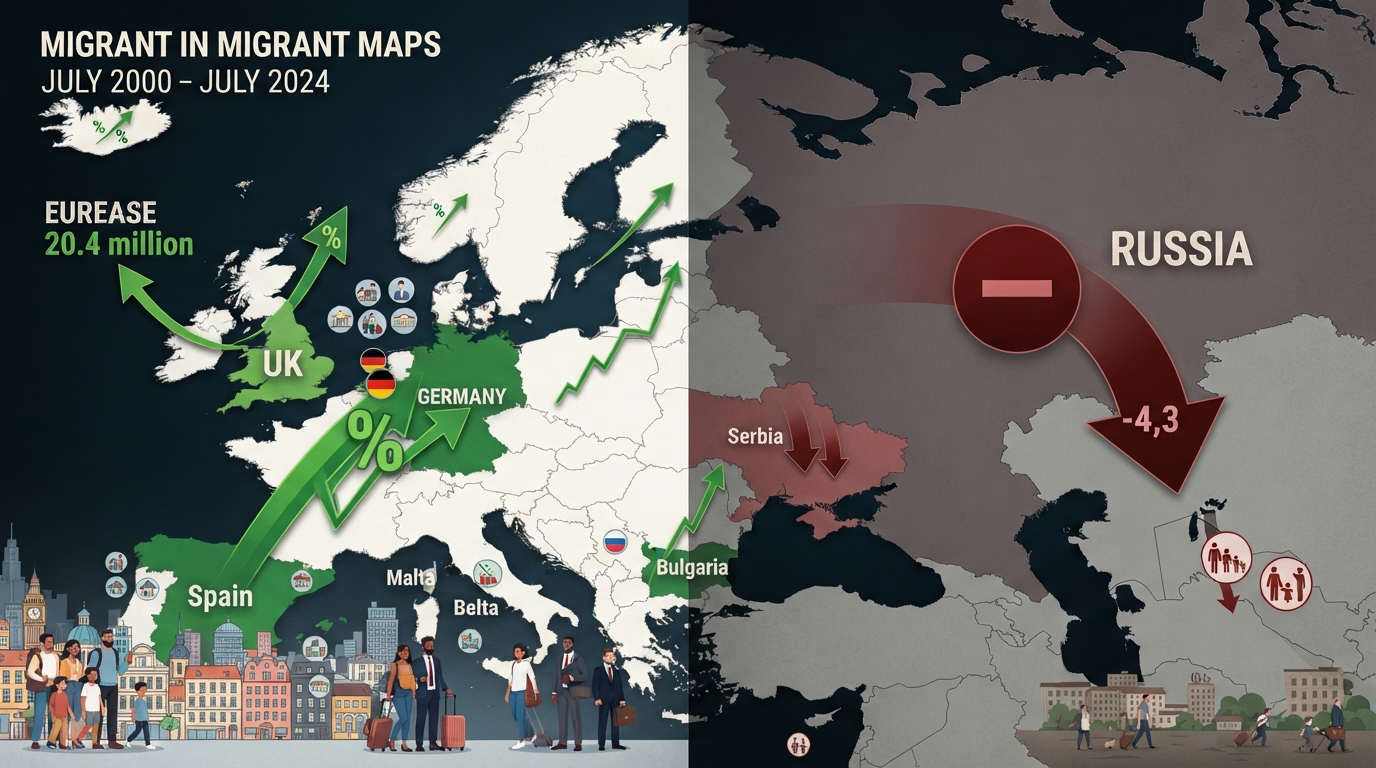
The number of migrants in Europe has increased, while in Russia it decreased by 4.3 million
It compares the number of migrants living in European countries as of July 2000 and July 2024.
These figures do not indicate the total number of people who arrived in the country over 24 years or the difference between those who arrived and those who left. They show how the number of migrants living in the country changed at a specific point in time. Depending on national definitions, this category may also include refugees, asylum seekers, and individuals who subsequently obtained citizenship of that state.
In the UK, Spain, and Germany, the combined number of migrants increased by nearly 20.4 million people. This accounts for almost half of the total growth in Europe.
In percentage terms, other countries came to the fore:
Malta - 827 percent;
Bulgaria - 590 percent;
Iceland - 522 percent.
In Spain, the number of migrants increased by more than four times. In the material, this is partially explained by the increase in the pace of construction in the early 2000s and the 2005 program for legalizing the legal status of migrants. Under this program, nearly 700 thousand applications were submitted.
In the UK, the number of migrants increased by 149 percent between 2000 and 2024.
Nevertheless, growth was not observed in all countries. Russia stood out in terms of an absolute decrease in the number of migrants: the population of this category living in the country shrank by approximately 4.3 million people. A decline was also recorded in Serbia, Ukraine, and several other Eastern European countries.
Migration helps soften labor shortages, increase the number of taxpayers, and reduce the consequences of demographic decline. At the same time, if infrastructure does not develop in line with population growth, additional pressure may arise on the housing market, schools, and public services.
For this reason, work permits, housing, language learning, and the recognition of qualifications and diplomas obtained abroad are of important significance in the integration of newcomers into society.