

Lockerbie bombing suspect seized from Libya in 'cloak and dagger' operation
Abu Agila Mohammad Mas'ud Kheir Al-Marimi claims he was unlawfully taken from Libya to stand trial over the bombing..
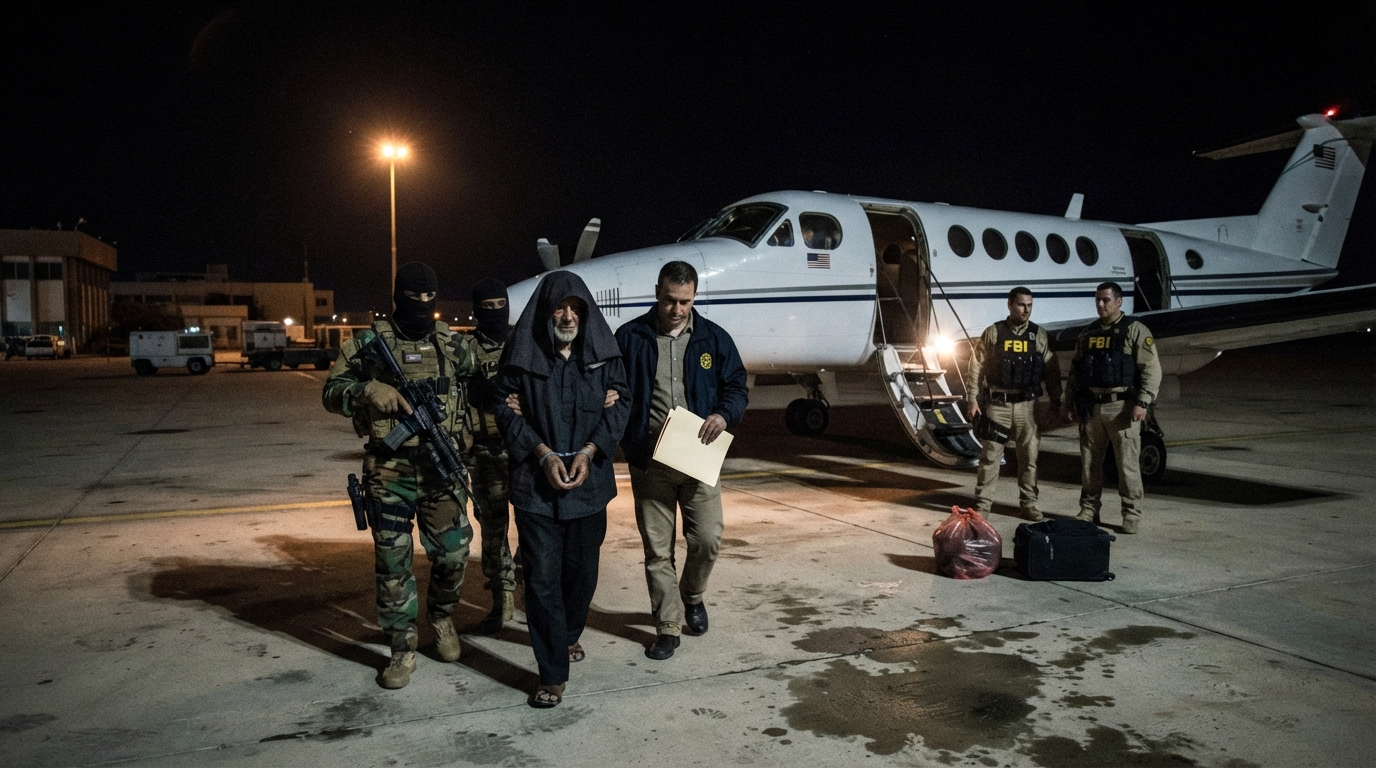
**Lockerbie bombing suspect taken from Libya in 'cloak and dagger' operation**
Hundreds of people were killed when Pan Am Flight 103 blew up over Lockerbie in December 1988.
A suspect in the Lockerbie bombing has said he was unlawfully taken from Libya to face trial in the United States after "a cloak and dagger operation conducted in the dead of night".
Abu Agila Mohammad Mas'ud Kheir Al-Marimi says he was seized by armed men and turned over "hooded and bound" to FBI agents, who had a plane waiting to take him out of the country.
Al-Marimi, also known as Mas'ud, denies making and arming the bomb that destroyed Pan Am Flight 103 over Lockerbie on 21 December 1988, killing 270 people.
The Libyan says he was the victim of an illegal rendition and has asked a judge in Washington DC to dismiss the case.
The US Department of Justice, in response, said that under American law the way he was removed should not prevent his trial, which has been postponed three times, from finally beginning in January.
Al-Marimi's account of events is set out for the first time in court papers filed by his legal team.
The US government charged him with bringing down the airliner in December 2020 and formally sought his "extradition, expulsion or otherwise lawful removal" from Libya to stand trial.
At that time, Al-Marimi was being held in Libya, serving a prison sentence for attacking rebel forces during the 2011 uprising against Col Muammar Gaddafi.
According to Al-Marimi, he was freed from prison on "compassionate grounds" on 30 September 2021 and went back to his family in Tripoli.
Roughly two weeks later, a group of armed men, many of them masked, came to his home and arrested him again, without explaining why or identifying themselves.
Defence lawyers say his "abduction" was allegedly carried out by a militia with "a reputation for brutality and disdain for human rights".
They say Al-Marimi was dragged across the floor "with no care for his health and mobility issues", his son was struck with a rifle, and his wife and daughter were assaulted.
They said the grandfather was taken to a prison in Misrata, about 116 miles (187km) east of Tripoli, where he was held in solitary confinement for several days.
On the morning of 11 December 2022, Al-Marimi said his captors gave him a sandwich and tea and told him to gather his things.
He thought he was about to be released, but instead he was handed over to the FBI.
A US government aircraft was waiting at Misrata airport when Al-Marimi arrived with a "loosely fitted cloth hood" over his head.
His escorts asked the FBI to hurry because people were watching, and he was put onto the plane.
The Libyan authorities handed over a plastic "trash bag" containing some of his belongings, including a Quran, a prayer rug, clothes, toiletries and medicine.
During the flight to the US, the FBI questioned Al-Marimi, carried out a "head to toe medical examination" and gave him clean clothes and blankets, his lawyers said.
They say the prime minister of the Tripoli-based Libyan government, Abdulhamid Dbeibah, later obtained financial investment from the United States, including $16m (£12m) to support Libya's transition to a democratic state and a contract with US oil giant Honeywell International.
Al-Marimi argues that the process amounted to unlawful rendition and forcible abduction, stripping the Washington court of jurisdiction over the case.
The defence says the militia group staged an illegal kidnapping after diplomatic talks stalled, in a process that showed "an utter disregard for Libyan law and sovereignty."
His lawyers said: "This is not the rule of law.
"This is the rule of the strong. Mr Al-Marimi's rendition sends a chilling message to the people of the world: 'If we want you, we will take you'."
They added: "Mr Al-Marimi must be returned to Libya."
The US government said that, under long-established legal doctrine, the court's jurisdiction did not depend on how the defendant was brought before it, even if that involved forcible abduction.
Prosecutors said the limited exceptions to that rule did not apply in Al-Marimi's case.
In their filing to the court, the government said: "Libya was permitted to transfer the defendant to the United States under any method it chose."
They added: "Any actions of the Libyan militias are not attributable to the United States, as would be required for this claim to succeed."
The defence has requested a hearing so it can present its argument before Judge Dabney Friedrich.
Al-Marimi's removal from Libya in 2022 triggered a strong backlash in his home country.
Prime Minister Debeibah said his government had been cooperating with an "international judicial framework to extradite accused citizens."
An Interpol red notice was active at the time, asking law enforcement worldwide to locate and provisionally arrest Al-Marimi, pending his extradition or surrender.
The head of Scotland's prosecution service, then Lord Advocate Dorothy Bain KC, told the Scottish Parliament she had received confirmation that Al-Marimi had been transferred to US custody "on a lawful basis".